

So I wrote a much longer thing explaining why Minnesota's anti-nudify tech law, while it might be well meaning, is TERRIBLY DRAFTED in a manner that almost guarantees it will be thrown out, giving Elon Musk a win. But also, I don't understand WHY MN legislators wrote such a bad law...

Techdirt
The Worst Person You Know Just Filed A Good First Amendment Lawsuit Against A Very Badly Drafted Nudify App Ban There's been a bunch of news this... techdirt.com/2026/07/30/the-worst-person-y…
Jul 30, 2026 at 7:10 PM
The Worst Person You Know Just Filed A Good First Amendment Lawsuit Against A Very Badly Drafted Nudify App Ban
There’s been a bunch of news this week regarding Minnesota’s new law that purports to prohibit “nudification” technology, and the fact that xAI has sued to have the law bloc…

Chapter Eight—Technology and the Law: The Automobile · University of Wisconsin Law School Digital Repository · University of Wisconsin Law School Digital Repository
University of Wisconsin Law School Law Library 975 Bascom Mall Madison, WI 53706 608-262-3394
Elon Musk likely broke the law by giving voters $1 million, Wisconsin board says | CNN Politics
Billionaire Elon Musk likely broke Wisconsin law when he handed out $1 million checks to voters in the 2025 state Supreme Court election, a bipartisan panel has found.

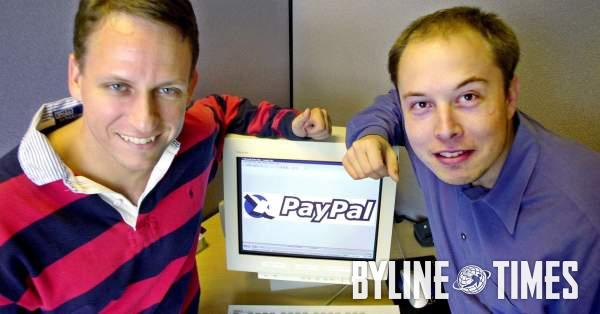
How Elon Musk and the Tech Billionaires Hijacked the State and Our Minds
Historian Quinn Slobodian tells Byline Times that Elon Musk's rise tells a deeper story—of fortunes built on state power, and a new politics where humans are treated less as citizens than as systems to be optimised
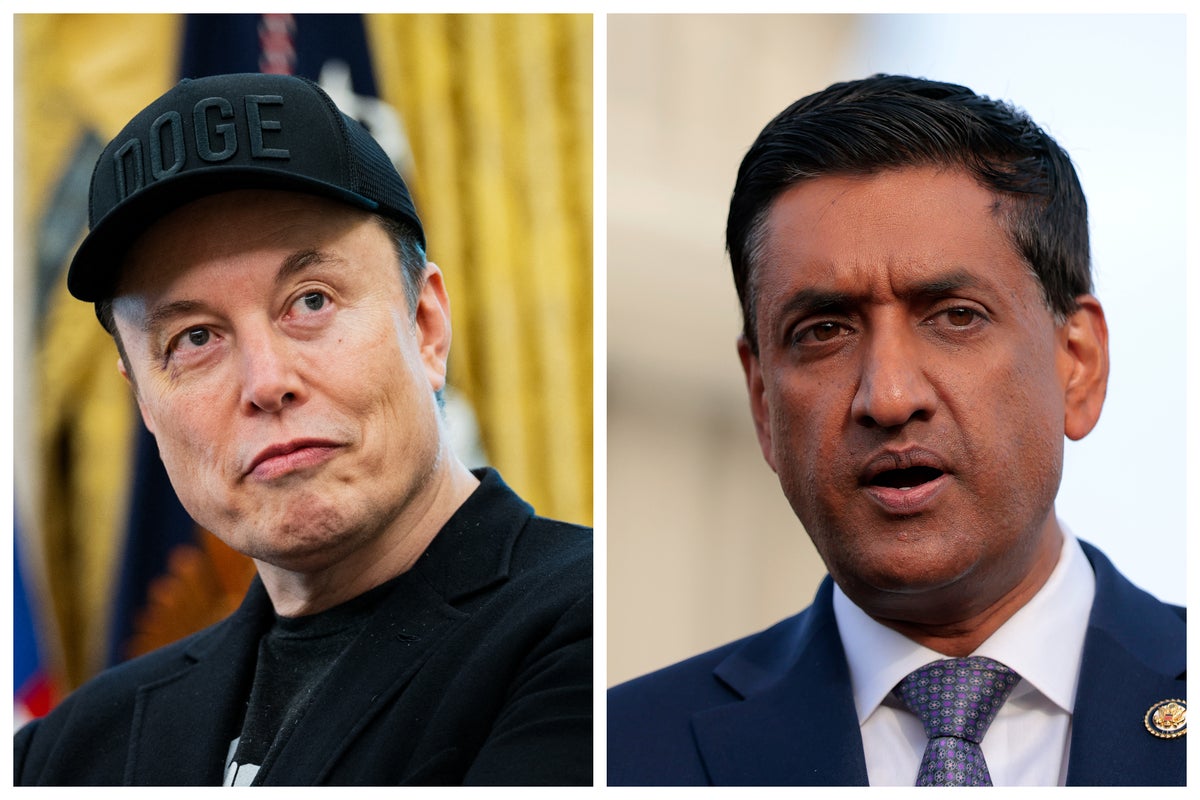
Elon Musk threatens to sue lawmaker who suggested DOGE cuts led to death of 4.5M kids
Democrat Ro Khanna cited a 2025 study that estimated more than 14 million people could die without USAID resources by 2030
Directing large language models to follow the letter or spirit of the law
The distinction between the spirit and letter of the law is a central issue across research and everyday life, and a growing concern for building safe, intelligent machines. What is this distinction based on, and how can we develop machines that follow the intention behind a rule? We used targeted adaptation that made large language models prioritize the spirit or letter of the law. With minimal modifications, our method significantly changed LLM behavior across diverse measures, novel vignettes, real-world scenarios, and influential legal cases. An analysis of model internals revealed a low-dimensional space with three interpretable dimensions matching a formal pre-specified framework for the geometry of legal concepts. These findings show how legal thought in LLMs may be organized and directed.

CONTU Revisited: The Case Against Copyright Protection for Computer Programs in Machine-Readable Form
Professor Samuelson casts a critical eye on the Final Report of the National Commission on New Technological Uses of Copyrighted Works (CONTU) which recommended that copyright protection be extended to machine-readable versions of computer programs. CONTU appears to have misunderstood computer technology and misinterpreted copyright tradition in two significant respects. The Commission failed to take into account the historical importance of disclosure of the contents of protected works as a fundamental goal of both the copyright and patent laws. It also erroneously opined that the utilitarian character of a work was no bar to its copyrightability when both the statute and the case law make clear that utilitarian works are not copyrightable. Since computer programs in machine-readable forms do not disclose their contents and are inherently utilitarian, copyright protection for them is inappropriate. Congress acted on CONTU's recommendation without understanding the significance of these conceptual flaws. Professor Samuelson recommends the creation of a new form of intellectual property law specifically designed for machine-readable programs.
CONTU Revisited: The Case against Copyright Protection for Computer Programs in Machine-Readable Form
Professor Samuelson casts a critical eye on the Final Report of the National Commission on New Technological Uses of Copyrighted Works (CONTU) which recommended that copyright protection be extended to machine-readable versions of computer programs. CONTU appears to have misunderstood computer technology and misinterpreted copyright tradition in two significant respects. The Commission failed to take into account the historical importance of disclosure of the contents of protected works as a fundamental goal of both the copyright and patent laws. It also erroneously opined that the utilitarian character of a work was no bar to its copyrightability when both the statute and the case law make clear that utilitarian works are not copyrightable. Since computer programs in machine-readable form do not disclose their contents and are inherently utilitarian, copyright protection for them is inappropriate. Congress acted on CONTU's recommendation without understanding the significance of these conceptual flaws. Professor Samuelson recommends the creation of a new form of intellectual property law specifically designed for machine-readable programs.

Bill C-22’s Groundhog Day: Why the Government’s Dismissal of Signal, Apple and the U.S. Congress Concerns Runs Back the Disastrous Online News Act Playbook - Michael Geist
Secure messaging service Signal yesterday became the latest company to warn that Bill C-22, the lawful access bill, could force it to leave the Canadian market rather than comply with provisions it says would compromise its end-to-end encryption and create new cybersecurity risks. Signal vice-president Udbhav Tiwari told the Globe and Mail that the company “would rather pull out of the country than be compelled to compromise on the privacy promises we have made to our users.” The comments are part of a steady stream of similar warnings from Apple, Meta, the Canadian Chamber of Commerce, the Cybersecurity Advisors Network, and the chairs of the U.S. House Judiciary and Foreign Affairs Committees. Despite growing concern, the government’s response has been to launch a misleading social media campaign and repeatedly insist that the experts and companies are mistaken.
Jeff Melnick on Twitter / X
Lots of us are hashing out new plagiarism/AI statements to share with our students. Here’s a draft of the last part of my very earnest one. pic.twitter.com/4Nqh7rZDcF— Jeff Melnick (@melnickjeffrey1) September 1, 2026

Commentary: The blueprint for fighting Trump's attempt to sabotage the election, drawn up in Minnesota • Minnesota Reformer
The evidence is all around us, but you have to connect dots and see the full picture.

Exhibit Public Redacted Memorandum of Law – #1587, Att. #1 in The New York Times Company v. Microsoft Corporation (S.D.N.Y., 1:23-cv-11195) – CourtListener.com
LETTER addressed to Judge Sidney H. Stein from Davida Brook dated September 17, 2026 re: Public, Redacted Version of News' Plaintiffs' Memorandum of Law. Document filed by Daily News LP, The Center for Investigative Reporting, Inc., The Intercept Media, Inc., The New York Times Company, Ziff Davis, LLC. (Attachments: # 1 Exhibit Public Redacted Memorandum of Law)Filed In Associated Cases: 1:25-md-03143-SHS-OTW et al..(Brook, Davida) (Entered: 09/17/2026)

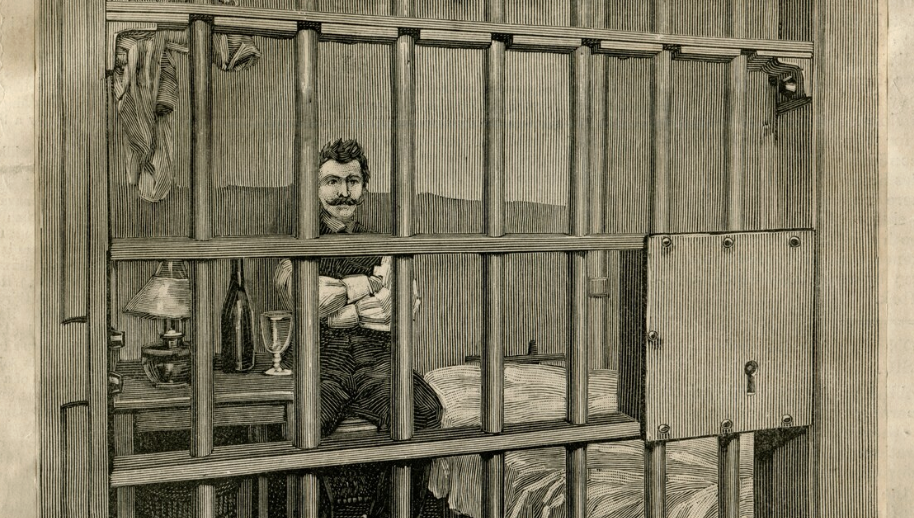
From Haymarket to Prairieland: How dissent has unleashed the long arm of the law
The Prairieland sentencing has dark historical parallels, Kim Kelly writes. But we can change the end of the current story.
We've written about how social media companies and other technology firms manipulate the scientific record in their favor. In our revisions, we will need to address how they have captured the state department to literally prevent researchers who criticize them FROM EVEN ENTERING THE COUNTRY.

Jameel Jaffer
This wild document is the basis for the State Department's decision to cancel the visas and green cards of tech researchers who study the social media platforms and of tech regulators who enforce privacy and transparency laws. Disclosed to us last night in @thecoalition.bsky.social v. Rubio.

