

david created a mode of communication: dreamtalk related to sandtalk(book). the project relies on a obsidian knowledge graph hence the realisation as a 3D obsidian plugin. you can find examples how it looks here : github.com/ProjectLiminality/InterBrain

GitHub - ProjectLiminality/InterBrain: Open-source protocol integrating collective and artificial intelligence — LLM orchestration, agentic workflows, and RAG in a cross-platform TypeScript/Tauri app.
github.comOct 9, 2026 at 8:22 PM
After Cybernetics: Treatise for Future Urbanisms — Against Catastrophe
Since 2014, Zaha Hadid Virtual Reality Group, part of Hadid Partners Architecture Firm, has had a focus on cybernetic architecture. This architecture involves what they label the ‘metaverse’. The metaverse integrates physical with digital worlds seamlessly. In industry parlance it is a world populated by what are euphemistically titled ‘cyber-physical’ assets.

Summary of "Improvising to cellular playgrounds in Realtalk", Aug 2023
claude-obsidian
Self-organizing AI second brain for Obsidian + Claude Code. Drop any source and Claude reads, links, and files it into one connected knowledge graph of plain Markdown you own. AI note-taking, personal knowledge management (PKM), and an open-source Notion alternative. Based on Karpathy's LLM Wiki pattern.
Obsidian's CEO on why productivity tools need community more than AI - Boris Mann Tech Blog
The latest episode of Decoder features a deep dive about Obsidian with @stephango.com and why we're not rushing to add sparkly AI buttons everywhere www.theverge.com/decoder-podc...
Relay - Team collaboration in Obsidian
Real-time multiplayer plugin for teams in Obsidian. Share folders, collaborate in real-time, keep personal notes private. Transform Obsidian into a powerful team collaboration tool.
capability based tensor network - Obsidian Publish
capability based tensor network - Powered by Obsidian Publish.
Web of the People — Open Indie
Whether you think of web3 as the advent of peer-to-peer protocols, coin-operated blockchains or autocomplete-AI synthesizers, change is c...
Home - chaum.com
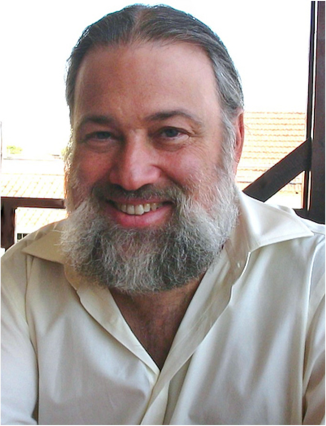
Widely recognized as the inventor of digital cash, David is currently leading xx network, a completely private, quantum-secure decentralized messaging and payment platform. He is also known for other fundamental innovations in cryptography, including privacy technologies such as mix nets and secure voting systems. With a PhD in Computer Science from UC Berkeley, he has [...]Read More... from Home
Spatial Communication in Level Design
The Conversation Is the Commit - The Phoenix Architecture
Smalltalk
Smalltalk is a purely object-oriented programming language that was originally created in the 1970s for educational use, specifically for constructionist learning, but later found use in business. It was created at Xerox PARC by Learning Research Group (LRG) scientists, including Alan Kay, Dan Ingalls, Adele Goldberg, Ted Kaehler, Diana Merry, and Scott Wallace.

about - pivot point - Obsidian Publish
about - pivot point - Powered by Obsidian Publish.
Solid (web decentralization project)
Solid is a web decentralization project led by Tim Berners-Lee, the inventor of the World Wide Web, originally developed collaboratively at the Massachusetts Institute of Technology (MIT). The project "aims to radically change the way Web applications work today, resulting in true data ownership as well as improved privacy" by developing a platform for linked-data applications that are completely decentralized and fully under users' control rather than controlled by other entities. The ultimate goal of Solid is to allow users to have full control of their own data, including access control and storage location. To that end, Tim Berners-Lee formed a company called Inrupt to help build a commercial ecosystem to fuel Solid.

Architecture and the Internet: Designing places in cyberspace
Cyberspace, as the information space is called, has become accessible in the past decade through the World Wide Web. And although it can only be experienced through the mediation of computers, it is quickly becoming an alternative stage for everyday economic, cultural, and other human activities. As such, there is a potential and a need to design it according to place–like principles. Making places for human inhabitation is, of course, what architects, landscape architects, and town planners have been doing in physical space for thousands of years. It is curious, therefore, that Cyberspace designers have not capitalized on the theories, experiences, and practices that have been guiding physical place–making. While most 3D environments closely mimic physical spaces, they are, by and large, devoid of the essential characteristics that differentiate a ‘place’ from mere ‘space.’ And only rarely are they sensitive to, and take advantage of, the peculiarities of Cyberspace. We believe that this state of affairs is temporary, characteristic of early adoption stages of new technologies. As the Web matures, and as it assumes more fully its role as a destination rather than as means of communication, there will be a growing need to design it according to place–making principles. By looking at physical architecture as a case study and metaphor for organizing space into meaningful places, this paper explores the possibility of organizing Cyberspace into spatial settings that not only afford social interaction, but, like physical places, also embody and express cultural values. At the same time, because Cyberspace lacks materiality, is free from physical constraints, and because it can only be ‘inhabited’ by proxy, these ‘places’ may not necessarily resemble their physical counterparts.

Naqoyqatsi
Godfrey Reggio takes on the digital revolution in the final chapter of his Qatsi Trilogy. Through a variety of cinematic techniques, including slow motion, time-lapse, computer- generated imagery, and found footage, the film tells of a world that has completed the transition from the natural to the artificial. Globalization has been accomplished, all of our interactions are technologically mediated, and all images are manipulated. From this (virtual) reality, Reggio sculpts a frenetic yet ruminative portrait of an era in which the cacophony of “communication” has rendered humankind effectively postlanguage.

