

Japan: A study covering 2020–2023 estimated COVID-19 infections were 4.7x higher than officially reported. During Omicron BA.4/5: • Reinfection rate rose from 0.4% (2021) to 28.1% (2023) • Reinfections made up 81.5% of new infections • Findings highlight widespread underreporting and reinfections
Nov 11, 2026 at 5:20 AM
Researchers link Long COVID to another virus | NHK WORLD-JAPAN News
Researchers in Japan have released findings showing that COVID-19 after effects, including fatigue, occur when a coronavirus infection activates another virus already inside the body.

COVID-19 #CoronaVirus Infographic Datapack — Information is Beautiful
Updated daily, now with global vaccination stats

Yale School of Public Health - COVID-19 and Immune System Impacts
What Are COVID-19’s Long-Term Medical Effects?
Fascinating email from TPM Reader JO, whose personal bio is tailor-made for...

Opinion | When It Comes to Covid-19, Most of Us Have Risk Exactly Backward (Published 2020)
We aren’t very good at discussing trade-offs, but we need to make some during this pandemic.

COVID antihistamine protocol
This current wave of COVID is bad, and I'm seeing a lot of people who were previously NOVID posting photos of their positive tests. I've been trying fairly diligently to get this information out on social media, because I know I follow the literature a lot more closely than a lot of people, so here
Effect of the Tokyo 2020 Summer Olympic Games on COVID-19 incidence in Japan: a synthetic control approach
Background The Tokyo 2020 Summer Olympic Games (23 July–8 August 2021) were held in the middle of Japan’s fifth wave of COVID-19, when the number of cases was on the rise, and coincided with the fourth state of emergency implemented by the host city, Tokyo. Aim This study aimed to assess whether the hosting of the Games was associated with a change in the number of COVID-19 cases in Japan using a synthetic control method. Methods A weighted average of control countries with a variety of predictors was used to estimate the counterfactual trajectory of daily COVID-19 cases per 1 000 000 population in the absence of the Games in Japan. Outcome and predictor data were extracted using official and open sources spanning several countries. The predictors comprise the most recent country-level annual or daily data accessible during the Games, including the stringency of the government’s COVID-19 response, testing capacity and vaccination capacity; human mobility index; electoral democracy index and demographic, socioeconomic, health and weather information. After excluding countries with missing data, 42 countries were ultimately used as control countries. Results The number of observed cases per 1 000 000 population on the last day of the Games was 109.2 (7-day average), which was 115.7% higher than the counterfactual trajectory comprising 51.0 confirmed cases per 1 000 000 population. During the Olympic period (since 23 July), the observed cumulative number of cases was 61.0% higher than the counterfactual trajectory, comprising 143 072 and 89 210 confirmed cases (p=0.023), respectively. The counterfactual trajectory lagged 10 days behind the observed trends. Conclusions Given the increasing likelihood that new emerging infectious diseases will be reported in the future, we believe that the results of this study should serve as a sentinel warning for upcoming mega-events during COVID-19 and future pandemics.

Outbreak Investigation of Salmonella: Jalapeño (August 2026)
The FDA and CDC, in collaboration with state and local partners, are investigating illnesses in a multistate outbreak of Salmonella Javiana infections.

Concerns and controversies at the 2020 Summer Olympics
A number of concerns and controversies arose leading up to the 2020 Summer Olympics, which took place in Tokyo, Japan. The games were postponed until July 2021 as a result of the COVID-19 pandemic. The IOC stated that their Japanese partners and the former prime minister Shinzo Abe "made it very clear" in 2020, "that Japan could not manage a postponement beyond next summer [2021] at the latest".[1] Just weeks before the opening of the Tokyo Olympics, honorary patron Emperor Naruhito was said to be "extremely worried about the current status of coronavirus infections",[2] and was "concerned that while there [were] voices of anxiety among the public, the holding (of the events) may lead to the expansion of infections".[3]
COVID-19 Vaccine Effectiveness and Safety for the 2026-2027 Respiratory Season
This Special Communication aims to identify and summarize the most recently published evidence evaluating the effectiveness and safety of US-licensed COVID-19 vaccines and report on the epidemiology of SARS-CoV-2 in the US.

Archive: New COVID-19 ‘Citizen Science’ Initiative Lets Any Adult with a Smartphone Help to Fight Coronavirus
The online study would try to help researchers gain insight into how the virus is spreading and identify ways to predict and reduce the number of new infections.

Retracted coronavirus (COVID-19) papers
via CDC We’ve been tracking retractions of papers about COVID-19 as part of our database. Here’s a running list, which will be updated as needed. (For some context on these figures, see…
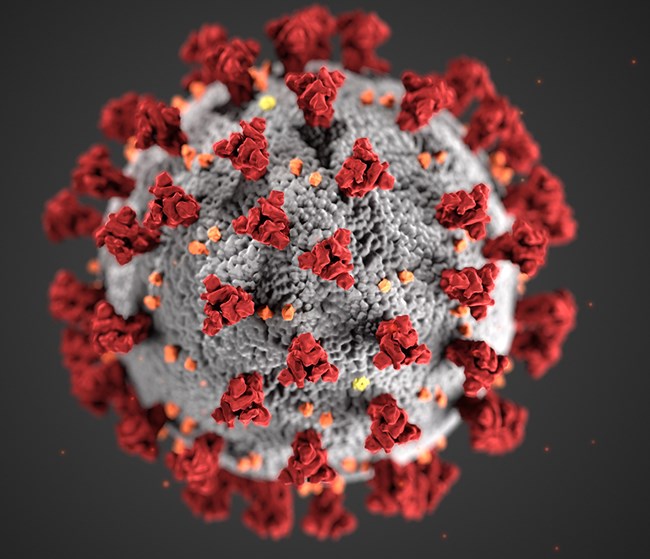
COVID-19

About the disease itself and/or SARS-CoV-2
COVID-19 vaccines
Primarily information in the US and Japan
Public health
Mainly related to COVID-19

49% of COVID infections are asymptomatic according to Yale School of Public Health. Yale advises layered protection: N95 masks, HEPA filters…
doi.org
COVID-19 Vaccine Effectiveness and Safety for the 2026-2027 Respiratory Season
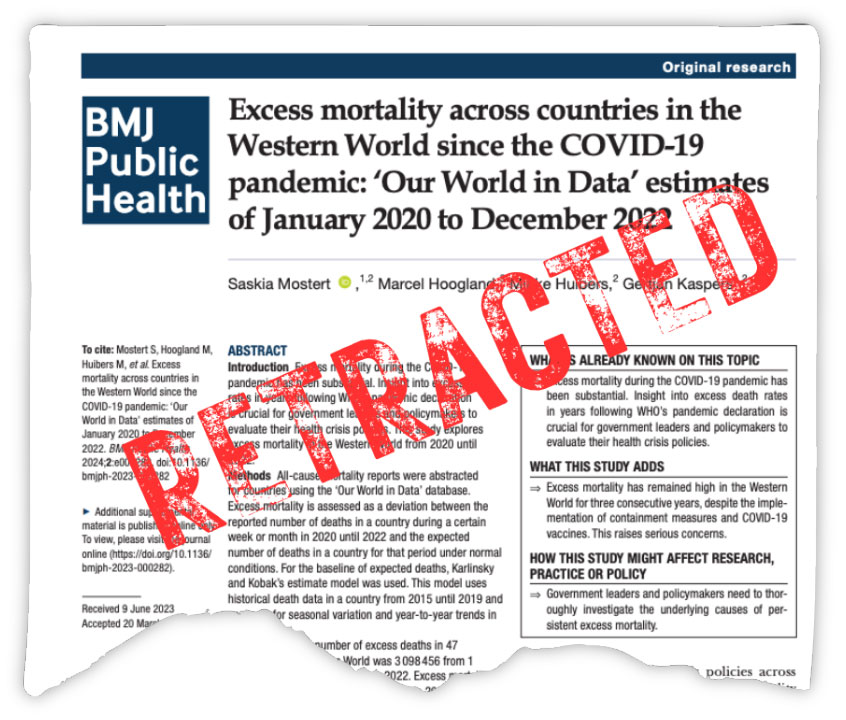
BMJ Group retracts paper on COVID-19 vaccines and mortality featured in Senate hearing

What to Know About New Covid Vaccines for Fall 2026
Underlying Conditions and the Higher Risk for Severe COVID-19

Airport air sampling captures COVID, influenza viruses
Retracted coronavirus (COVID-19) papers
NCBI - WWW Error Blocked Diagnostic
SAGE Search
COVID antihistamine protocol
outbreak.info SARS-CoV-2 data explorer
