

Three notes: (1) this is not *just* marketing. These guys really do mean it. They are convinced they’ve built a vengeful digital god. (2) but also they’re a cult. They are not impartial scientific experts. (3) and one of the byproduct of their endless confidence is marketing hype.

Alejandra Caraballo
The alarms are all flashing red.
Sep 9, 2026 at 3:19 AM
The scent of Musk: Power, charisma and paranoia in Silicon Valley
(Working Paper) Good Faith Design: Religion as a Resource for Technologists
Previous work has found a lack of research in HCI on religion, partly driven by misunderstandings of values and practices between religious and technical communities. To bridge this divide in an empirically rigorous way, we conducted an interview study with 48 religious people and/or experts from 11 faiths, and we document how religious people experience, understand, and imagine technologies. We show that religious stakeholders find non-neutral secular embeddings in technologies and the firms and people that design them, and how these manifest in unintended harms for religious and nonreligious users. Our findings reveal how users navigate technoreligious practices with religiously informed mental models and what they desire from technologies. Informed by this, we distill six design values -- wonder, humility, space, embodiedness, community, and eternity -- to guide technologists in considering and leveraging religion as an additional, valid sociocultural resource when designing for a holistic user. We further spell out directions for future research.

Your Favorite Science YouTubers Are Wrong About AI, (e.g. SciShow, Kurzgesagt, and Kyle Hill )
Controversial ‘Stop Hiring Humans’ billboard campaign takes to the skies over SF
(KRON) — Anyone glancing upward while walking around San Francisco in the past few days might have noticed a now-familiar three-word marketing tagline circling overhead. On several days this …

The Problem With Promoting ‘Gold Standard Science’
Opinion | Branding scientific research with a simplified label risks misleading the public and harming scientific literacy.
Search, Discovery, Pills, and Portals
Solving the distribution crisis in marketing

The Media Can't Stop Propping Up Elon Musk's Phony Supergenius Engineer Mythology
"CEO said a thing!" journalism is now utterly pervasive, and includes parroting billionaire and CEO claims with a total disregard for whether or not anything being said is actually true.

Meet the AI OnlyFans: How one startup raised millions to build an ‘erotic companions’ platform | Kai Nicol-Schwarz
Meet the AI OnlyFans: How one startup raised millions to build an ‘erotic companions’ platform --- When AI erotic companion startup Oh raised a $4.5m funding round in January, it had something few in the shadowy new sector could boast. A roster of named investors, publicly backing the company. VCs are often bound by “vice clauses”, which prohibit firms from investing in controversial products like pornography or weapons. As a result, startups working on ethically contentious products often rely on angel investors and family offices to stay afloat. But Oh, which generates NSFW adult content and conversations with both fictional characters as well as bots based on real people, has tapped into a group of seemingly less squeamish investors: crypto VCs. It’s drawn backing from the likes of Tangent, Kosmos Ventures, Big Brain Holdings, Bodhi Ventures and Tagus Capital. “Raising money for a business like this from non-crypto VCs is very difficult,” says Oh founder and CEO Nic Young, who positions the startup as a “decentralised platform” and offers payments via crypto. “A lot of crypto VCs don’t have vice clauses — it’s more liberal and free.” Oh wants to use those fresh funds to build the “AI OnlyFans”, with plans to roll out autonomous scantily clad bots that can market themselves on social media and direct message users with spicy conversation starters. The biggest challenge? Convincing enough users it’s not that weird turning to AI when you’re looking for romance. https://lnkd.in/eRF7a5Dn

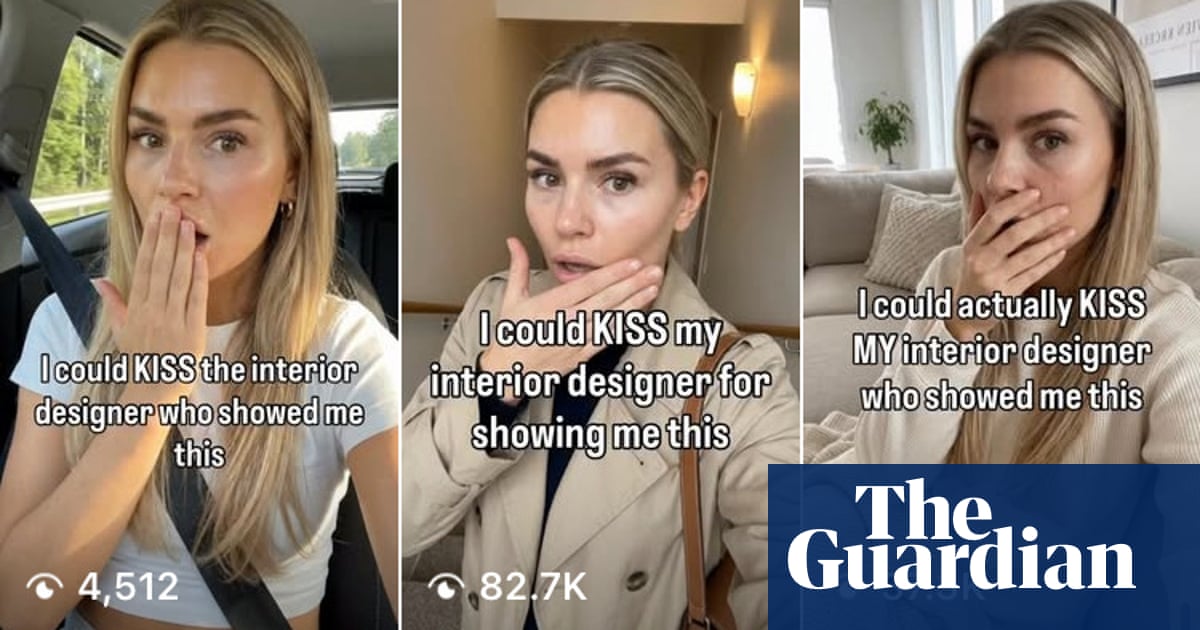
Brands using AI-generated influencers to promote products on social media
Investigation finds AI content that purports to show genuine customers, prompting calls for greater transparency
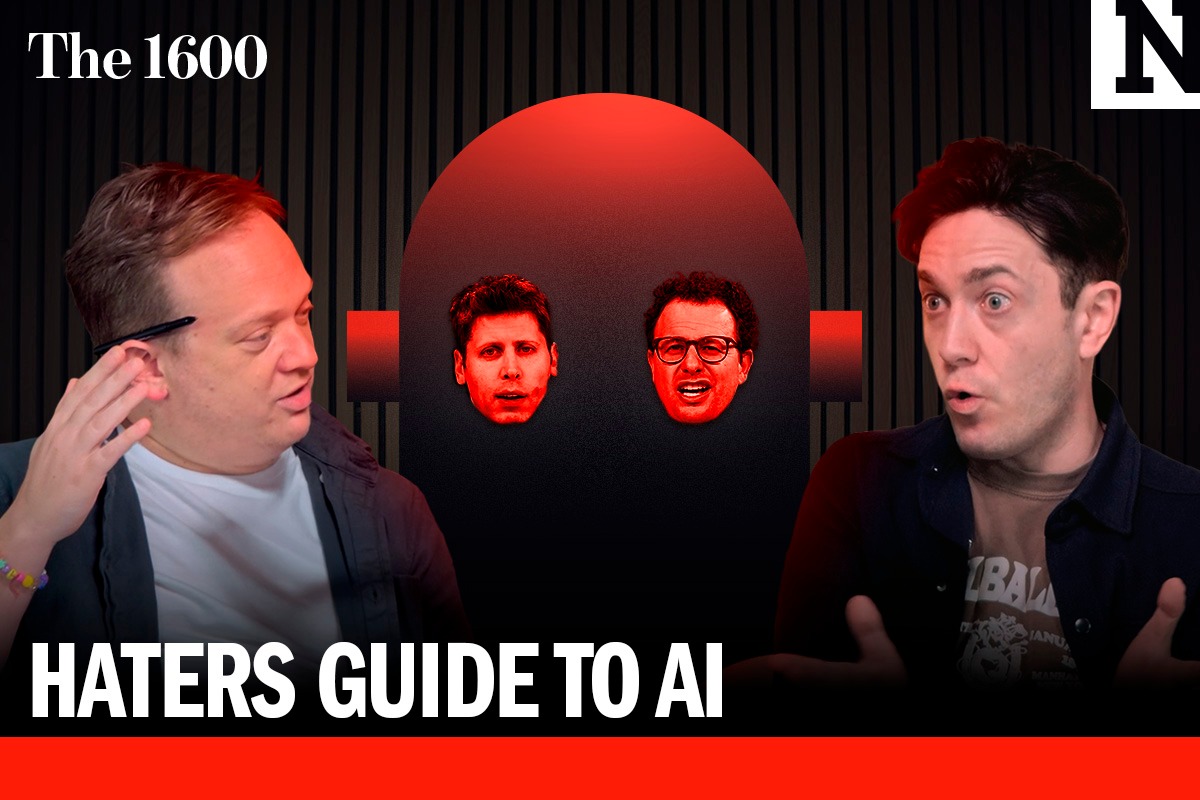
AI skeptic Ed Zitron says Industry is scamming us into poverty
Ed Zitron joins The 1600 to bust the myths and fairy tales coming from our AI overlords.
There Are Actually Just Three Ways To Grow
Most brands obsess over distribution when the real growth comes from moves marketers can’t make alone

The Risks of Industry Influence in Tech Research
Emerging information technologies like social media, search engines, and AI can have a broad impact on public health, political institutions, social dynamics, and the natural world. It is critical to develop a scientific understanding of these impacts to inform evidence-based technology policy that minimizes harm and maximizes benefits. Unlike most other global-scale scientific challenges, however, the data necessary for scientific progress are generated and controlled by the same industry that might be subject to evidence-based regulation. Moreover, technology companies historically have been, and continue to be, a major source of funding for this field. These asymmetries in information and funding raise significant concerns about the potential for undue industry influence on the scientific record. In this Perspective, we explore how technology companies can influence our scientific understanding of their products. We argue that science faces unique challenges in the context of technology research that will require strengthening existing safeguards and constructing wholly new ones.
Once you understand that this is a model of science written by non-scientists who hate universities but love venture capital and redirecting money to political allies, everything makes a lot more sense. nytimes.com/2026/07/22/us/politics/trump-…

Trump’s Plan for Science: More Money for A.I., Less for Universities
www.nytimes.comI do wish it was better understood by now—especially by folks in the media—that these "warnings" from large AI corporations in fact function as "advertisements" axios.com/2025/04/22/ai-anthropic-virtu…

Exclusive: Anthropic warns fully AI employees are a year away
www.axios.comI do wish it was better understood by now—especially by folks in the media—that these "warnings" from large AI corporations in fact function as "advertisements" axios.com/2025/04/22/ai-anthropic-virtu…
Exclusive: Anthropic warns fully AI employees are a year away
www.axios.com

