

I forget the exact phrase/who said it, but yesterday, early during @atproto.nyc someone mentioned how much AT Proto work is focused on readers. Made me think of the excellent "In Defense of Readers" alistapart.com/article/indefenseofreaders/ by @aworkinglibrary.com

In Defense of Readers
alistapart.comAug 23, 2026 at 2:26 PM
The revolt of the reader | The Observation Deck
Reading is important to me. While I’m not a quick reader nor an especially voracious one, I have found that long-form reading has had a profound influence on me over my life. And because reading is important to me, writing is too: writing not only allows us to convey our ideas, but the very act forces us to test and distill them — at once making our ideas more robust while providing the vehicle by which to share them.
“CEO said a thing!”
A blistering guide to what lazy journalism too often looks like


Creative Reading: Scaffolding Reading for Transformation
Reading augmentation systems increasingly help readers process text at scale. While these tools address real constraints of time and cognitive load, they often implicitly frame reading as information transmission, or "reading to discard," delegating interpretation and effort to the machine. Yet this delegation changes the outcome of reading. For example, in scholarly reading, deciding what a research text implies and why it matters is central to the work of scholarly production. We propose creative reading as an alternative goal: reading augmentation that supports readers in creating both readings and themselves as readers. By putting literary and narrative theories into conversation with scholarly sensemaking and creativity support, we present a provocation-oriented design space for valuing the process of reading as a way of preserving a plurality of readings and transforming readers over time.

Creative Reading: Scaffolding Reading for Transformation
Reading augmentation systems increasingly help readers process text at scale. While these tools address real constraints of time and cognitive load, they often implicitly frame reading as information transmission, or "reading to discard," delegating interpretation and effort to the machine. Yet this delegation changes the outcome of reading. For example, in scholarly reading, deciding what a research text implies and why it matters is central to the work of scholarly production. We propose creative reading as an alternative goal: reading augmentation that supports readers in creating both readings and themselves as readers. By putting literary and narrative theories into conversation with scholarly sensemaking and creativity support, we present a provocation-oriented design space for valuing the process of reading as a way of preserving a plurality of readings and transforming readers over time.
Reading in the Age of Constant Distraction by Mairead Small Staid
February 8, 2019 – Twenty-five years ago, Sven Birkerts published “The Gutenberg Elegies: The Fate of Reading in an Electronic Age.” Have his fears and projections come to pass?

The Secret Power of ‘Read It Later’ Apps
The Secret Power of ‘Read It Later’ Apps By Tiago Forte of Forte Labs At the end of 2014 I received an email informing me that I had read over a million words in the ‘read it later’ app …

Creative Reading: Scaffolding Reading for Transformation
However, recent work on augmenting reading largely focuses on making reading more efficient, especially in knowledge-intensive contexts where people must rapidly make sense of research papers and other complex documents (Lo et al., 2024). These systems often aim to help readers skim, summarize, and synthesize large volumes of information in order to reduce cognitive effort and accelerate document- and corpus-level sensemaking at scale (Gu et al., 2025; Lo et al., 2024; Fok et al., 2023). At one extreme, the form of reading implicitly envisioned by these systems may resemble what we call “reading to discard”: extracting the essential, actionable informational core of a document as quickly and efficiently as possible, so that the rest can be swiftly tossed aside—much like we often process inbound mail. This motivates us to ask what scaffolding approaches might resist “reading to discard,” what alternative forms of reading we might scaffold, and what alternative views and values of reading might guide the conversation.
atproto made simple: publishing lexicons - underreacted
Thomas G. Dietterich on Twitter / X
We are seeing a new trend in submissions to @arxiv (and presumably to conferences and journals): Authors submitting papers whose contents they likely do not understand. 1/— Thomas G. Dietterich (@tdietterich) September 13, 2026
The Published Voice: Whose Voice Are We Really Reading? - The Scholarly Kitchen
What happens then to “author voice,” which has always been an important consideration to authors and reviewers alike, if AI is helping researchers with their writing?

"One of the important skills of the professional scientists... is to know what to read and what not to read. This is narrow community knowledge built up through extended face-to-face socialisation in expert groups."

Large language models eroding science understanding: an empirical study of ‘malignment’ - AI and Ethics
link.springer.comI wrote something about atproto from the perspective of having lived through the early days of the internet. timtrautmann.com/blog/the-nerds-are-building-a…

The nerds are building a new internet, and I could feel it in the room
timtrautmann.comFinally had some time (to attempt) to catch up on reading the articles published on Offprint. Wanted to share a few that were fun reads First article is by @bunniesin.space. They’re exploring the world of atproto and reading their thoughts and confusion on @mu.social’s lex extension was a good read

Some thoughts on extending lexicons
amybunny.offprint.app1/ Scholarly publishing spent thirty years arguing about access. It has barely started arguing about what readers do with the paper once they have it. That second argument is turning into a field, forming around how science gets read and judged. Here is the map as I see it: aris.pub/blog/scholarly-interface-desi…
A budding discipline around how science gets read and judged - Aris
aris.pubatproto-reads

blogs and writing about atproto (maybe also open social generally)

The Bluesky ecosystem has the juice (ATProto for normies) - Nate Spilman

nothin' but blue skies from now on
What It Means for Universities to Run Their Own PDS: The Potential of DID as Academic Infrastructure - Nightflight
From Attention to Intention - The Open Garden
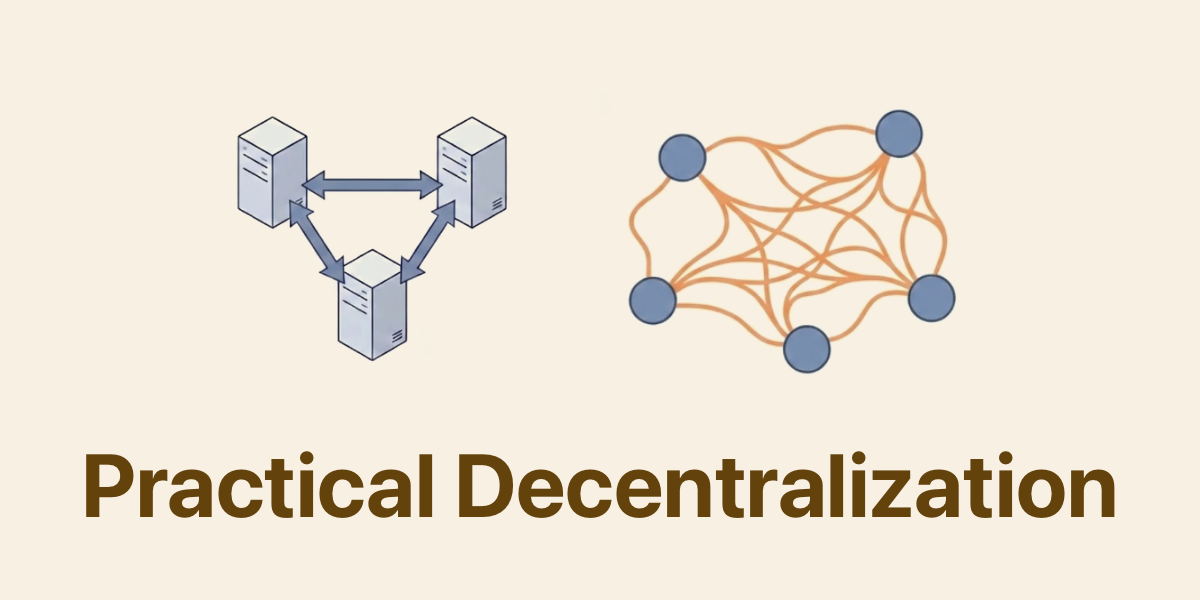
Practical Decentralization


