

Election denialists are now in the "improbable results" & "suspicious statistics" stage — mischaracterizing data/results from the midterms to allege election fraud. This conversation has been growing over the last few days. After initially accepting results, Trump is engaging in denialism today.
Nov 8, 2026 at 1:07 AM
Anticipating Election Misinformation in the 2026 Midterms
Election misinformation often follows the same pattern every cycle. Here are some of the false and misleading claims that voters are likely to see.

Dialogues on Democracy: Belief-Tailored AI Conversations Reduce Inaccurate Election Denial Beliefs
Elections, while central to democratic functioning, have become increasingly threatened by beliefs about election fraud. Artificial intelligence (AI) provides a novel opportunity to address such false beliefs through dynamic conversation and debunking. Through two experiments (N = 1,802 Republicans from Lucid who endorsed election fraud claims), we examined the use of AI to fact-check 2020 election conspiracies prior to the 2024 US Presidential election. We tested the effects of two treatments (an information-tailored and values-tailored AI dialogue) in which AI fact-checked their claims and tailored arguments to the specific election conspiracy that the participant themselves articulated. Both treatment conditions, when compared to a control dialogue and a simple statement that the conspiracy was incorrect, reduced confidence in their election conspiracy claims. There was no significant difference between information-tailored and values-tailored feedback. Promisingly, participants with the strongest baseline denialism experienced the largest decreases in denialism beliefs. These studies highlight the potential of AI-driven interventions to address election misinformation.

FiftyPlusOne just caught a pollster faking data — and they copped to it
In response to a request for comment on a FiftyPlusOne investigation, Wedgewood Polls admitted their data was bogus
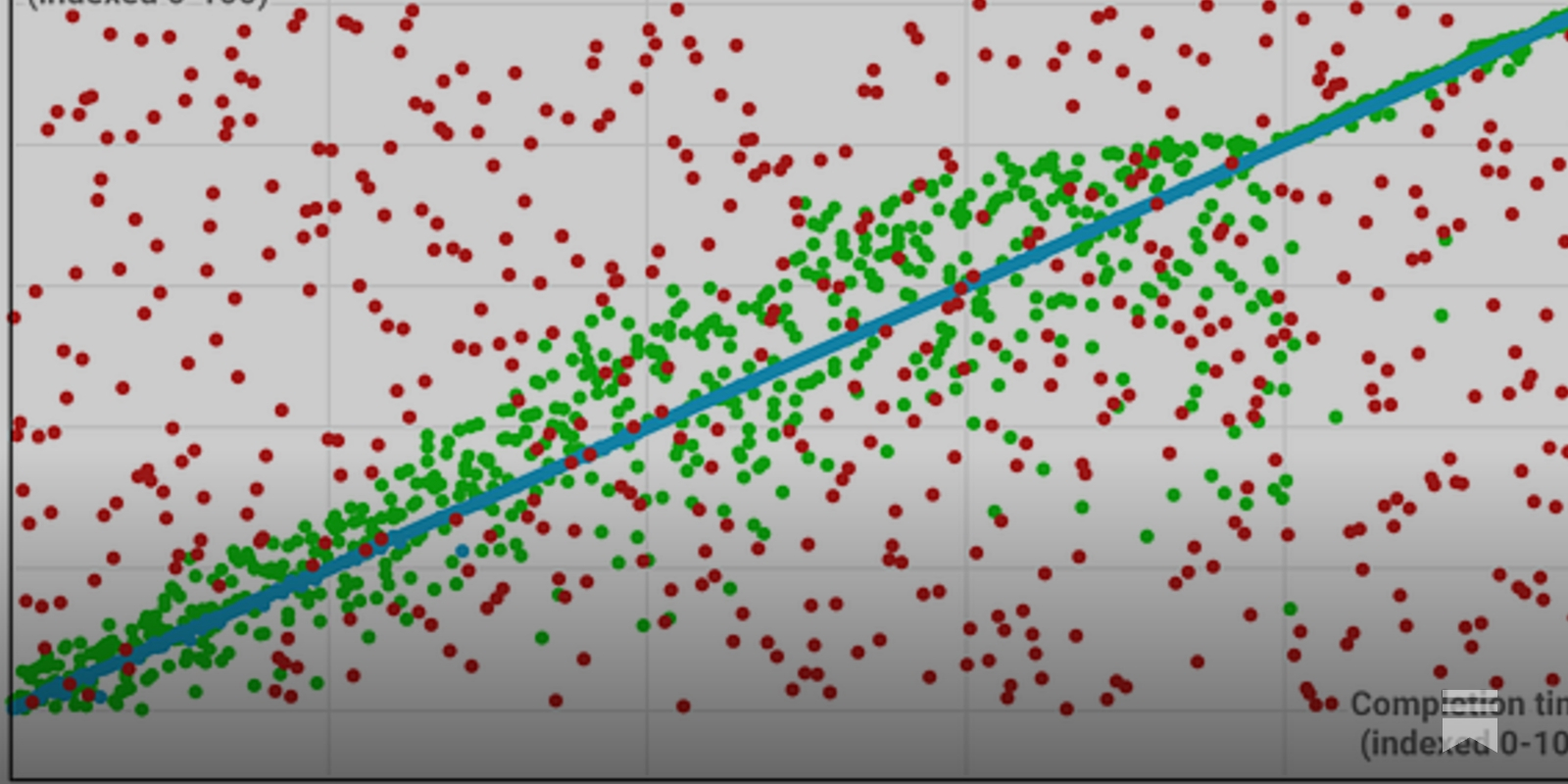
Believing misinformation is a “win” for some people, even when proven false
Winning" means prioritizing independence from outside influence over being right.

Colombia's Petro accuses Israeli cyberfirm BlackCore of election interference
Outgoing president rejects election results, claiming half a million automated bots were deployed to manipulate voters ahead of Abelardo de la Espriella’s razor-thin victory | Anadolu

The Liar’s Dividend: Can Politicians Claim Misinformation to Evade Accountability?
This study addresses the phenomenon of misinformation about misinformation, or politicians "crying wolf"' over fake news. Strategic and false claims that stories are fake news or deepfakes may benefit politicians by helping them maintain support after a scandal. We posit that this benefit, known as the "liar's dividend," may be achieved through two politician strategies: by invoking informational uncertainty or by encouraging oppositional rallying of core supporters. We administer five survey experiments to over 15,000 American adults detailing hypothetical politician responses to stories describing real politician scandals. We find that claims of misinformation representing both strategies raise politician support across partisan subgroups. These strategies are effective against text-based reports of scandals, but are largely ineffective against video evidence and do not reduce general trust in media. Finally, these false claims produce greater dividends for politicians than alternative responses to scandal, such as remaining silent or apologizing.
Security and disinformation in the U.S. 2016 election
We have been conducting a thorough investigation related to the U.S. election across our products. Today, we are sharing results from that investigation.

Facts and Myths about Misperceptions
Misperceptions threaten to warp mass opinion and public policy on controversial issues in politics, science, and health. What explains the prevalence and persistence of these false and unsupported beliefs, which seem to be genuinely held by many people? Though limits on cognitive resources and attention play an important role, many of the most destructive misperceptions arise in domains where individuals have weak incentives to hold accurate beliefs and strong directional motivations to endorse beliefs that are consistent with a group identity such as partisanship. These tendencies are often exploited by elites who frequently create and amplify misperceptions to influence elections and public policy. Though evidence is lacking for claims of a “post-truth” era, changes in the speed with which false information travels and the extent to which it can find receptive audiences require new approaches to counter misinformation. Reducing the propagation and influence of false claims will require further efforts to inoculate people in advance of exposure (for example, media literacy), debunk false claims that are already salient or widespread (for example, fact-checking), reduce the prevalence of low-quality information (for example, changing social media algorithms), and discourage elites from promoting false information (for example, strengthening reputational sanctions).

Debunking: A Meta-Analysis of the Psychological Efficacy of Messages Countering Misinformation
This meta-analysis investigated the factors underlying effective messages to counter attitudes and beliefs based on misinformation. Because misinformation can lead to poor decisions about consequential matters and is persistent and difficult to correct, debunking it is an important scientific and public-policy goal. This meta-analysis ( k = 52, N = 6,878) revealed large effects for presenting misinformation ( ds = 2.41–3.08), debunking ( ds = 1.14–1.33), and the persistence of misinformation in the face of debunking ( ds = 0.75–1.06). Persistence was stronger and the debunking effect was weaker when audiences generated reasons in support of the initial misinformation. A detailed debunking message correlated positively with the debunking effect. Surprisingly, however, a detailed debunking message also correlated positively with the misinformation-persistence effect.

How Trump’s obsession with ‘rigged’ voting machines spread across US government
The effort to prove the 2020 election "stolen" failed. Diehards remain undeterred.

Election Rumor Rundown for October 13: Emerging rumors around voting machines and ‘ballot dumping’
DHS reports misconstrue vulnerabilities as having been exploited, “Ballot Dumping” in Valley Center misleadingly suggest mass voter fraud, and prediction markets already advertising election bettin…

The Plot to Subvert an Election: Unraveling the Russia Story So Far (Published 2018)
For two years, Americans have tried to absorb the details of the 2016 attack: spies, leaked emails, social media fraud — and President Trump’s claims that it’s all a hoax. The Times explores what we know and what it means.

Many voters saw midterm election as a rebuke of Trump, NBC News Exit Poll shows
The president’s approval rating is dismal among voters, who have big concerns about the economy, according to polling results.

Rated not helpful
New CCDH research shows that X's Community Notes are failing to counter misleading claims about the US election, despite Musk calling it the "best source of truth on the internet.”

Russian disinformation campaign sets sights on US midterms
A Russian disinformation operation has turned its attention to the US midterm elections, unleashing a series of deepfake videos that depict celebrities attacking Democrats, researchers said, with more…

Election rumor update: Since election results started to come in Tues night, we first saw a drop in election integrity rumors. Wed-Fri, a dedicated group of conspiracy theorists worked to flesh out explanations for how the election was rigged. Sat, Pres. Trump amplified some of those claims.
