

tempted to try and write out a spec-like thing for a generic account system for DIDs. one spec that defines handles as human friendly aliases and an account server that acts as a generic abstraction over DID doc ops as well as an AS for OAuth to other services, probably using RAR instead tho
Apr 17, 2026 at 10:59 PM
Decentralized Identifiers (DIDs) v1.0
Decentralized identifiers (DIDs) are a new type of identifier that enables verifiable, decentralized digital identity. A DID refers to any subject (e.g., a person, organization, thing, data model, abstract entity, etc.) as determined by the controller of the DID. In contrast to typical, federated identifiers, DIDs have been designed so that they may be decoupled from centralized registries, identity providers, and certificate authorities. Specifically, while other parties might be used to help enable the discovery of information related to a DID, the design enables the controller of a DID to prove control over it without requiring permission from any other party. DIDs are URIs that associate a DID subject with a DID document allowing trustable interactions associated with that subject.
Account delegation for atproto: orgs, aliases, alts and more - Nel Ramblings
Creating a did:web atproto account using goat | bryan newbold
This is a hastily-written guide to creating a did:web atproto account. You'll need: familiarity with command line tools a domain name and web server you control, for the did:web a handle domain name you control (can be the same as the did:web domain) an invite code to an atproto PDS the goat t...

Creating a did:web atproto account using goat | bryan newbold
This is a hastily-written guide to creating a did:web atproto account. You'll need: familiarity with command line tools a domain name and web server you control, for the did:web a handle domain name you control (can be the same as the did:web domain) an invite code to an atproto PDS the goat t...
did:web Method Specification
DIDs that target a distributed ledger face significant practical challenges in bootstrapping enough meaningful trusted data around identities to incentivize mass adoption. We propose a new DID method using a web domain's existing reputation.
The Reference PDS Gets an Account Management Page - AT Protocol
Announcing the addition of an account management interface to the reference PDS
Bluesky handles (Verified accounts)
A catalog of Bluesky handles grouped by generic or country TLDs

Proposal: OAuth-based account creation · bluesky-social atproto · Discussion #4587
We recently added to the reference PDS (and underlying OAuth Provider) implementation support for Initiating User Registration via OpenID Connect 1.0, however, what I wasn't aware of when I add...
did:dns Method Specification
Many early DID methods were based on distributed ledgers or other decentralized infrastructure, and some of those still remain popular. However, the DID community has also seen a lot of innovation and has come up with new types of DID methods. One of them is did:web, which is based on traditional DNS and web server infrastructure. The DID method presented here is did:dns, which follows a similar idea but offers several improvements over did:web.
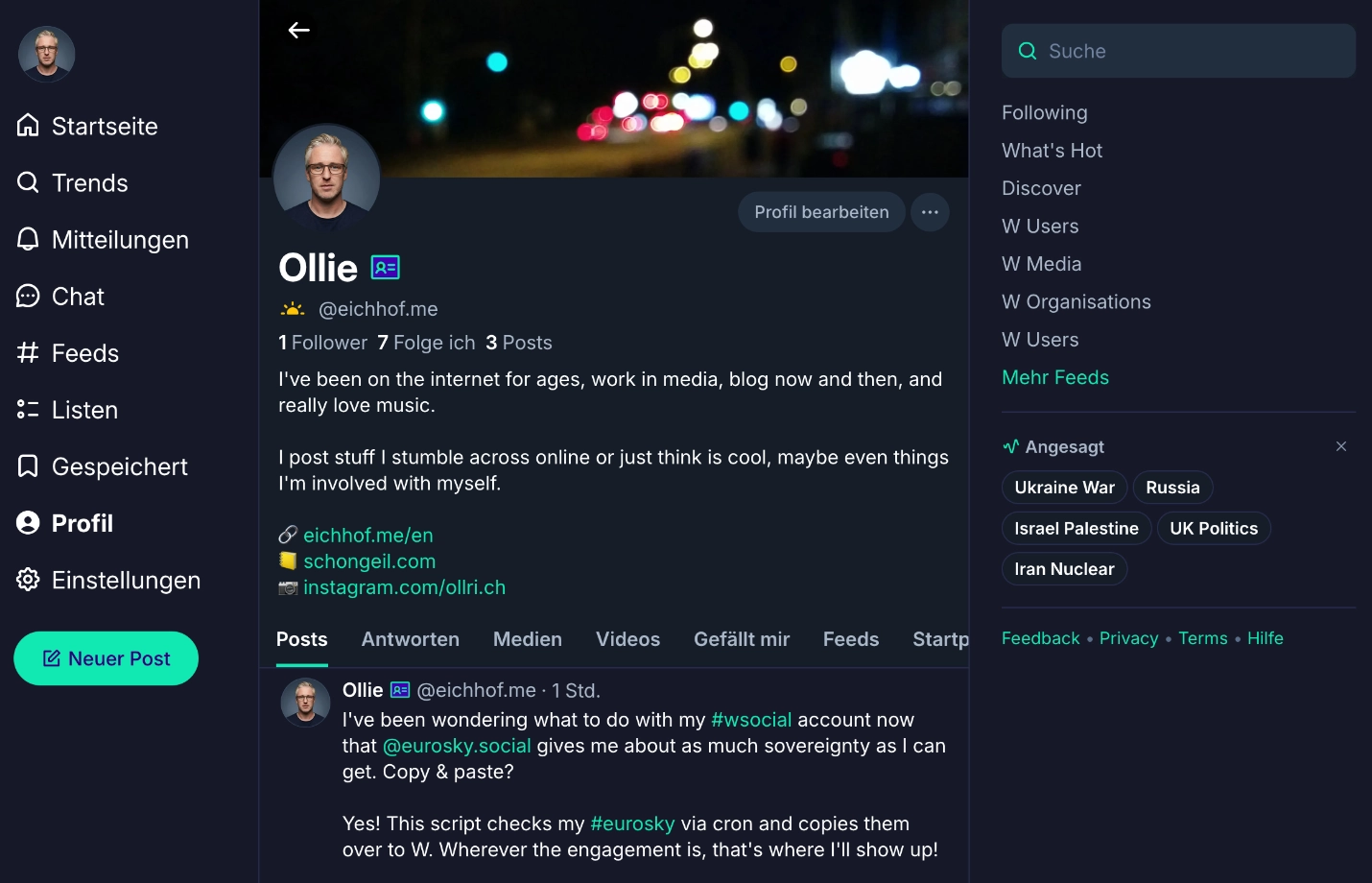
Use your own domain as a W social handle
W social removes the handle feature from its web frontend. Using the AT Proto API, you can still set your own domain as a handle. A guide in four steps.
Exploring Identities in the AT Protocol via Bluesky
The AT Protocol is an open, decentralized network for building social applications. Bluesky, a relatively new social network, is built on top of the AT Protocol. It recently piqued my interest as I came across this fascinating research paper Bluesky and the AT Protocol: Usable Decentralized Social Media. In this post, we’ll dive into one of the key elements of the AT Protocol: identities. We will start with Bluesky user handles, explore additional information about them, and see what else we can discover. DID Resolution A handle in Bluesky is associated with a DID, which can be resolved using DNS or HTTPS. decentralized identifier (DID) A globally unique persistent identifier that does not require a centralized registration authority and is often generated and/or registered cryptographically. […] Many—but not all—DID methods make use of distributed ledger technology (DLT) or some other form of decentralized network. From Decentralized Identifiers (DIDs) v1.0 The DID for @jay.bsky.team can be resolved via a DNS record. Example with dig: > dig _atproto.jay.bsky.team TXT [...] _atproto.jay.bsky.team. 14400 IN TXT "did=did:plc:oky5czdrnfjpqslsw2a5iclo" If you don’t have dig installed, try an online tool like nslookup.io. If no DNS TXT entry exists, the handle may resolve to a DID through a well-known HTTPS endpoint. Let’s take the example of @jamesgunn.bsky.social: > curl https://jamesgunn.bsky.social/.well-known/atproto-did did:plc:lotavzt36yanhfy3j3gpysyj If you don’t have curl installed, you can just open the link in your browser https://jamesgunn.bsky.social/.well-known/atproto-did. PLC Once you have a DID, examine the part after the first colon. This is known as the method. The above two examples use plc, which stands for Public Ledger of Credentials. These PLC DIDs can be looked up in the PLC directory at plc.directory. The AT Protocol also supports the web method, though we focus on plc here. We can use curl again to get more information about a DID. Let’s take @jay.bsky.team’s DID as example. > curl https://plc.directory/did:plc:oky5czdrnfjpqslsw2a5iclo/log | jq [ { "sig": "KuN3A61golVNSDU71wZKLP9lVuXk6YekJAz1lwDzrPsNTEWHBBW_8zSyV6pDxV4KiYXuAXlS1Ik47XkjQZ94mA", "prev": null, "type": "create", "handle": "jay.bsky.social", "service": "https://bsky.social", "signingKey": "did:key:zQ3shP5TBe1sQfSttXty15FAEHV1DZgcxRZNxvEWnPfLFwLxJ", "recoveryKey": "did:key:zQ3shhCGUqDKjStzuDxPkTxN6ujddP4RkEKJJouJGRRkaLGbg" }, { "sig": "TY3ot8yFF-0LL8ceoRwSGaNQj0F1aj-IApYXRGT21G1fnznKHUHT1QE7c1aTrYd9PQLVvXUGag6CZ9EEeIKqgA", "prev": "bafyreidswhiwi4ljkl4es4vwqhkas3spmmktortqbp6lkrb5v7qqdfr3mm", "type": "plc_operation", "services": { "atproto_pds": { "type": "AtprotoPersonalDataServer", "endpoint": "https://bsky.social" } }, "alsoKnownAs": [ "at://jay.bsky.social" ], "rotationKeys": [ "did:key:zQ3shhCGUqDKjStzuDxPkTxN6ujddP4RkEKJJouJGRRkaLGbg", "did:key:zQ3shpKnbdPx3g3CmPf5cRVTPe1HtSwVn5ish3wSnDPQCbLJK" ], "verificationMethods": { "atproto": "did:key:zQ3shXjHeiBuRCKmM36cuYnm7YEMzhGnCmCyW92sRJ9pribSF" } }, { "sig": "WmQmobHA6abtu8xIkBSrDkkoMNjOxP1Tl_1zl1DbIZlA9kjOyxjX-J1rzwWVy3stdzMowpBeBnedkAug84n_RQ", "prev": "bafyreicgb25yf5fro22oyhtkbgerzr4nume4sx757r525skxdzpeoeseha", "type": "plc_operation", "services": { "atproto_pds": { "type": "AtprotoPersonalDataServer", "endpoint": "https://bsky.social" } }, "alsoKnownAs": [ "at://jay.bsky.team" ], "rotationKeys": [ "did:key:zQ3shhCGUqDKjStzuDxPkTxN6ujddP4RkEKJJouJGRRkaLGbg", "did:key:zQ3shpKnbdPx3g3CmPf5cRVTPe1HtSwVn5ish3wSnDPQCbLJK" ], "verificationMethods": { "atproto": "did:key:zQ3shXjHeiBuRCKmM36cuYnm7YEMzhGnCmCyW92sRJ9pribSF" } }, { "sig": "dhstt4uPua8OVs8TVzHTqtCnNMsBDN7kjxIBmTIYBDRkknrtprBJ_AISXFoBZyqfoxq2altp-vlRAPEKSh5zeg", "prev": "bafyreihmf7dapx27fexc7jwj4cdpbxcmhnnwo3x5vrpvbr6lclzj7gpsmi", "type": "plc_operation", "services": { "atproto_pds": { "type": "AtprotoPersonalDataServer", "endpoint": "https://morel.us-east.host.bsky.network" } }, "alsoKnownAs": [ "at://jay.bsky.team" ], "rotationKeys": [ "did:key:zQ3shhCGUqDKjStzuDxPkTxN6ujddP4RkEKJJouJGRRkaLGbg", "did:key:zQ3shpKnbdPx3g3CmPf5cRVTPe1HtSwVn5ish3wSnDPQCbLJK" ], "verificationMethods": { "atproto": "did:key:zQ3shtJpFGgEG3tv3ERKvjo7VHbjDPVyvjYvW7gpie49rtNtc" } } ] Again, feel free to click on it instead, https://plc.directory/did:plc:oky5czdrnfjpqslsw2a5iclo/log. This returns a list of all operations that were performed on this DID. The first entry is the genesis operation — the one that created the DID. It is the only one where prev (previous entry) is null, because it is the first one. Note that the first entry of this DID’s log has a different format. This entry uses the legacy format. Currently, newly created DIDs use the new format (subsequent records), but @jay.bsky.team has been around for a while (the account belongs to Bluesky’s CEO). If you look through the logs you will notice a couple of changes that were made to her identity over time: the handle was changed from jay.bsky.social to jay.bsky.team (note that the legacy format used handle whereas the new format uses alsoKnownAs) the handle now includes at:// the personal data server changed from https://bsky.social to https://morel.us-east.host.bsky.network Signatures Each entry in the log includes a sig field, which contains the signature. This cryptographic signature is derived from the other fields in the entry. For the genesis operation, the rotationKeys (or signingKey for legacy) field contains the public key(s) of the key pair(s) with which the entry was signed. Subsequent operations need to be signed with the key from the previous entry. Additionally, the prev field references the previous entry. Creating a DID The identifier in the DID, which is the last part of the colon-separated string, is constructed from the genesis operation. For @jay.bsky.team: the identifier is oky5czdrnfjpqslsw2a5iclo the genesis operation is this JSON document: { "sig": "KuN3A61golVNSDU71wZKLP9lVuXk6YekJAz1lwDzrPsNTEWHBBW_8zSyV6pDxV4KiYXuAXlS1Ik47XkjQZ94mA", "prev": null, "type": "create", "handle": "jay.bsky.social", "service": "https://bsky.social", "signingKey": "did:key:zQ3shP5TBe1sQfSttXty15FAEHV1DZgcxRZNxvEWnPfLFwLxJ", "recoveryKey": "did:key:zQ3shhCGUqDKjStzuDxPkTxN6ujddP4RkEKJJouJGRRkaLGbg" } Steps: encode the genesis operation in DAG-CBOR (this is a concise binary format and looks a bit like JSON) create a SHA256 hash of the encoded document encode the hash with base 32 and make its letters lowercase. take the first 24 characters add did:plc: as a prefix to create the 32-character DID Verification Based on what we’ve learned so far we can verify a handle from Bluesky. For example, if we want to check @jay.bsky.team: resolve DID via DNS: did:plc:oky5czdrnfjpqslsw2a5iclo look up DID in PLC directory the handle in the alsoKnownAs (or handle for legacy) field must match jay.bsky.team verify all operations using the public keys and signatures reconstruct the DID from the genesis operation and ensure it is the same as the one we found in the DNS TXT record Can we trust the PLC directory though? Say a malicious actor has taken over control and modified all entries in the log. The hacker even constructed the entries in the log so that all the signatures appear valid. How would we still know the PLC directory is compromised? Remember that the DID can be reconstructed from the genesis operation. If that were modified, we’d end up with a different DID from the one we found in the DNS TXT record. Summary This blog explores the AT Protocol, the decentralized foundation of social applications like Bluesky, with a focus on user identities and their technical underpinnings. It explains how Bluesky user handles are associated with Decentralized Identifiers (DIDs), which can be resolved using DNS records or HTTPS endpoints. Detailed examples demonstrate how tools like dig and curl retrieve DID data, revealing the method (plc) and structure used to catalog them in the Public Ledger of Credentials (PLC). The post also examines the DID lifecycle, showcasing how historical operations and changes—such as updates to handles or servers—are logged and accessible for transparency. There are several aspects that we did not investigate, such as: the web method for DIDs tombstone operations in the log recovery how exactly to construct the prev entry in the DID document what the other fields in the DID document mean If you are curious, the links in the next section will help you answer these questions. Links & Further Reading Bluesky Application AT Protocol AT Protocol Identity AT Protocol DID AT Protocol Handle Decentralized Identifiers (DIDs) v1.0 did:plc Method Specification Specification: DAG-CBOR
did-method-plc/did-method-plc
Public Ledger of Credentials: a cryptographic, strongly-consistent, and recoverable DID method
wrote a quick guide to creating a did:web atproto PDS account using goat. this isn't something I recommend for folks in most cases (did:plc is great!), but I think it is important on principle, and we should test and document it better.

Creating a did:web atproto account using goat | bryan newbold
whtwnd.comShower thought idea: What about expanding the role of the PDS for account management? E.g. when signing up on atproto with any app/service for the first time, redirect to the already existing account interface (`/account/`) already present on reference PDS, making this flow mandatory to support.
what would the technical implications be if things that already have universal IDs like ISBNs were added as a type of DID? e.g. at://did:isbn:9780316229302

bryan newbold
mirroring existing catalog records (books, films, venues, etc) in to atproto records is tempting, but (IMHO) an anti-pattern. instead of copying that data in and referencing with an AT-URI, you should reference them by existing identifiers (ISBN, OSM identifier, etc). appviews sync the catalog.
this is kinda another reason im starting to think more and more that there would be worth in splitting atprotos identity layer out as its own spec and standard. building up handles and oauth around a DID makes for a really flexible cross platform (and potentially cross ecosystem) identity system

Nelind
i kinda hate how atproto adopting DIDs has made people intrinsically associate DIDs with atproto ... it makes some people see me as some annoying bitch trying to shove atproto into places it obviously doesnt belong in when i suggest using DIDs as user identifiers for other systems

