

Act or Clarify? Modeling Sensitivity to Uncertainty and Cost in Communication
When deciding how to act under uncertainty, agents may choose to act to reduce uncertainty or they may act despite that uncertainty. In communicative settings, an important way of reducing uncertainty is by asking clarification questions (CQs). We predict that the decision to ask a CQ depends on both contextual uncertainty and the cost of alternative actions, and that these factors interact: uncertainty should matter most when acting incorrectly is costly. We formalize this interaction in a computational model based on expected regret: how much an agent stands to lose by acting now rather than with full information. We test these predictions in two experiments, one examining purely linguistic responses to questions and another extending to choices between clarification and non-linguistic action. Taken together, our results suggest a rational tradeoff: humans tend to seek clarification proportional to the risk of substantial loss when acting under uncertainty.

The Realization Effect: Risk-Taking after Realized versus Paper Losses
Understanding how prior outcomes affect risk attitudes is critical for the study of choice under uncertainty. A large literature documents the significant influence of prior losses on risk attitudes. The findings appear contradictory: some studies find greater risk-taking after a loss, whereas others show the opposite—that people take on less risk. I reconcile these seemingly inconsistent findings by distinguishing between realized versus paper losses. Using new and existing data, I replicate prior findings and demonstrate that following a realized loss, individuals avoid risk; if the same loss is not realized, a paper loss, individuals take on greater risk.
Perfect Guidance 🧭 on Twitter / X
Be confident. Believe. You will succeed.— Perfect Guidance 🧭 (@PerfectGuide_) October 11, 2026
Perfect Guidance 🧭 on Twitter / X
Be confident. Believe. You will succeed.— Perfect Guidance 🧭 (@PerfectGuide_) October 11, 2026
Looking for the Light Today
My friend Stephanie wrote a beautiful blog post today entitled, “Looking for the Light Today”. She points out the many things we can be grateful for today in light of a devastating Presidential election result. We are not upset because she lost, but rather because he won. He stands firmly against so many of my friends and family that I cannot rightly shrug this off.
Walt McDonald: "Advice I Wish I'd Been Told"
Over the years, I've heard good advice from others; I wish they had told me sooner. Probably they did, but I didn't listen. What I'm about to say is what I constantly urge myself to do. I offer these comments to save us time, to help us strip off some ankle weights of language. The difference between second place and first place in the high jump, between the silver and the gold, is only about an inch. Ah, but "How glorious that inch / And that split-second longer in the air before the fall" (Robert Francis, "Excellence").
Find Your People
Thank you to Bucknell University for inviting me to be this year's commencement speaker. And congratulations to the Class of 2025! Watch the speech on YouTube. Thirty-two...

How to say you’re sorry
“We apologize for any inconvenience this may have caused” is absolutely not the way. There’s never really a great way to say you’re sorry, but there are plenty of terrible ways. One of the worst wa…

Results of the 2022 Victorian state election (Legislative Council)
This is a list of results in the Legislative Council for the 2022 Victorian state election.

Ukraine’s Second Miracle Year
The war isn’t won, but for the first time in years, outright victory seems possible.
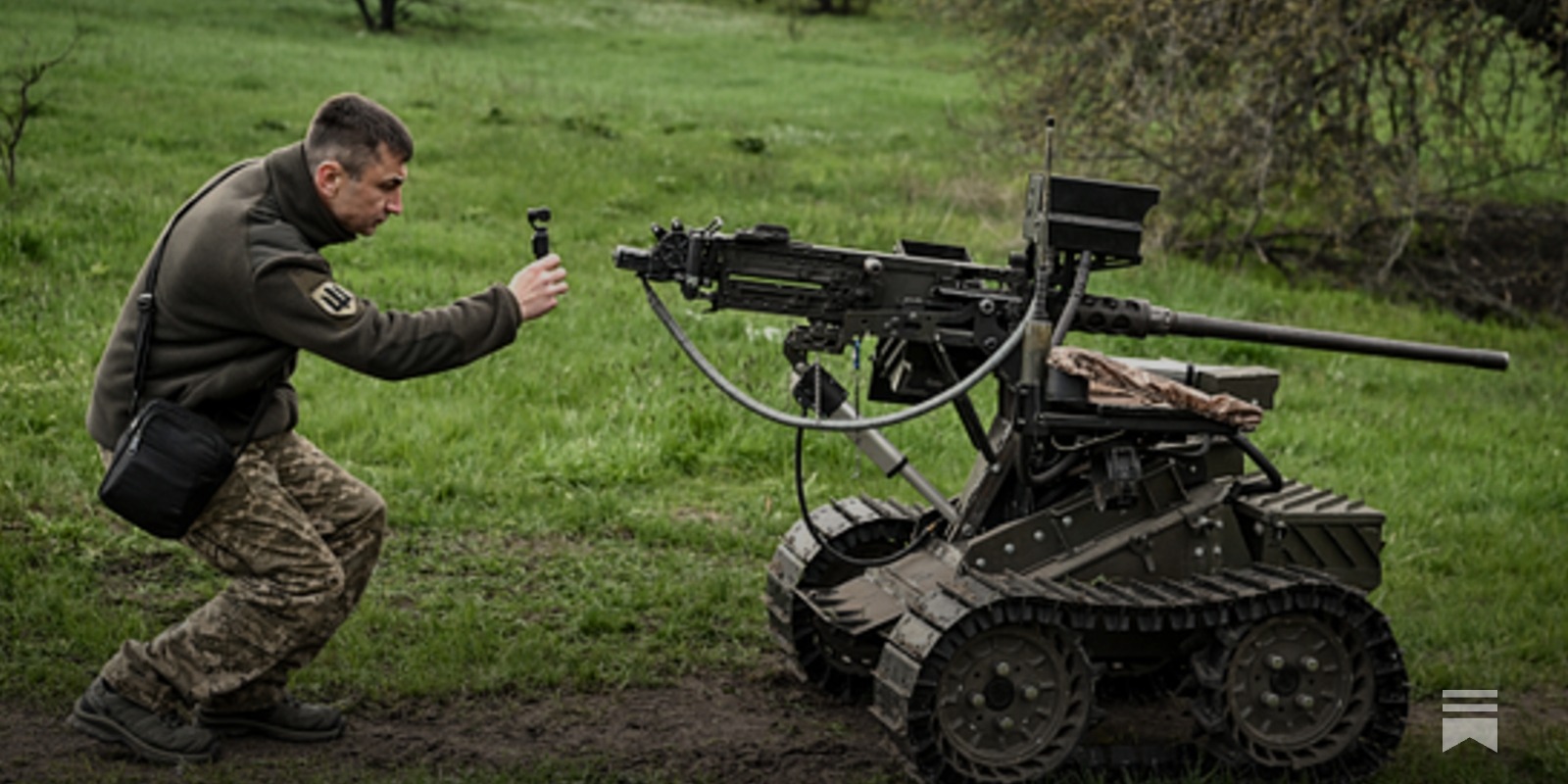
It's Mourning in America
I'm not really sure what to say. But phew, I sure as hell won't turn to ChatGPT to compensate, because my god, I'm grieving – "election grief is real" – and some advanced text predictor that promises to compensate for my "loss for words" is not going to do

We are all going to regret Kalshi and Polymarket.
Gambling should be like cigarettes: Legal but inaccessible.

Predicting outcomes for games of skill by redefining what it means to win
The Elo rating system is a highly successful ranking algorithm for games of skill where, by construction, one team wins and the other loses. A primary limitation of the original Elo algorithm is its inability to predict information beyond a match's win-loss probability. Specifically, the victor is awarded the same point bounty if he beats a team by 1 point or 10 points; only the rating difference between the team and its opponent affects the match bounty. In this work, we explain that Elo ratings and predictions can be naturally extended to include margin-of-victory information by simply redefining "what it means to win." We create ratings for each value of the margin-of-victory and use these ratings to predict the full distribution of point spread outcomes for matches which have not yet been played.
The Score: How to Stop Playing Somebody Else's Game
A philosophy of games to help us win back control over …

predictably i hate this


