What's verification on the open social web for? With @gui.do and @emily.space we put together a draft statement and roadmap for democratic account verification. For everyone, without IDs. The draft is here, please contribute and comment. Open until 31 May tangled.org/sherif.eurosky.social/atmosph…
May 19, 2026 at 3:51 PM
sherif.eurosky.social/atmosphere-verification
A project for democratic, ID-free verification for everyone on the AT Protocol
What to Know About the E.U.’s New Age Verification App for Social Media
The E.U.’s new age verification app aims to address concerns raised by tech platforms around privacy and enforcement.

Open Social Web ID - Erlend’s notes
Approaching a shared method of single sign-on for the entire open social web.
Briefing_Building a New Social Web-20260218.pdf
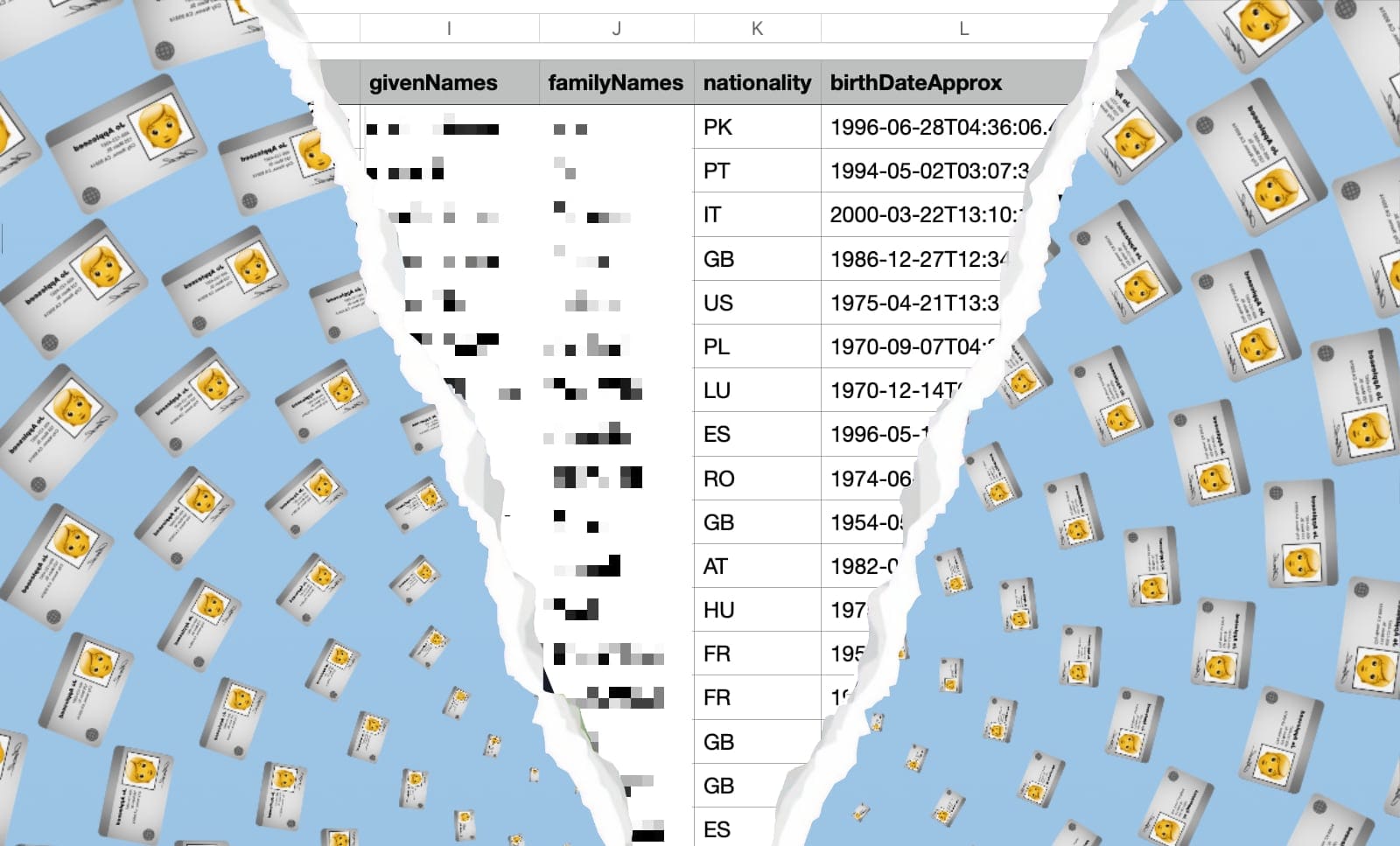
Hackers Had A Live Feed Of Every ID This Verification Company Scanned. For Over A Year.
From the very beginning of this recent obsession with identifying everyone online (yes, they like to call it “age” verification, but it always ends up as identity verification), we̵…

FediForum | Growing the Open Social Web un-workshop, 2026/03/02

Name Checker - Social Media Username Checker
Check the availability of your desired Brand Name through our social media username checker (name checker). Claim your online identity across Social Media!
Constructing and enforcing "authentic" identity online: Facebook, real names, and non-normative identities
Despite the participatory and democratic promises of Web 2.0, many marginalized individuals with fluid or non-normative identities continue to struggle to represent themselves online. Facebook users, in particular, are told to use “authentic identities,” an idea reinforced throughout the site’s documentation, “real name” and other policies, and in public statements by company representatives. Facebook’s conception of authenticity and real names, however, has created problems for certain users, as demonstrated by the systematic deactivation of many accounts belonging to transgender and gender variant users, drag queens, Native Americans, abuse survivors, and others. In view of the struggles of marginalized users, Facebook policy appears paradoxical: the site simultaneously demands authenticity yet proscribes certain people from authentic self-presentation. In this work, we examine Facebook’s construction of “authenticity” and show how it excludes multifaceted, fluid, or non-normative identities. Using content analysis and close reading, we analyze site documentation and data from The Zuckerberg Files (an online archive of Facebook founder and CEO Mark Zuckerberg’s public remarks) to understand the platform’s mechanisms for enforcing authenticity. We find that Facebook positions itself as a type of administrative identity registrar, raising vital questions regarding the ethics and consequences of identity enforcement online today.
Constructing and enforcing "authentic" identity online: Facebook, real names, and non-normative identities
Despite the participatory and democratic promises of Web 2.0, many marginalized individuals with fluid or non-normative identities continue to struggle to represent themselves online. Facebook users, in particular, are told to use “authentic identities,” an idea reinforced throughout the site’s documentation, “real name” and other policies, and in public statements by company representatives. Facebook’s conception of authenticity and real names, however, has created problems for certain users, as demonstrated by the systematic deactivation of many accounts belonging to transgender and gender variant users, drag queens, Native Americans, abuse survivors, and others. In view of the struggles of marginalized users, Facebook policy appears paradoxical: the site simultaneously demands authenticity yet proscribes certain people from authentic self-presentation. In this work, we examine Facebook’s construction of “authenticity” and show how it excludes multifaceted, fluid, or non-normative identities. Using content analysis and close reading, we analyze site documentation and data from The Zuckerberg Files (an online archive of Facebook founder and CEO Mark Zuckerberg’s public remarks) to understand the platform’s mechanisms for enforcing authenticity. We find that Facebook positions itself as a type of administrative identity registrar, raising vital questions regarding the ethics and consequences of identity enforcement online today.
Hack of Age Verification Company Shows Privacy Danger of Social Media
We’ve said it before: online age verification is incompatible with privacy. Companies responsible for storing or processing sensitive documents like drivers’ licenses are likely to encounter data
Framing to Grow the Open Social Web and Serve Democratic Freedoms – Position Paper / Richard Reisman
Framing to Grow the Open Social Web and Serve Democratic Freedoms – Position Paper Richard Reisman (Discussion Draft 2/13/26) For FediForum Un-Workshop March 2, 2026 Growing the usage and functionality of the social web to meet the needs of humanity requires a broadened framing of the task and ...
We’re pleased to announce that we’ll be working with @eurosky.social to help to define and develop open social web infrastructure for the AT Protocol! igalia.com/2026/03/18/Advancing-the-AT-P…
Advancing the AT Protocol in Partnership with Eurosky | Igalia
www.igalia.com@mackinac.social, built by @whiteside.io, is an open social web client that's thinking multi-protocol and bridging-first! John's added a *ton* of unique features we've never seen before, so we wanted to outline a few of them in a thread 👇🏼 1/🧵
✅ @jcsalterego.bsky.social has been verified by @bsky.app.
On verification and coordination authority - Connected Places
EU Digital Identity Wallet Home - EU Digital Identity Wallet -
Online Age Verification Legislature (by Bee 🐝) — Semble
EU Digital Wallet

Bluesky Made Me Prove I Was An Adult—Here’s How I Did It

Keytrace - You be you, everywhere.