

My Journey to the Center of America’s Political Spam Text Hell
I’ve gotten nearly 2,000 campaign fundraising texts that were meant for someone else. I tried to find out why—and uncovered a labyrinth of politicians, data brokers, and shady tactics.

How to break populist parties’ appeal? An experimental evaluation of communication counter-strategies
Right-wing populist parties have become a major challenge to liberal democracies worldwide. How can mainstream parties effectively counter their appeal? While prior research has focused on the drivers of populist support, much less is known about how to counter right-wing populist rhetoric. We test four communication counter-strategies that target core elements of right-wing populist appeals: (i) undermining populists’ claims to democratic credibility, (ii) promoting inclusive in-group identity to counter exclusionary narratives, (iii) highlighting their performance legitimacy, and (iv) emphasizing the procedural legitimacy of mainstream parties. Drawing on real-world party communications from social media, manifestos, and press releases, we created 170 experimental treatments (posters and social media posts varying in format and complexity) to simulate how voters encounter political messages in everyday life. In a large-scale survey experiment with over 24,000 respondents in Germany, messages undermining right-wing populists’ democratic credibility prove most effective, particularly among citizens with high initial support for such parties.
Deep Storytelling: Collective Sensemaking and Layers of Meaning in U.S. Elections
Misinformation and disinformation about elections remain pressing concerns for researchers, policymakers, and the public. Critics, however, argue that fears surrounding these issues are exaggerated due to a lack of evidence of impact. This debate highlights the challenges inherent in assessing the impacts of misinformation, as the drivers of false and misleading content often exist in the context of a specific claim. To address this issue, we examined false and misleading information surrounding the 2020 and 2022 U.S. national elections, focusing on the contextual features of online conversations that fueled various rumors. We developed two qualitative codebooks, creating the second after realizing that the first, which labeled individual tweets, failed to capture broader rumoring dynamics. By integrating multi-layered qualitative coding with thematic analysis and quantitative visualizations, we show how influencers, political elites, and audiences collaboratively told deep stories from 2020 through 2022. As these stories were told, audiences interpreted events in 2022 through the lens of the 2020 story, guided by influencers' cues, leading to an evolution in storytelling style between the two election cycles. This ongoing performance was tailored to align with the incentive structures, affordances, and attention economy of social media. We combine deep stories with theories of collective sensemaking and rumoring, creating a framework to better assess the contextual features surrounding false and misleading information.

Election Disinformation in Different Languages is a Big Problem in the U.S.
And it’s driving a wedge between voters in non-English communities Mis- and disinformation about elections predate the endless scroll of modern social media services. [1] Yet easy access to online information channels and amplification tools enable false narratives to spread at a massive scale. When false narratives are combined with data voids and unique cultural […]
Persuasion and resistance: A survey experiment on messaging for and against One Nation | School of Politics & International Relations
Since the May 2025 federal election, One Nation's primary vote has risen sharply across published polling. If an election were held today, it would likely be the second-largest bloc in the House of Representatives. What drives this surge — and what, if anything, suppresses it — remains contested, with explanations ranging from economic grievance and cultural backlash to anti-establishment disaffection. While these accounts have been tested experimentally for radical-right parties abroad, they remain largely untested in Australia.
Sharing without clicking on news in social media
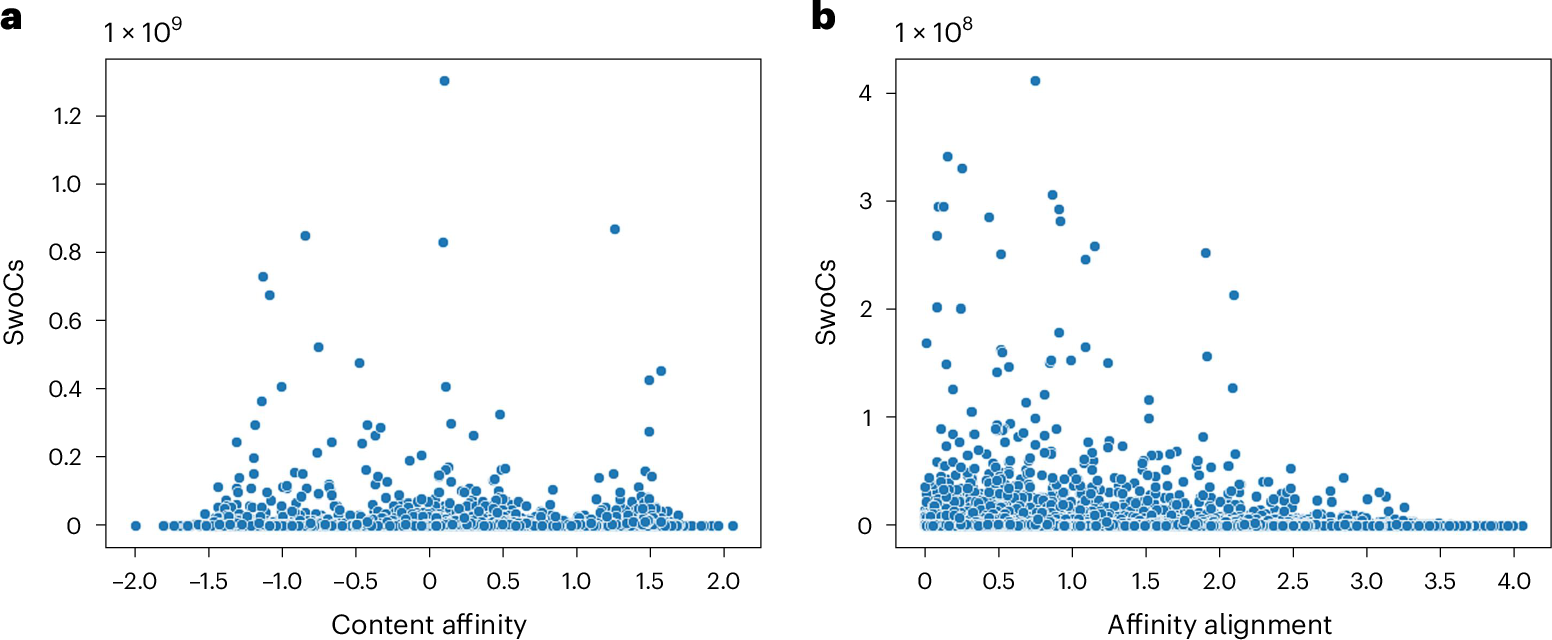
Social media have enabled laypersons to disseminate, at scale, links to news and public affairs information. Many individuals share such links without first reading the linked information. Here we analysed over 35 million public Facebook posts with uniform resource locators shared between 2017 and 2020, and discovered that such ‘shares without clicks’ (SwoCs) constitute around 75% of forwarded links. Extreme and user-aligned political content received more SwoCs, with partisans engaging in it more than politically neutral users. In addition, analyses with 2,969 false uniform resource locators revealed higher shares and, hence, SwoCs by conservatives (76.94%) than liberals (14.25%), probably because, in our dataset, the vast majority (76–82%) of them originated from conservative news domains. Findings suggest that the virality of political content on social media (including misinformation) is driven by superficial processing of headlines and blurbs rather than systematic processing of core content, which has design implications for promoting deliberate discourse in the online public sphere.
Political disinformation concentrates in repeated claims across media
The prevalence and dynamics of disinformation remain contentious, partly because measures have relied on posts containing URLs from untrustworthy sources. We move beyond this by detecting disinformation in text and across posts. Using retrieval-augmented generation, we match six million Facebook, Instagram, and X posts by politicians from the United States, United Kingdom, and Germany, and two million articles from news outlets to fact-checked claims. We show that disinformation is concentrated in a small number of combinations of policy issues and parties and that just over hundred distinct claims account for around half of all disinformation across the three countries. They often appear first on a single platform, later on multiple, and subsequently in news coverage before being fact-checked. These findings suggest that disinformation is concentrated in a narrow segment of political communication, potentially creating repeated exposure that may shape the terms of public debate through both social and news media.
The Narratives We Need – PIRC
We spoke to over 200 campaigners and reviewed 10 years of research on framing. Here are the five key lessons we learned...

Was It Something The Democrats Said?
A Response to Third Way’s Political Language Memo
Metaphor and the Political War
Metaphor and the Political War
Data Feminism for AI
Attacks on women and trans people are not happening in a vacuum. Communications scholars W. Lance Bennett and Marianne Kneuer recently argued that we are witnessing the intensification of "illiberal public spheres" around the world (Bennett and Kneuer, 2023). These are characterized by a set of anti-democratic communications tactics that include the denigration and exclusion of minoritized people, targeted attacks on the press and political institutions, and transgression of norms of civil discourse. Such tactics are enabled and amplified by the social media platforms owned by Big Tech, whose business model elevates attention above all other metrics, such that they profit richly off extremism, threats, spectacle, and lies. The success of this corporate partnership with right-wing extremism is evident in the proliferation of book bans (Magnusson, 2024), the demonization of DEI and critical race theory (Crenshaw, 2022), and mob tactics to doxx, intimidate, misrepresent, and otherwise silence people that study misinformation, speak out against racial and gender violence, or rule against insurrectionists (Edmonds, 2024). At the same time, we have seen the continued work of feminists, including Latin American, Indigenous, and abolitionist feminists in the US and globally, doing the work of imagining alternate worlds (Cullors, 2021; Davis, 2022; Ricaurte, 2019; Simpson, 2017). This paper represents our own first attempt to imagine a more equitable, sustainable, feminist world for AI research.
Improving social media for democratic discourse
Social media have expanded opportunities for communication and political participation, but today's dominant platforms are optimized primarily for engagement and advertising revenue, contributing...

The Liar’s Dividend: Can Politicians Claim Misinformation to Evade Accountability?
This study addresses the phenomenon of misinformation about misinformation, or politicians "crying wolf"' over fake news. Strategic and false claims that stories are fake news or deepfakes may benefit politicians by helping them maintain support after a scandal. We posit that this benefit, known as the "liar's dividend," may be achieved through two politician strategies: by invoking informational uncertainty or by encouraging oppositional rallying of core supporters. We administer five survey experiments to over 15,000 American adults detailing hypothetical politician responses to stories describing real politician scandals. We find that claims of misinformation representing both strategies raise politician support across partisan subgroups. These strategies are effective against text-based reports of scandals, but are largely ineffective against video evidence and do not reduce general trust in media. Finally, these false claims produce greater dividends for politicians than alternative responses to scandal, such as remaining silent or apologizing.
NEW: Some Dems are adopting anti-trans rhetoric in their campaigns While Republicans learn they can’t rely on it to win like they did in 2024 Inside how each party is navigating trans issues in 2026 — in ways they never have before w/ @alexroarty.bsky.social washingtonsun.com/campaigns/republican-transgen…

Republicans' Trans Attack Ads Aren’t Hitting the Same Way This Year
www.washingtonsun.com

