

I'm thinking about what *generatives* are most applicable in the atmosphere — per Kevin Kelly, "better than free" qualities that can't be copied even on the internet: edge.org/conversation/kevin_kelly-bett… Things like contextualization, personalization, sensemaking…ideas? Need to write about this more!
Apr 21, 2026 at 9:44 PM
On atmospheric generatives… - Scraps!
How can we build moats on an open network? How can we make money when all the data's free? Here, I sketch some ideas for new generatives — contextualization, fluidity, aggregation, and relationality — for value creation in the atmosphere.
Generative artificial intelligence: The Times and Sunday Times editorial guidelines
As we explore the potential of generative artificial intelligence our commitment is to uphold our high editorial standards.
In spite of hype, many companies are moving cautiously when it comes to generative AI | TechCrunch
Companies are extremely interested in generative AI as vendors push potential benefits, but turning that desire from a proof of concept into a working product is proving much more challenging.

Ideation with Generative AI—in Consumer Research and Beyond
Abstract The use of generative AI (genAI) in consumer research is rapidly evolving, with applications including synthetic data generation, data analysis, and more. However, their role in creative ideation—a cornerstone of consumer research—remains underexplored. Drawing on the human creativity literature, we propose that ideation with genAI is facilitated by its productivity and semantic breadth, which are psychologically analogous to the dual pathways of persistence and flexibility in human ideation. Further, we distinguish between the utility of genAI as a key ideator versus humans as key ideator, conceptualized through the genAI ideation roles of Designer and Writer and of Interviewer and Actor. While genAI excels in generating incremental improvements, its potential for groundbreaking innovation could be unlocked by leveraging its ability to prompt human creativity. This article advances the theoretical and practical understanding of genAI in ideation for consumer research, offering numerous practical guidelines for integrating generative AI into research while emphasizing human–AI collaboration to achieve radical insights.
Generative AI enhances individual creativity but reduces the collective diversity of novel content
Creativity is core to being human. Generative artificial intelligence (AI)—including powerful large language models (LLMs)—holds promise for humans to be more creative by offering new ideas, or less creative by anchoring on generative AI ideas. We study the causal impact of generative AI ideas on the production of short stories in an online experiment where some writers obtained story ideas from an LLM. We find that access to generative AI ideas causes stories to be evaluated as more creative, better written, and more enjoyable, especially among less creative writers. However, generative AI–enabled stories are more similar to each other than stories by humans alone. These results point to an increase in individual creativity at the risk of losing collective novelty. This dynamic resembles a social dilemma: With generative AI, writers are individually better off, but collectively a narrower scope of novel content is produced. Our results have implications for researchers, policy-makers, and practitioners interested in bolstering creativity. , Generative AI can enhance the creativity of short stories but may limit the variation in diverse outputs.
Generative AI in a Nutshell - how to survive and thrive in the age of AI
The potential of generative AI for personalized persuasion at scale
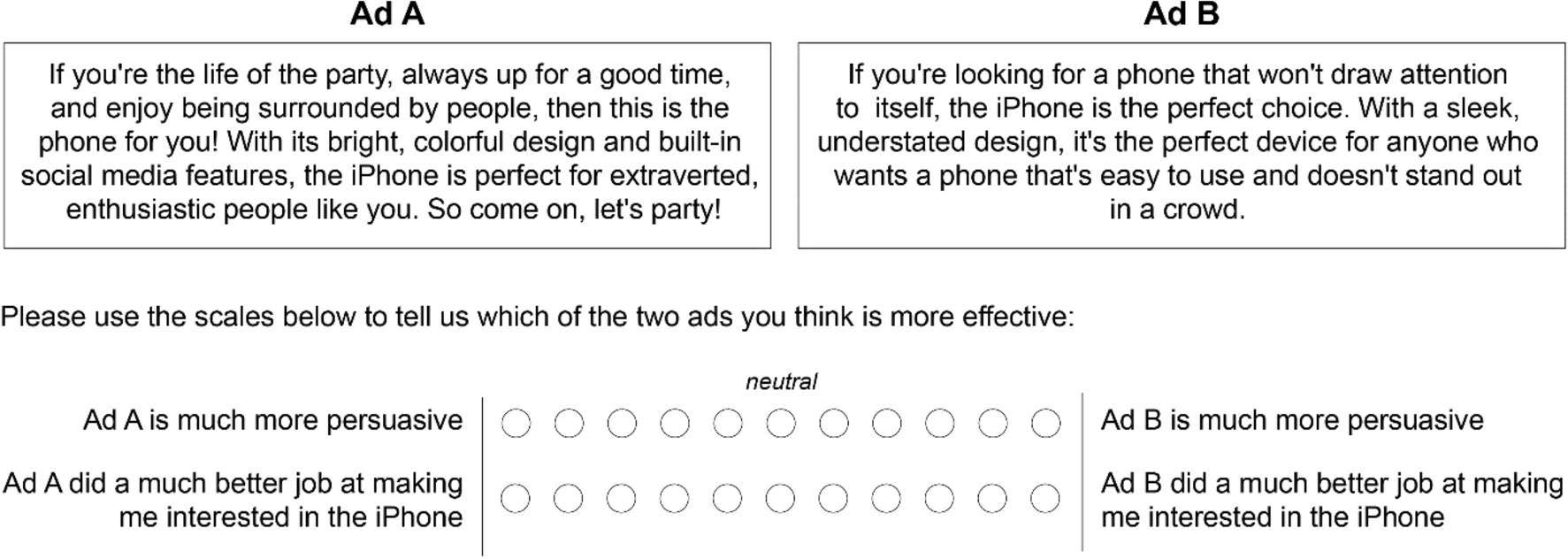
Matching the language or content of a message to the psychological profile of its recipient (known as “personalized persuasion”) is widely considered to be one of the most effective messaging strategies. We demonstrate that the rapid advances in large language models (LLMs), like ChatGPT, could accelerate this influence by making personalized persuasion scalable. Across four studies (consisting of seven sub-studies; total N = 1788), we show that personalized messages crafted by ChatGPT exhibit significantly more influence than non-personalized messages. This was true across different domains of persuasion (e.g., marketing of consumer products, political appeals for climate action), psychological profiles (e.g., personality traits, political ideology, moral foundations), and when only providing the LLM with a single, short prompt naming or describing the targeted psychological dimension. Thus, our findings are among the first to demonstrate the potential for LLMs to automate, and thereby scale, the use of personalized persuasion in ways that enhance its effectiveness and efficiency. We discuss the implications for researchers, practitioners, and the general public.
Principles for Using Generative A․I․ in The Times’s Newsroom | The New York Times Company
As we embark on experiments that make use of generative A.I in the newsroom and Opinion, these principles will guide our work and clarify why and how we plan to use the technology…

Generative UI: A rich, custom, visual interactive user experience for any prompt
Yaniv Leviathan, Google Fellow, Dani Valevski, Senior Staff Software Engineer, Vishnu Natchu, Principal Engineer, and Yossi Matias, Vice President & Head of Google Research

Generative AI for Pro-Democracy Platforms · From Novel Chemicals to Opera
Online discourse faces challenges in facilitating substantive and productive political conversations. Recent technologies have explored the potential of generative AI to promote civil discourse, encourage the development of mutual understanding in a discussion, produce . . .

How to build a generative engineering culture
A generative engineering culture is one where nothing seems to fall through the cracks, “we should” gets prioritized and becomes reality, and original ideas and value come primarily from engineers, rather than management. A culture like this is an engine for building capacity, quality, innovation, and sophistication.

Guest Post - The Perils of Using Generative AI to Perform Research Tasks: Editors’ and Publishers’ Viewpoints - The Scholarly Kitchen
Today's guest post offers a review of a panel of publishers and editors discussing the pros and cons of using Generative AI, along with ethical and policy implications.

Ars Technica's policy on generative AI
How Ars Technica uses, and doesn't use, generative AI.

Wrote up some thoughts on new *atmospheric generatives* Things that can generate value even in environments where everything can be copied, like: contextualization • fluidity • aggregation • relationality Riffing on a @kevinkelly.bsky.social piece from years ago; extending for the atmosphere!

On atmospheric generatives…
scraps.schlage.town