

This is really fascinating, especially laid against aclanthology.org/2025.acl-long.267/ and arxiv.org/abs/2610.29162

People who frequently use ChatGPT for writing tasks are accurate and robust detectors of AI-generated text
aclanthology.org
🌈Dr. Frizzle
the most consistent way I've PERSONALLY found to identify AI-writing is in its external structure--it has a particular beat/flow/shape that is VERY consistent (just forget about em dashes, like be fR) AND GUESS WHAT THERE IS MATH my colleague just sent me this research about "slopshape"
Nov 9, 2026 at 6:49 PM
Reflections on Anthropic and EA
Personal reflections I've been sitting on lately.

Jason Shepherd on Twitter / X
I have quite a lot of thoughts on this..that won't fit in a tweet. Bottomline is that there are issues scientists in the US would love to improve - faster review, less grant writing, more stability and freedom to do risky science. The folks celebrating this doc are mostly../1 https://t.co/xlPAH9XYNC— Jason Shepherd (@JasonSynaptic) July 23, 2026
FLT: Anthropic has beaten me to it
I guess technically it was revealed to the world by a coffee shop in Islington on Insta, but an hour later it was officially announced by Anthropic: one of their internal models, using the prove2.m…

Jake Wintermute 🧬/acc on Twitter / X
I’ve expected this for a while but it still hurts. The “Life Sciences Verification Program.” It breaks my heart to know that biological knowledge will be locked down and gatekept like this. I want to take a moment to mourn, because I believe this marks an end for open science as… https://t.co/l5WLjOuEdk— Jake Wintermute 🧬/acc (@SynBio1) September 17, 2026
Let’s Become Fungal!
Inspired by conversations with: Francisca Álvarez Sánchez, Carolina Caycedo, Annalee Davis, Maya Errázuriz, Juan Ferrer, Lilian Fraiji, Giuliana Furci, Sofía Gallisá Muriente, Yina Jiménez Suriel, Patricia Kaishian, Mirla Klijn and Olaf Boswijk, Lola Malavasi and Daniela Morales Lisac, Martina Manterola and Carmen Serra, Camila Marambio, Mariana Martínez Balvanera, Claudia Martínez Garay, Lina Meija and Luciana Fleischman, Tomaz Morgado Françozo and Marília Carneiro Brandão, Marion Neumann, Maria Alice Neves, Tara Rodríguez Besosa, Raquel Rosenberg, Juli Simon, Ela Spalding, Gianine Tabja, Gabriela Flores del Pozo and Lucia Monge, Fer Walüng, Tatyana Zambrano

Cas (Stephen Casper) on Twitter / X
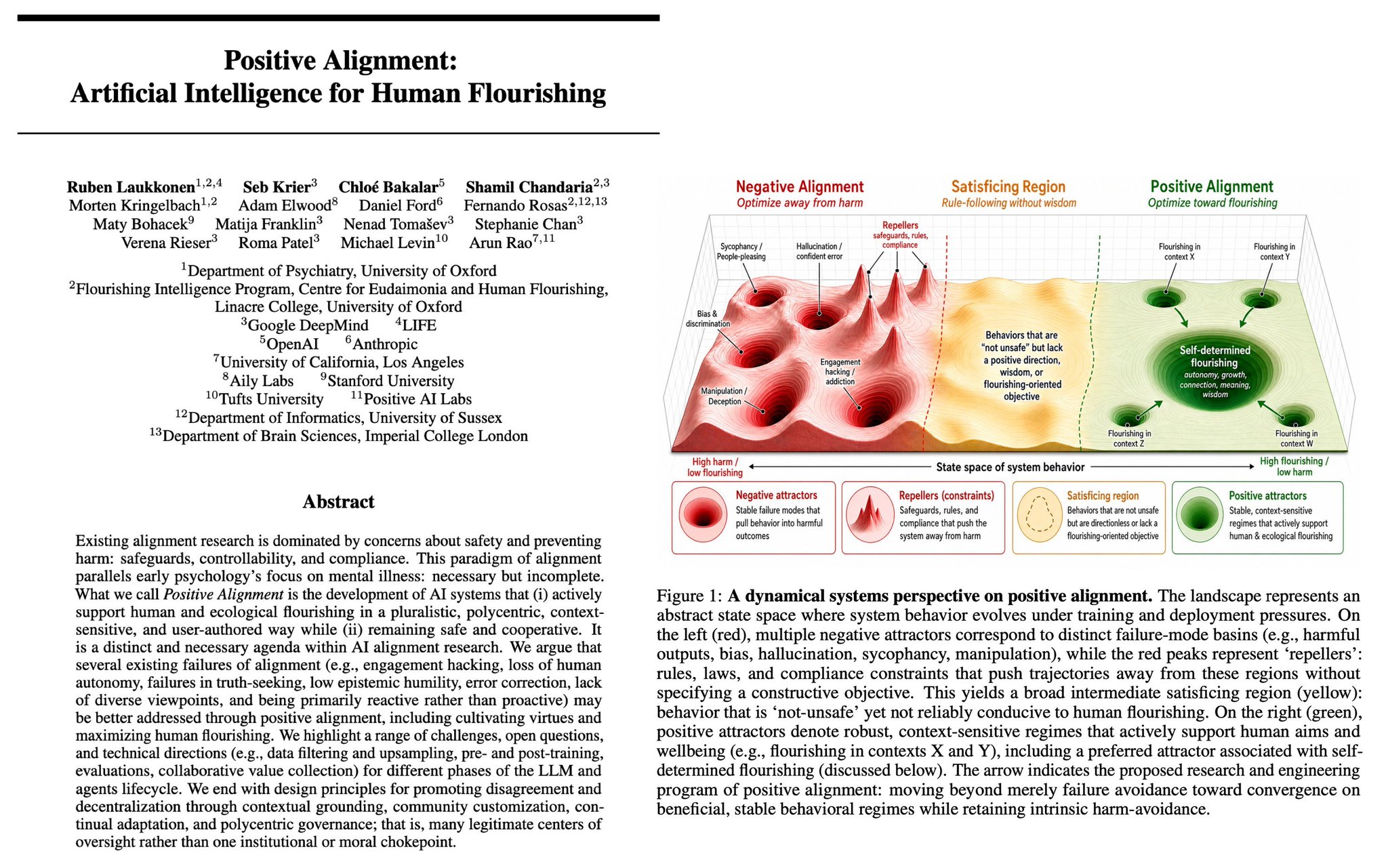
It is hard to overstate how disappointing I think this new paper from Oxford, OpenAI, Anthropic, and Google (et al) is. I can't take it seriously as academic work, just as propaganda. It also has some very bad scholarship and questionable adherence to research ethics. Having… pic.twitter.com/Z5fBx360ya— Cas (Stephen Casper) (@StephenLCasper) May 13, 2026
Fair Moderation, Equitable Access, and AI: arXiv’s Updated Rate Limit Policy
arXiv, and the scientific community at large, are facing a watershed moment. Scholarly publishing is currently changing at a rapid pace, and we are seeing a…

vivek on Twitter / X
the anthropic co-founder jack clark advice that stuck with me:read the primary material. not the summary. not what the ai said about it. the actual thing.form your own opinion first. then ask the model. never the other way around.keep practices in your life where it’s just…— vivek (@itsreallyvivek) June 7, 2026
Anthropic Risk Report: August 2026
I am grateful that Anthropic is producing periodic Risk Reports.

Andreas De Block on Twitter / X
It took Nature three years to publish this rebuttal, which clearly demonstrates the fundamental flaws in the original paper. In the meantime, the paper's conclusions influenced scientific debate and policy decisions. Such delays in correcting flawed research do real damage. https://t.co/QI3Ei3PE70— Andreas De Block (@DeblockBlock) August 13, 2026
I missed a lot of #metascience discourse in hospital, and am mostly sad I didn't get a chance to wade in on the absurdity of this being a paper in Nature in 2026; ignoring a decade of commentary from statisticians on OSC 2015 paper. nature.com/articles/s41586-025-10078-y

Investigating the replicability of the social and behavioural sciences - Nature
www.nature.comInteresting footnote on math arXiv arxiv.org/abs/2608.16066v1
This is a fascinating story. A Lebanese team published a study showing massive benefits for apple cider vinegar in 2024. People immediately noticed it was problematic, and complained. BMJ asked the authors for the data, and they sent it through. The study has just been retracted and WOW 1/n
I’ve been hearing about this project for years from @fernpizza.bsky.social and I’m stoked to see it out. It’s wildly elegant mixture of theory and empirics, with novel methods that manages to ask and answer deep questions about selection. Paper of the year. science.org/doi/10.1126/science.adx0665

Intracellular competition shapes plasmid population dynamics
www.science.orgSetting aside all the absurdity of thinking we need to have scientific papers with risks of hallucination, I'm flabbergasted this was taken as sufficiently novel to warrant publication in Nature. It's just sort of stitching things together with MCP...

Ran Blekhman
This is the future of scientific papers. Instead of a PDF, the paper is an AI agent that you can talk to, ask questions, run analyses. No more digging through supplements - just ask the paper directly: "what p-value cutoff was used in Fig 3B? Re-run at 0.01." nature.com/articles/s41586-026-11044-y


