Francois Laberge on Twitter / X
Gesture recognition using the Decisions API by @OpenAIDevs. Thanks to it's vision understanding it is way more accurate than my previous Jev-based demo. It was also faster. cc @thsottiaux @jxnlco @pvncher @tldraw @steveruizok https://t.co/lFumGoduzw pic.twitter.com/3P2iKffdWW— Francois Laberge (@seflless) October 7, 2026

We Are Living in Pinocchio’s World
I have always wanted to own a Montblanc Writers Edition dedicated to Carlo Collodi, the Italian author whose real name was Carlo Lorenzini. He took his pen name from the Tuscan village where his mo…

Free Download Books
Search Books / Authors New Releases Genres Listopia Authors Languages Search by Language & Genre Recently Added
BumpTop 3D Multi-Touch Desktop
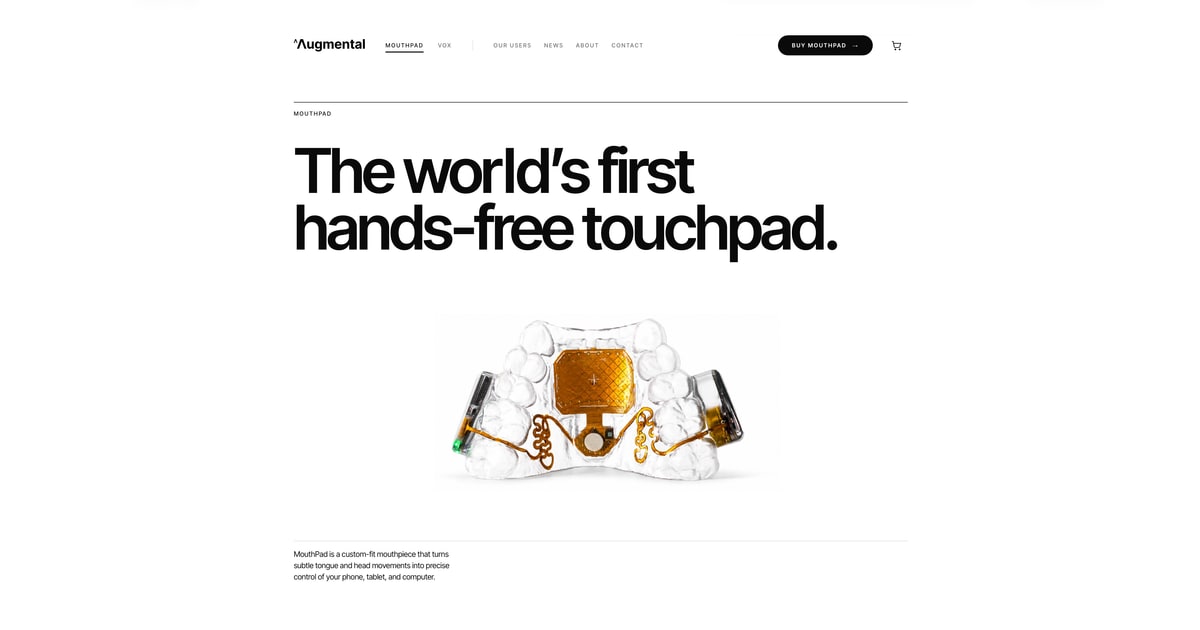
MouthPad: the hands-free touchpad
A trackpad worn on the roof of the mouth: hands-free control of your devices, driven by the tongue. From Augmental.
userinterface.wiki
A living manual for better interfaces. Learn design principles, motion, typography, and more.
Culture on the Ground - Tim Ingold, 2004
Classical accounts of human evolution posit a progressive differentiation between the hands as instruments of rational intelligence and feet as ...

Study Guide: The Peripheral by William Gibson (SuperSum…
Analyzing literature can be hard — we make it easy! Thi…

Tipographia
Visual archive of graphic design, typography and things printed in Portugal. A collection by...

Occupy movement hand signals
The Occupy movement hand signals are a group of hand signals used by Occupy movement protesters to negotiate a consensus.[1][2][3] Hand signals are used instead of conventional audible signals, like applause, shouts, or booing, because they do not interrupt the speaker using the human microphone, a system where the front of the crowd repeats the speaker so that the content can be heard at the back of the crowd. The signals have been compared to other hand languages used by soldiers, cliques and Wall Street traders.[4]
GUIdebook: Graphical User Interface gallery
GUIdebook: Graphical User Interface gallery
Putting sign language AI into users’ hands
Introducing sign-language-to-text (SL2T), our breakthrough model powering new sign language features for Deaf and hard of hearing users.

Road to a book lexicon (Part 1) - Nick The Sick
The article where I don't define a lexicon, and instead, complain about ISBNs