

I think the framing in the press is not especially accurate. I read that whole section of the prospectus, which is just listing hundreds of things that are risks, including that renewables might not work. That said, full agreement on policy, obviously.
Oct 28, 2026 at 2:29 PM
Truth, Consequences, Climate, and Demand Destruction
"This is how the attack by one petro-state (ours) on another (Iran's) may be turning out to be very bad for petroleum, because the only thing history loves more than a surprise party is irony." The Crisis The biggest news is always the climate news, and sometimes it's so big

Morality vs. Politics as a Framing Problem: How (Not) to Misunderstand the Fight Against Climate Change
Topoi - This paper is guided by two research hypotheses: (1) In contemporary public discourse, many of the most urgent political problems are predominantly framed and understood in moral terms; (2)...
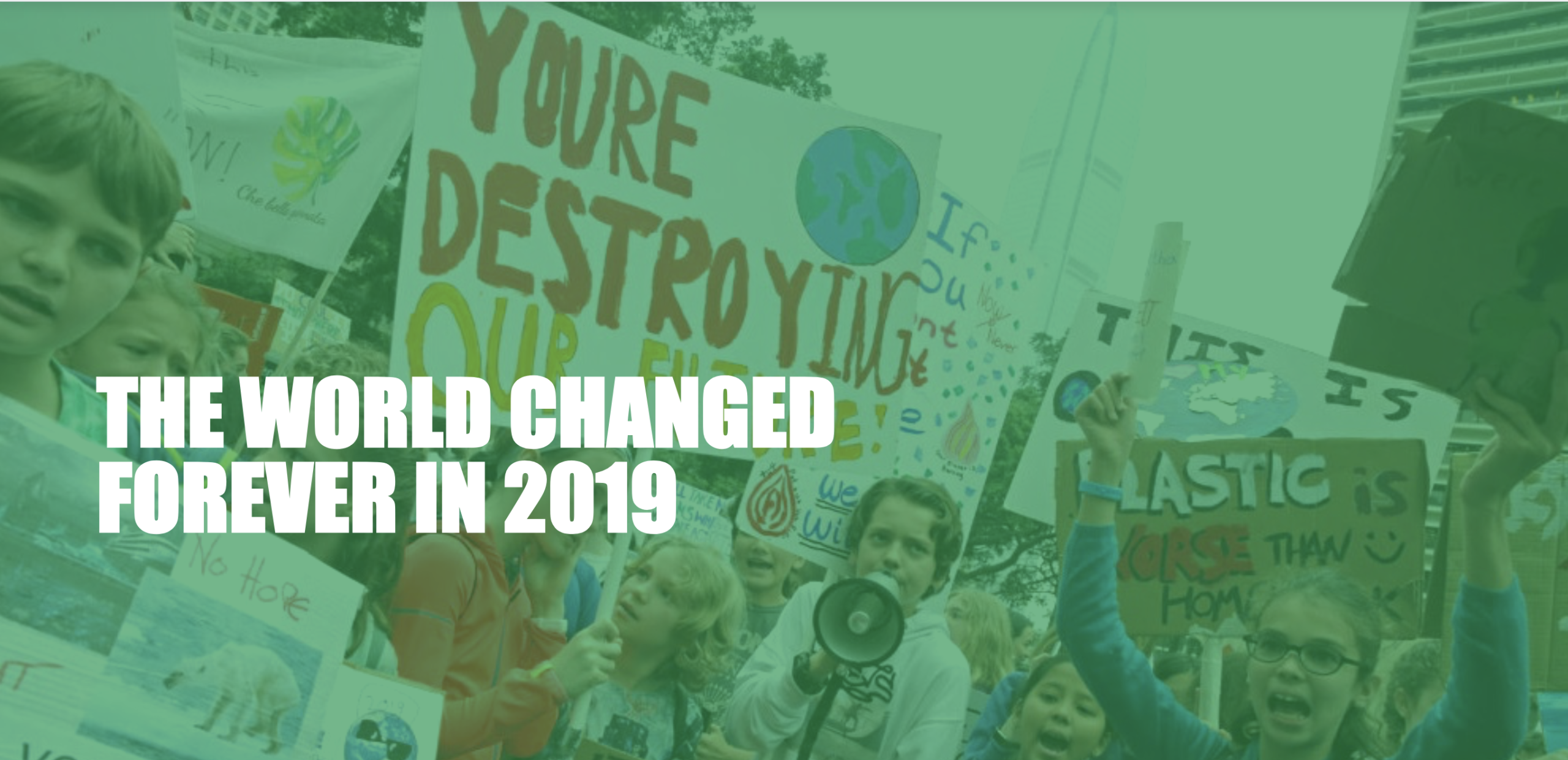
Addressing climate change and protecting our environment – Victorian Socialists
The climate crisis is driven by the profit motive. We need a shift to 100 percent publicly owned renewable energy and an end to old-growth logging.
Gas-Lit
If it is sometimes hard to tell the difference between fossil-fuel lobbyists and the billionaire press, that’s because there isn’t one.

The shale revolution helped make America’s economy great
But will the country’s oil riches discourage a similar revolution in renewables?

Caroline Lucas: The shocking climate reports the UK government didn't want you to see
The intelligence services now believe nature collapse is a security threat. For a cabinet determined to sacrifice the environment for growth, was that too uncomfortable a truth, asks the former Green party leader
The i-frame and the s-frame: How focusing on individual-level solutions has led behavioral public policy astray
An influential line of thinking in behavioral science, to which the two authors have long subscribed, is that many of society's most pressing problems can be addressed cheaply and effectively at the level of the individual, without modifying the system in which the individual operates. We now believe this was a mistake, along with, we suspect, many colleagues in both the academic and policy communities. Results from such interventions have been disappointingly modest. But more importantly, they have guided many (though by no means all) behavioral scientists to frame policy problems in individual, not systemic, terms: To adopt what we call the “i-frame,” rather than the “s-frame.” The difference may be more consequential than i-frame advocates have realized, by deflecting attention and support away from s-frame policies. Indeed, highlighting the i-frame is a long-established objective of corporate opponents of concerted systemic action such as regulation and taxation. We illustrate our argument briefly for six policy problems, and in depth with the examples of climate change, obesity, retirement savings, and pollution from plastic waste. We argue that the most important way in which behavioral scientists can contribute to public policy is by employing their skills to develop and implement value-creating system-level change.

The Climate Movement Isn’t in Retreat, It’s Under Attack…and It’s Time to Fight Back | Newsletter
In 2020, a source shared a presentation with me from an internal branding workshop they’d been asked to attend for bp. It was fascinating for a number of reasons, not least because it indicated that the oil major felt genuinely threatened by a surprising new enemy: young people. There have always been ebbs and flows […]
Being rational all the time isn’t going to do you any favors
When Daniel Kahneman and Amos Tversky published their paper on Prospect Theory in 1979, few people could have imagined the long-term implications.

Huge gas-fired power station plan quietly revealed amid renewables fanfare
WA's environmental watchdog releases for public comment a plan for a mega gas-fired power plant on the same day the state government trumpets an ambitious plan to almost double renewable energy generation.
Pentagon moves to designate Anthropic as a supply-chain risk | TechCrunch
"We don't need it, we don't want it, and will not do business with them again," the president wrote in the post.

Majority of US voters link extreme weather to climate crisis, study finds
Top Democrat says findings show public ‘way ahead of the politicians’ as Trump dismisses global heating as ‘hoax’

Environmental epidemiology in a crossfire
Two tendencies have emerged in environmental epidemiology that hamper the translation of research findings into prevention of environmental hazards. One is the increased focus on highlighting weaknesses of epidemiology research that is clearly meant to explain away the research conclusions and weaken their possible implications for interventions to control environmental hazards. Another is the voluminous amount of information sharing that involves a substantial amount of misinformation, as part of the ongoing infodemic. In this light, the appearance of the catalogue of doubt-raising strategies, indeed the worst practices of scientific inference, is good news. Collected under the auspices of the International Network for Epidemiology in Policy, it serves to illustrate the range of possible (and impossible) forms of critique that may be raised on behalf of vested interests or other groups who for some reason disagree with the epidemiological conclusions. We believe that this systematic list will be useful in our field and help to identify critiques of policy options that are hidden and sometimes suppressed in weighing the epidemiological evidence.

Glass Half Full: Building a Decarbonized U.S. Power Sector -
The Inflation Reduction Act of 2022 (IRA) was built, sold, and attacked as the largest climate investment in U.S. history. […]
Opinion | These A.I. Policies Will Hurt Our Business. We Should Do Them Anyway.
The risks posed by A.I. are too great to forgo any regulation, even for those who stand to gain tremendously from the technology’s rise.

Political Scenarios for Climate Disaster - Dissent Magazine
In the Global North we often act as if our future will be a warmer version of today: liberal capitalism, plus flood insurance, minus coral reefs. That future is a fantasy.

