

> Making the models smarter doesn't solve the problem. It makes the problem harder to see. So many relatable sentences here.

M Berk
I found this article so, so helpful at explaining why slogging through is the best way to learn (and so much more): ergosphere.blog/posts/the-machines-are-fine/
Apr 19, 2026 at 5:40 PM
Crafting a good (reasoning) model
A recent talk I gave on model training, reasoning, and the next frontier.
Are better models better? — Benedict Evans
Every week there’s a better AI model that gives better answers. But a lot of questions don’t have better answers, only ‘right’ answers, and these models can’t do that. So what does ‘better’ mean, how do we manage these things, and should we change what we expect from computers?

The AI Question that No AI Person Asks
The AI Question that No AI Person Asks
Harnessing Frustration: Using LLMs to Overcome Activation Energy
One of my biggest weaknesses as a software engineer is procrastination when facing a new project. When the scope is unclear, I have a tendency to wait until I feel I’ve “felt out” the problem to start doing anything. I know I’ll feel better and work much faster when I get “stuck in” but I still struggle with that first step, overcoming the “activation energy” required to engage with the details. LLMs have been a game-changer for me in this respect: I can just throw a couple of sentences at them with the shape of the problem. This leads to one of two outcomes: The LLM comes up with a good solution, usually in a slightly different way than what I was thinking. I realize “oh wow the solution is much simpler than I thought”. Straight away I start thinking about the consequences of implementing and improving what the LLM suggested. The LLM comes up with a solution that I intuitively recognize as “wrong”. My immediate reaction is frustration (“How could it get it so wrong”) which leads me to go back and forth with the model, explaining to it why its solution could not possibly work. But in the process of arguing with the model, my brain is churning away and generating variations or different approaches that could work. After a while, even if the AI is still on the wrong track, the debate will trigger a moment of inspiration where suddenly the solution will come to me. I’ll excitedly start up a new conversation and start working through it with the model. The key is the emotional reaction I have immediately to the LLM’s response, either excitement or frustration. By harnessing this immediate feedback loop, I get my brain out of its passive, procrastination mode. It’s almost like a jolt: either I’m thrilled because it’s simpler than I thought, or I’m spurred to action by the urge to correct a perceived ‘wrong’ answer. This forces me to engage with the problem in a meaningful way.
The 50 Percent Problem
Empirical evidence of the educational harm of generative AI
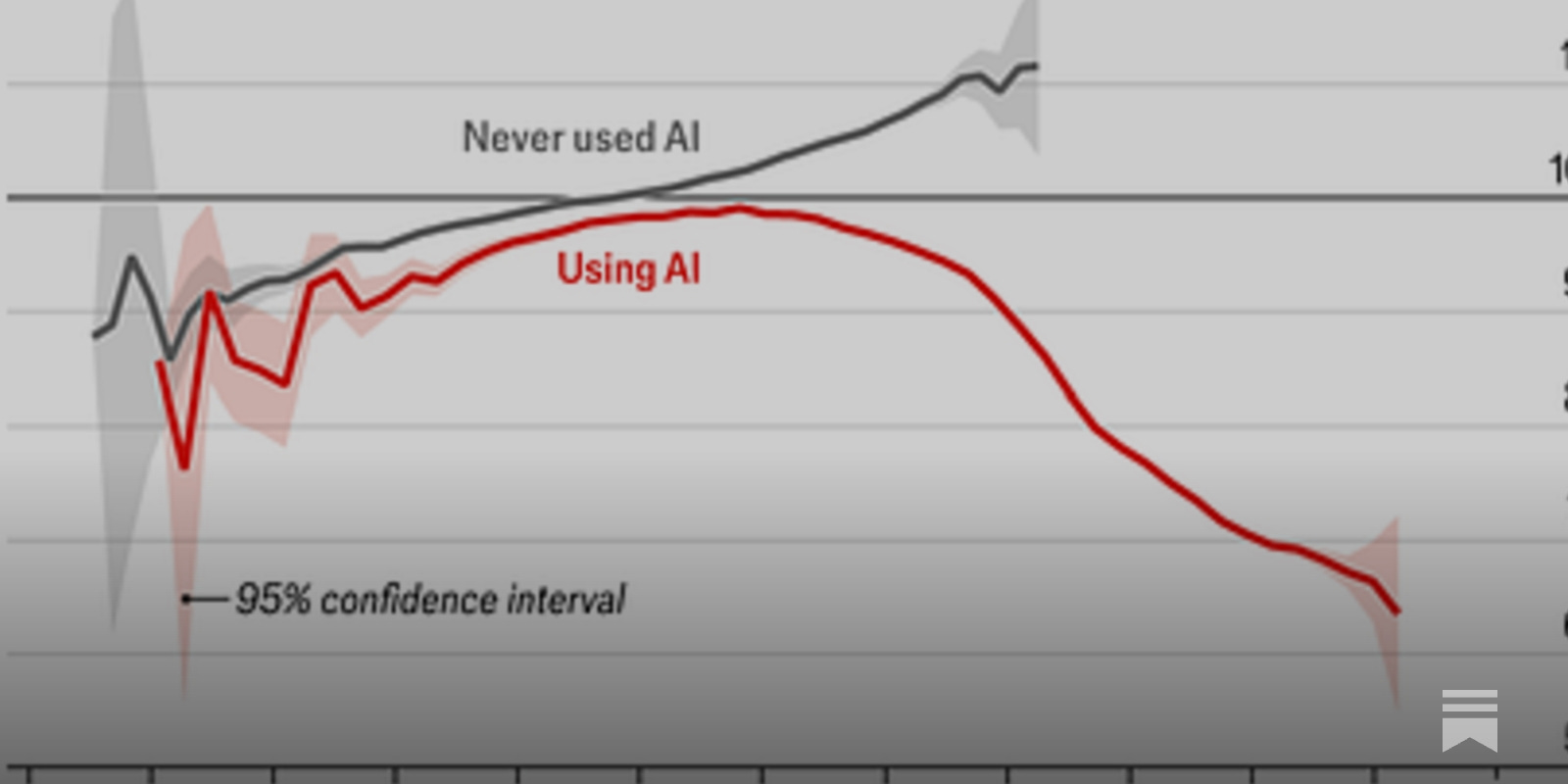
The 50 Percent Problem
Empirical evidence of the educational harm of generative AI
The fall of the theorem economy
How AI could destroy mathematics and barely touch it

The fall of the theorem economy
How AI could destroy mathematics and barely touch it
Models
Amp uses the best model for each task: leading generalist foundation models for complex reasoning and planning, and smaller specialized models for fast, accurate responses in specific domains.


The AI Power Systems Problem is Actually Much Worse than the Video Explains

The Illusion of Thinking: Understanding the Strengths and Limitations of Reasoning Models via the Lens of Problem Complexity
Recent generations of frontier language models have introduced Large Reasoning Models (LRMs) that generate detailed thinking processes…

The Jevons Paradox of AI - Wesley's notes
Why AI can make us more productive but will never save us time
Models do not improve linearly (any more). New models improve more than expected on hard tasks. Now let's think about it a bit more. It means progress is directed towards the hard tasks. It also means the easier tasks improve less than expected. Which alphaxiv.org/abs/2608.00355

