I do think tech companies are underestimating the amount of - new account fatigue - new app fatigue - useless upgrade fatigue - terms of service fatigue

Doctora Malka Older
do I REALLY have to update my browser to keep using slack? (do I REALLY have to keep using slack?)
Apr 21, 2026 at 9:47 PM
Your tech stack is not the product
Early stage technology decisions must be, uncomfortably, a means to an end.

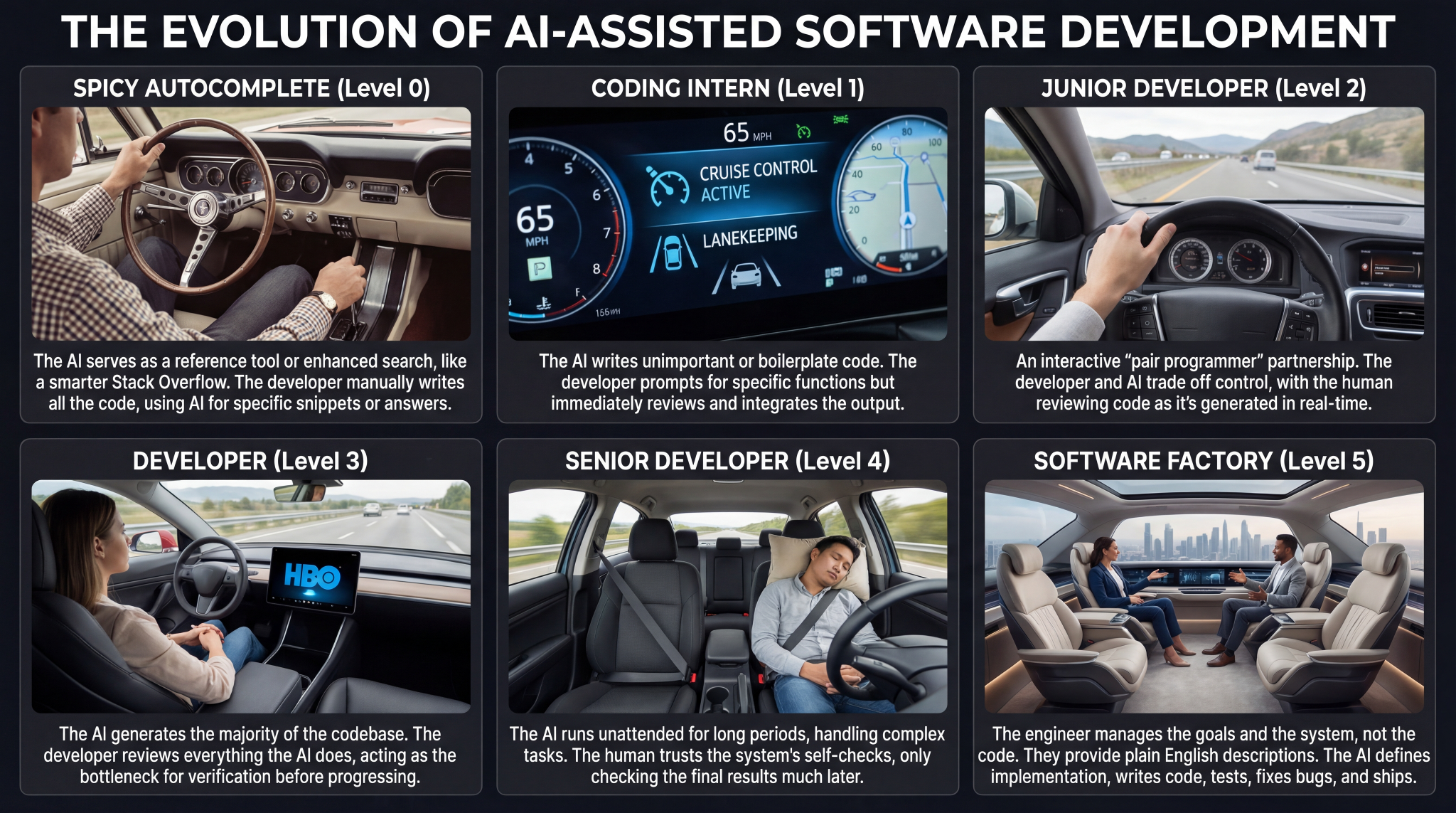
The Five Levels: from Spicy Autocomplete to the Dark Factory – Dan Shapiro's Blog
In my last post, I wrote about technical deflation. We’re seeing the cost of code is dropping so fast that we need to change our tech debt payment plans. The smart teams…
100 years of whatever this will be
What if all these weird tech trends actually add up to something? Last time, we explored why various bits of trendy technology are, in my o...
Microsoft reports are exposing AI's real cost problem: Using the tech is more expensive than paying human employees | Fortune
Companies are racing to incentivize employees to use AI. But as some companies are finding, the more employees that use the technology, the heavier the bill.

Big Tech’s A.I. Spending Is Accelerating (Again)
Despite the risk of a bubble, Google, Meta, Microsoft and Amazon plan to spend billions more on artificial intelligence than they already do.

'We're in a Bubble'
A lot of people have been saying we’re in a tech bubble for quite some time. Someday they’ll be right, but in the meantime, I thought it'd be fun to look back at some articles from the last 10...
People Loved the Dot-Com Boom. The A.I. Boom, Not So Much.
Tech leaders are beginning to worry about the public’s underwhelming enthusiasm for their plans to remake the world with artificial intelligence. Will that burst the bubble?

More! More! More! Tech Workers Max Out Their A.I. Use.
At a number of companies, employees compete on leaderboards to show how much A.I. they’re using. They’re racking up big bills along the way.

Balancing “If it ain’t broke, don’t fix it” vs. “Release early and often”
Every organization faces a war between two schools of thought, with “If it ain’t broke, don’t fix it” on one side and “release early and often” on the other. This blog post looks for a way for enterprise consumers to embrace fast-paced changes in the software industry.

Prompts are technical debt too
It’s common and correct to say that “all code is technical debt”. Adding code is a necessary evil for developing new features: you almost always have to do it, but each line of code adds to the complexity and maintenance burden of the system. All future changes to the system have to work with the existing code, or at least avoid breaking it. Once systems accumulate enough code, they become impossible for a single person to understand: instead of reading the code and understanding what it does, you must rely on guesses, theories and heuristics1. Sensible engineers write as little code as possible.

Developers spend most of their time figuring the system out
I am often asked what I mean when I say that developers spend most of their time figuring the system out. Let’s unpack the statement.
12 Things Everyone Should Understand About Tech
Tech is more important than ever, deeply affecting culture, politics and society. Given all the time we spend with our gadgets and apps…

Do AI-enabled companies need fewer people? | Seldo.com
AI-native startups are doing more with less — 40% smaller teams, 6x higher revenue per employee — and the data confirms it's not just hype. But the wave of new jobs I predicted hasn't materialized so far. Compute is replacing labor. Will that change?
Coopting Disruption
Our economy is dominated by five aging tech giants – Alphabet, Amazon, Apple, Meta, and Microsoft. In the last twenty years, no company has commercialized a new

Why Do the Biggest Companies Keep Getting Bigger? It’s How They Spend on Tech
The secret of success for Amazon, Google and Microsoft is how much they invest in their own technology.

Slow down to speed up: so much has changed in 6 months’ time
An overview of what’s changed in engineering during the last six months, how various tech companies are changing how they work, and why slowing down could be a sensible strategy