

wow — the preprint host, arxiv, is banning authors for a year if they submit papers with hallucinated citations 🤖

Helen Branswell 🇨🇦
I find this unsettling: A new study in #Lancet shows that the number of faux citations in scientific articles is on the rise, and #AI is likely to blame. @aniloza.bsky.social reports. statnews.com/2026/05/07/lancet-study-finds…
May 14, 2026 at 8:45 PM
Researchers who use hallucinated references to face arXiv ban
The preprint server is the latest to impose stiff penalties on authors who contribute to AI ‘slop’ — but not everyone is convinced it’s the right approach.

Preprint site arXiv is banning computer-science reviews: here’s why
Nature - The repository is taking steps to tackle a surge in low quality, AI-generated content.

ArXiv to Ban Researchers for a Year if They Submit AI Slop
The change comes as arXiv and others struggle to manage an influx of AI-generated materials masquerading as rigorous science.
Fair Moderation, Equitable Access, and AI: arXiv’s Updated Rate Limit Policy
arXiv, and the scientific community at large, are facing a watershed moment. Scholarly publishing is currently changing at a rapid pace, and we are seeing a…

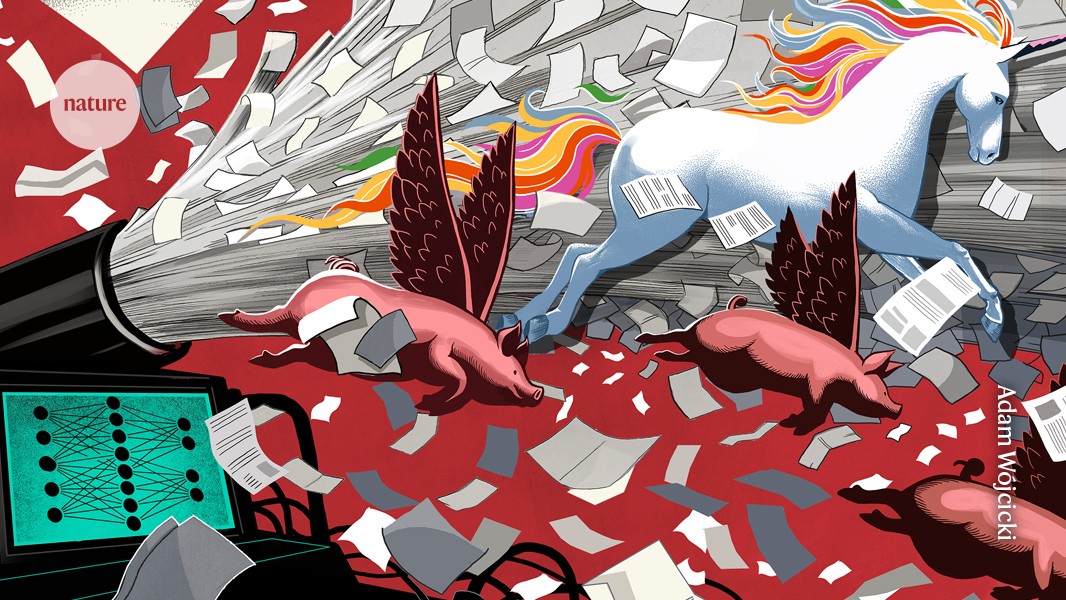
Hallucinated citations are polluting the scientific literature. What can be done?
Tens of thousands of publications from 2025 might include invalid references generated by AI, a Nature analysis suggests.
Hallucinated citations are polluting the scientific literature. What can be done?
Tens of thousands of publications from 2025 might include invalid references generated by AI, a Nature analysis suggests.
Hallucinated citations are polluting the scientific literature. What can be done?
Tens of thousands of publications from 2025 might include invalid references generated by AI, a Nature analysis suggests.
arXiv Changes Rules After Getting Spammed With AI-Generated 'Research' Papers
Cornell University’s arXiv will no longer accept Computer Science reviews and position papers.

arXiv Is Rate Limiting Submissions Because It Can’t Keep up With AI Slop
The academic publisher said submissions have doubled in the past two years and moderators are having a hard time keeping up.
Thomas G. Dietterich on Twitter / X
We are seeing a new trend in submissions to @arxiv (and presumably to conferences and journals): Authors submitting papers whose contents they likely do not understand. 1/— Thomas G. Dietterich (@tdietterich) September 13, 2026
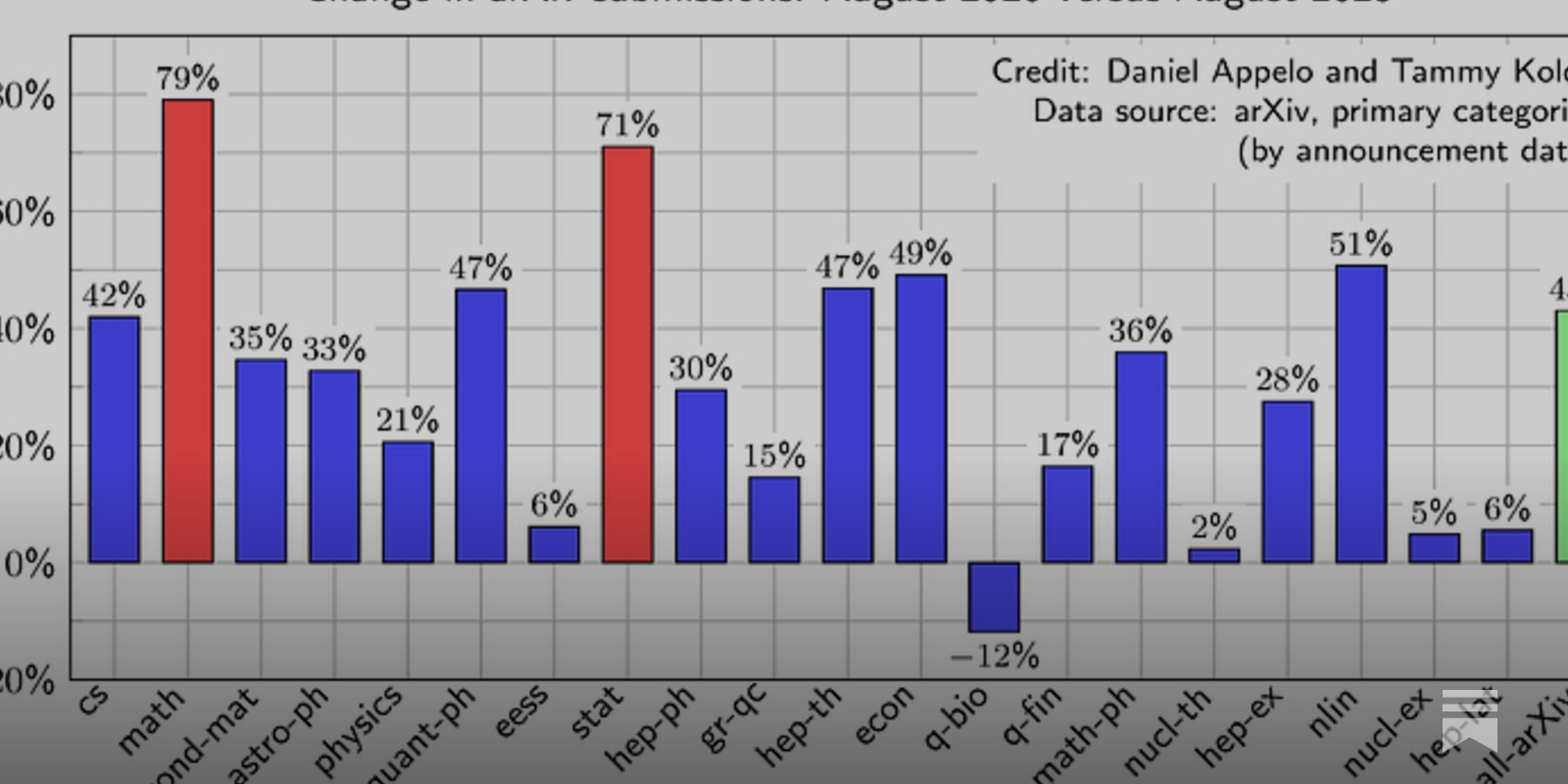
A Breakdown of arXiv Submissions in Mathematics
Guest post with Daniel Appelo (Virginia Tech)
Q&A from the slop trenches – GeoSpatial ML
We reviewed 22 ML conference submissions this summer. Fifteen had fabricated citations, hallucinated authors, or clear LLM slop, so we complain about that a bit, and release the paper references audit we now run.
Mikel Artetxe on Twitter / X
3/4 papers I reviewed and 2/3 reviews I got this ARR cycle were AI slop. Fraudsters are already outnumbering honest researchers. Unless drastic measures are urgently adopted, conference publications will have zero value or even become negative signal, and academia will be toast.— Mikel Artetxe (@artetxem) September 19, 2026
HalluCiteChecker: A Lightweight Toolkit for Hallucinated Citation Detection and Verification in the Era of AI Scientists
We introduce HalluCiteChecker, a toolkit for detecting and verifying hallucinated citations in scientific papers. While AI assistant technologies have transformed the academic writing process, including citation recommendation, they have also led to the emergence of hallucinated citations that do not correspond to any existing work. Such citations not only undermine the credibility of scientific papers but also impose an additional burden on reviewers and authors, who must manually verify their validity during the review process. In this study, we formalize hallucinated citation detection as an NLP task and provide a corresponding toolkit as a practical foundation for addressing this problem. Our package is lightweight and can perform verification in seconds on a standard laptop. It can also be executed entirely offline and runs efficiently using only CPUs. We hope that HalluCiteChecker will help reduce reviewer workload and support organizers by enabling systematic pre-review and publication checks. Our code is released under the Apache 2.0 license on GitHub and is distributed as an installable package via PyPI. A demonstration video is available on YouTube.

Fraudulent citations, blamed on AI hallucinations, are becoming more common in research papers
“Fabricated” citations that do not reference real academic papers are spreading in the literature, polluting the public record of science, a new study found

wow — the preprint host, arxiv, is banning authors for a year if they submit papers with hallucinated citations 🤖
Helen Branswell 🇨🇦
I find this unsettling: A new study in #Lancet shows that the number of faux citations in scientific articles is on the rise, and #AI is likely to blame. @aniloza.bsky.social reports. statnews.com/2026/05/07/lancet-study-finds…
