

I don't want to dunk on OP here, because it sounds like he was sold a bill of goods. This sounds like wsocial decided to move into a house and declare that it was theirs, and then start renting it out based on that claim. Really not cool and very misleading.

Wimster9030 🇪🇺 🇧🇪
I know, Daniel, but that's not the way WSocial "sold" it to us. We could only access trough ID-verification so we know for 100% they are EU and a "real person". That was the whole point. So we went trough that process, but now it seems that the backdoor are the other ATProt platforms to get in too.
Jul 30, 2026 at 7:52 PM
AI Economics for Dummies
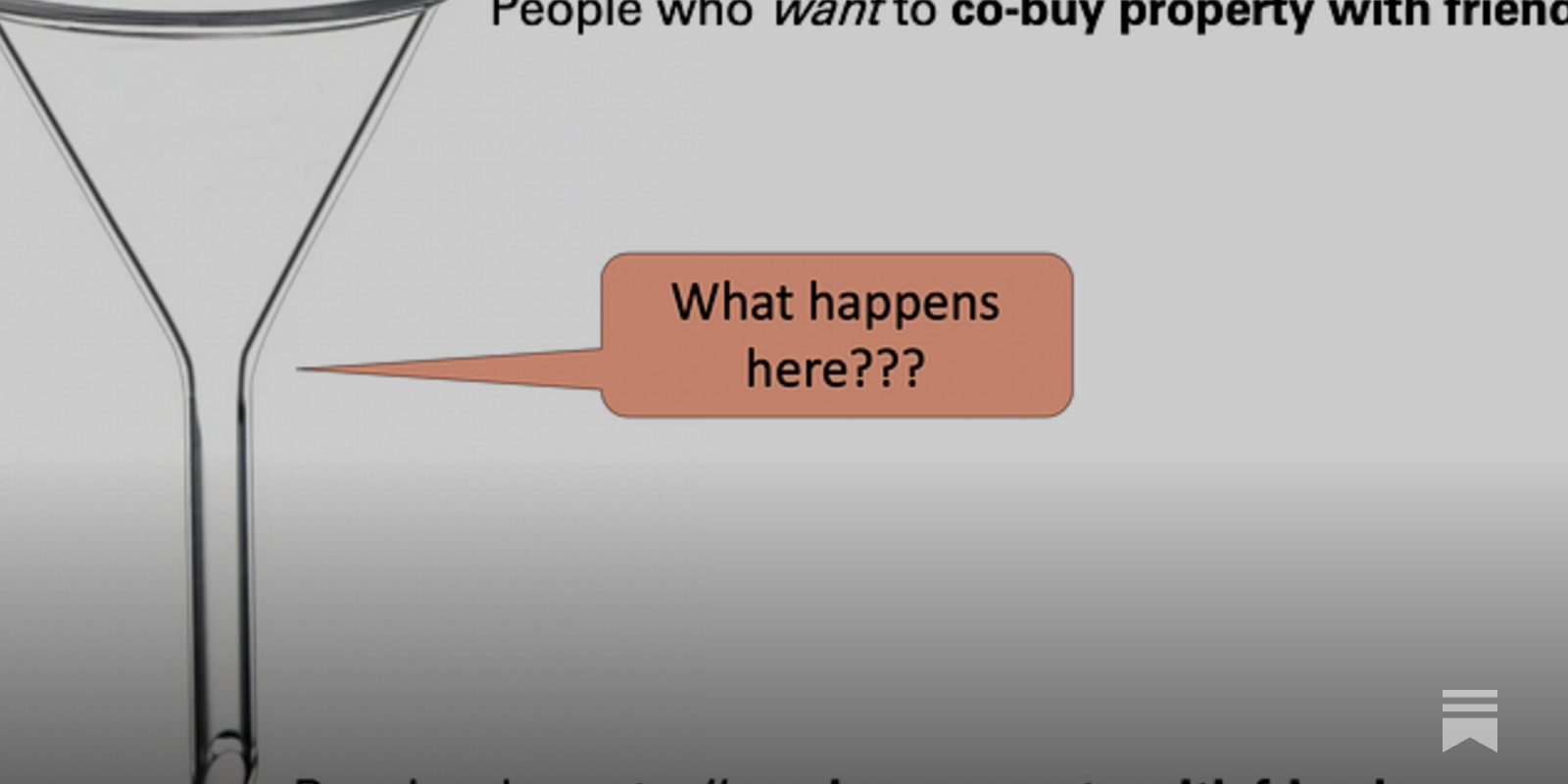
“Xavier owns an apartment that he rents out at a loss of $1 billion/month. Seeing this success, he decides to make financial commitments to construct $850 bi...
Information Salience and Mispricing in Housing
Making the purchase price fully salient to consumers has been shown to affect demand and equilibrium prices in various markets. Using a setting where part of the home acquisition price is in the form of nonsalient debt, we show this can happen in housing—a market where a typical household makes its largest acquisition. A regulation that made the debt and the total price salient for homebuyers eliminated a large mispricing caused by consumers’ inattention to the debt before the regulation. An average homebuyer would lose about $13,300 by acquiring a dwelling with one-standard deviation ($51,000)-higher debt, but this is nearly eliminated after the regulation. To shed light on the underlying channels, we use administrative data and show that young, financially inexperienced, and first-time homebuyers used to overpay the most. The results are not driven by rational channels based on liquidity constraints and adverse selection. Our findings imply that making all-inclusive house price and mortgage features salient at the time of advertising the sale can help avoid unintentional borrowing. This paper was accepted by David Simchi-Levi, finance. Supplemental Material: The online appendix is available at https://doi.org/10.1287/mnsc.2021.4253 .

A Theory of Fiduciary Liability – McGill Law Journal / Revue de droit de McGill – Érudit
An article from McGill Law Journal / Revue de droit de McGill, on Érudit.

Price and Sovereignty Harvard Law Review
[W]e must not overlook the actual fact that dominion over things is also imperium over our fellow human beings. — Professor Morris R. Cohen,...

Chapter Eight—Technology and the Law: The Automobile · University of Wisconsin Law School Digital Repository · University of Wisconsin Law School Digital Repository
University of Wisconsin Law School Law Library 975 Bascom Mall Madison, WI 53706 608-262-3394
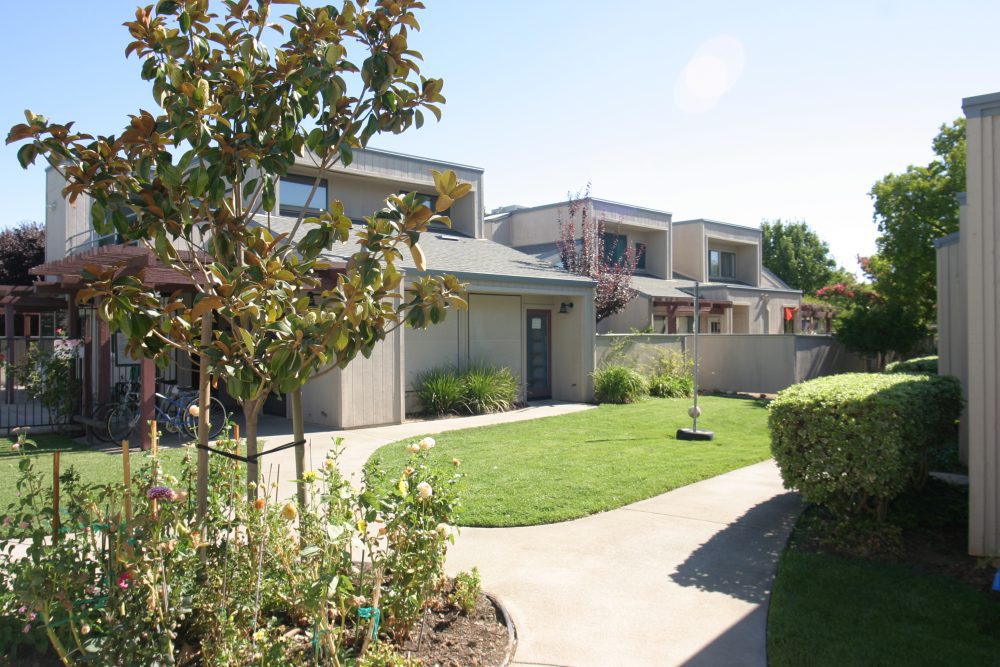
A Low-Cost Ownership Oasis in a Desert of Apartment Unaffordability
When this California housing cooperative began more than 30 years ago, it wasn’t the most affordable place to live. But now, it is.
Pain of Paying? — A Metaphor Gone Literal: Evidence from Neural and Behavioral Science
How do individuals consider the price of a good when making purchase decisions? Standard economic theories assume an analytical process: Individuals consider th

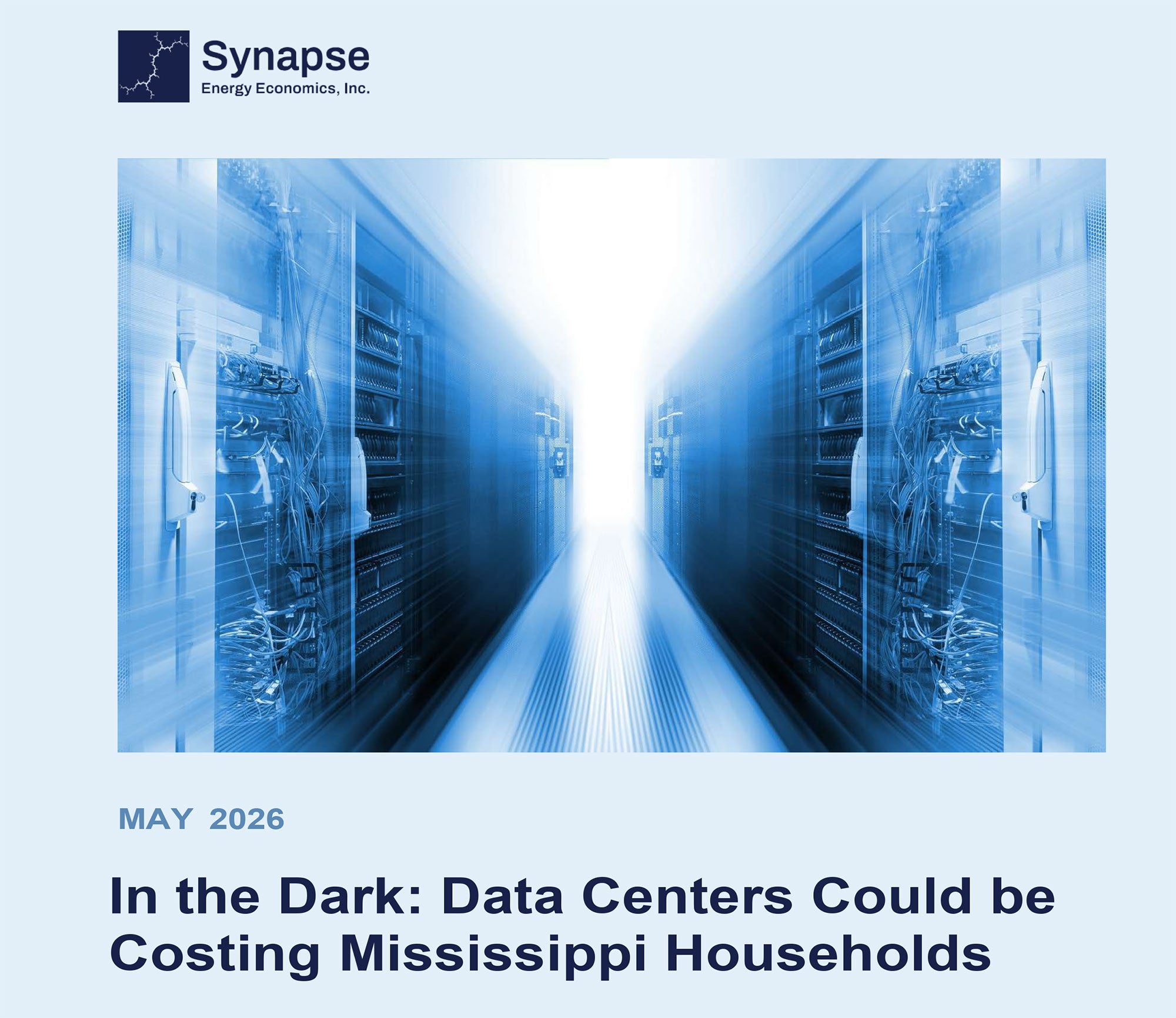
Mississippi “Data Center Giveaway Law” Leaves Residents in the Dark and Could Already Be Costing Utility Customers ~$11/mo.
A state law is failing to protect households from potentially rising power bills. How lawmakers and utilities can fix this.
The Fiduciary Obligation
ROBERT FLANNIGAN; The Fiduciary Obligation, Oxford Journal of Legal Studies, Volume 9, Issue 3, 1 October 1989, Pages 285–322, https://doi.org/10.1093/ojls

Monopoly money: The effect of payment coupling and form on spending behavior.
When Purchase Means License: Digital Ownership's Quiet Erosion — Koios
When Purchase Means License: Digital Ownership's Quiet Erosion
Co-holding behaviour: unlocking the puzzle
This article seeks to explain why households decide to simultaneously hold both credit and savings products. Beyond the arguments of ignorance or behavioural biases commonly used in the literature,...

Affording Disposal Control: The Effect of Circular Take-Back Programs on Psychological Ownership and Valuation
A circular economy is a “closed-loop” system designed so that products flow back into the production cycle after use. With many companies implementing take-back programs as part of their sustainability strategy, a fundamental shift in consumption has occurred, with consumers considering disposal during and even before purchase decision making. Eight experiments reveal that consumers indicate a greater willingness to pay for circular program products. An increase in psychological ownership underlies the difference in product valuation. Specifically, the additional disposal control uniquely afforded by circular products increases the capacity of circular take-back program products to evoke psychological ownership. The process explanation is directly tested through mediation. Experimentally manipulating antecedents of psychological ownership (i.e., disposal control and psychological ownership) provides further support for the conceptual framework.

I literally saw a post two weeks back in which a guy with two jobs was flagellating himself because he was short on rent, lamenting that had he donated plasma more, maybe his rent would be on time. This system is deeply fucked. Earth is a pleasure cruise for 1000 people and we're all just the staff.

More Perfect Union
Is this the “golden age” economy we’ve heard so much about? nbcnews.com/news/us-news/americans-sell-p…


