

AI Doomsday Panic Is Completely Out Of Control
The press obsession with software-powered doomsday is a misdirection overshadowing a much deadlier reality: our public interest regulators no longer function.

AI FOR EPISTEMICS & COORDINATION
Civilization and technology have radically improved the human condition. Nonetheless, the world sometimes goes in directions which essentially nobody would prefer — e.g., nuclear arms races, unexpected financial crashes, predatory marketing, or ubiquitous political misinformation.
AI Safety Is a Narrative Problem · Special Issue 5: Grappling With the Generative AI Revolution
This op-ed explores power and narrative dynamics around AI. Drawing on pop-culture references, the professional experiences of the author and examples from 2023’s “Great AI Safety Hype Roadshow,” this piece draws on the literary criticism technique of practical criticism to consider how speeches and announcements from both Silicon Valley executives and research scientists to interrogate the media-friendly nature of p(doom) discourse—which focuses on the existential risks of AI (PauseAI, 2023)—and its likely consequences. The complexities of AI and its numerous social impacts can be difficult for even the most expert analyst to unpack. In spite of this, the potential of “existential threats” has successfully cut through to become a mainstay of mainstream media coverage over the last year. This piece will make the case that this is an effective narrative conceit that has achieved a number of ends that traditional science communication tends to find difficult, if not impossible, to achieve. Firstly, it is easy to understand. Simplification of this nature—that removes jargon and complexity and focuses on a single outcome—is much easier to fit on a TV rolling news ticker or on the cover of a tabloid newspaper than more well-balanced, representative opinions. Secondly, it inherits prior assumptions from well-known dramatic forms. P(doom) plays to stories familiar from Greek tragedy through to Marvel movies, in which lone male heroes battle ineluctable forces. Thirdly, it is imbued with urgency and so becomes difficult to ignore.

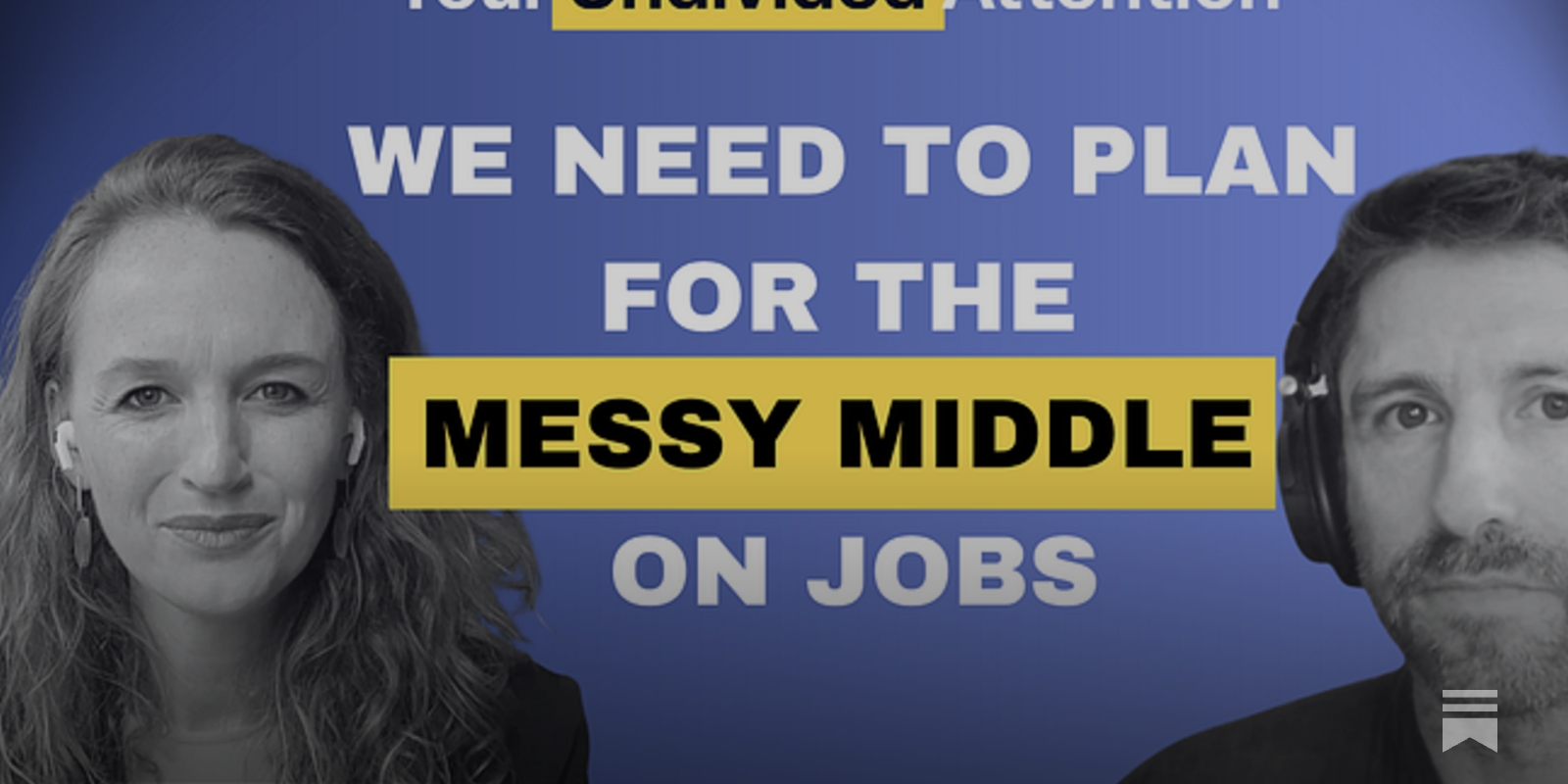
Enough Debate about the AI Jobpocalypse. We Need To Plan for the Messy Middle.
Caught between arguments of abundance and apocalypse, economist Molly Kinder explores what workers can expect in the near future — and what we can do about it.
The loudest warning about AI and jobs yet
200 economists and AI leaders say something big is happening. What should we do about it? Plus: Apple sues OpenAI

March 2026 Global Dialogues Survey | Windfall Trust
Here’s what the world had to say about the AI economy
For years, they warned AI could kill all humans. Now people are listening.
A doomsaying community once on the periphery of the tech industry has gained influence, as AI “agents” perform amazing and alarming feats.

The AI Question that No AI Person Asks
The AI Question that No AI Person Asks
AI Doomsday Bullshit Is Getting Tired
The "rogue AI" narrative continues to help obscure very ugly and avoidable human failures.

The AI Researcher Who Just Quit Anthropic Says It’s ‘Crunch Time for Humanity’
Jacob Coxon talks to WIRED about the “mini Manhattan project” inside Anthropic, the problem with alignment, and why AI labs have just a few years left to make their systems safe.

The AI future where humans get paid to be creative
one recurring theme in the coverage of this AI Anthropic doomsday newscycle is nobody actually has any REAL ideas of what to do just a lot of ambiguous hand-waving in a country that's too corrupt to have working regulators, by a press that doesn't realize that's a central pillar of the conversation

The AI Researcher Who Just Quit Anthropic Says It’s ‘Crunch Time for Humanity’
www.wired.comSep 10, 2026 at 4:42 PM
I‘m far from an AI doomer, but it is amazing how many serious voices — on LinkedIn, no less! — are sharing stories about how AI slop is quickly becoming one of the top problems they see in academic writing and research “AI will 10x our research!” doesn’t seem to be surviving encounters with reality
New from us: Anthropic just published scenarios for AI’s possible economic impacts, which range from minimal, to explosive GDP growth of 15% by 2030 as knowledge-worker unemployment hits 18%. I sat down with their co-founder Jack Clark to pick his brains on how they’re thinking about all of this.
I‘m far from an AI doomer, but it is amazing how many serious voices — on LinkedIn, no less! — are sharing stories about how AI slop is quickly becoming one of the top problems they see in academic writing and research “AI will 10x our research!” doesn’t seem to be surviving encounters with reality


