

Relevant envy:

Mayor Zohran Kwame Mamdani
演出现场见! on.nyc.gov/broadway
Aug 16, 2026 at 1:22 AM
Advancing the Understanding of Phenotypic Mimicry in Men’s Conspicuous Consumption
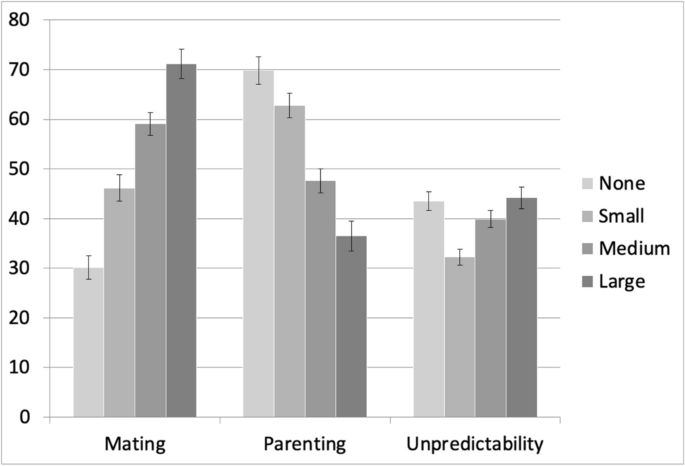
Two studies advance the understanding of phenotypic mimicry in consumer products. Product features mimicking more prominent male secondary sexual characteristics are associated with men’s behavioral strategies which are higher in mating effort and lower in paternal investment in offspring, in parallel with reproductive strategies across species and within the human population. The first study demonstrated a continuous relationship between the sizes of luxury brand logos and perceptions of the owners’ life histories. Two partial replications reproduced Study 1 results. Study 2 demonstrated that a manipulation of coloration, another fundamental dimension of variation in secondary sex characteristics, generates a similar pattern of results. In both studies, men owning shirts with more prominent sensory characteristics were believed to use authority and intimidation as strategies for advancing social status, whereas men owning shirts with less showy characteristics were believed to demonstrate useful abilities and foster cooperative alliances. Participants also recognized the strategic use of luxury display properties across social contexts.
Your Loneliness Was a Design Decision Made by Your Enemy
or: they want us isolated because it's easier to sell us shit

A psychologically rich life: Beyond happiness and meaning.

Tightwads and spendthrifts: An interdisciplinary review
Consumers rely on a “pain of paying” to help deter their spending. While this is beneficial for some consumers, others experience levels of pain that create problems. “Tightwads” experience too much pain when considering spending and therefore spend less than they would ideally like to spend. By contrast, “spendthrifts” experience too little pain and therefore spend more than they would ideally like to spend. Neither are happy with how they handle money. In the decade since the tightwad‐spendthrift construct was introduced, much has been learned about what it is and is not (e.g., frugality, greed), what contextual factors are likely to reduce its importance, how it plays a role within romantic relationships, and when it might first emerge in childhood. This paper reviews the wide range of interdisciplinary research relevant to the tightwad‐spendthrift construct and proposes several directions for new research.

Choosing Less‐Preferred Experiences For the Sake of Variety
Abstract. Data from several experiments show that, contrary to traditional models of variety seeking, individuals choose to switch to less-preferred option
Shared Reality: Experiencing Commonality with others' Inner States about the World
Humans have a fundamental need to experience a shared reality with others. We present a new conceptualization of shared reality based on four conditions. We posit (a) that shared reality involves a (subjectively perceived) commonality of individuals' inner states (not just observable behaviors); (b) that shared reality is about some target referent; (c) that for a shared reality to occur, the commonality of inner states must be appropriately motivated; and (d) that shared reality involves the experience of a successful connection to other people's inner states. In reviewing relevant evidence, we emphasize research on the saying-is-believing effect, which illustrates the creation of shared reality in interpersonal communication. We discuss why shared reality provides a better explanation of the findings from saying-is-believing studies than do other formulations. Finally, we examine relations between our conceptualization of shared reality and related constructs (including empathy, perspective taking, theory of mind, common ground, embodied synchrony, and socially distributed knowledge) and indicate how our approach may promote a comprehensive and differentiated understanding of social-sharing phenomena.

Enjoy it again: Repeat experiences are less repetitive than people think.
You don’t have to enjoy everything - some things aren’t for you | Respec
If that new game announcement has left you feeling cold, so what?

The Hidden Complexity of Wishes — LessWrong
(It has come to my attention that this article is currently being misrepresented as proof that I/MIRI previously advocated that it would be very diff…

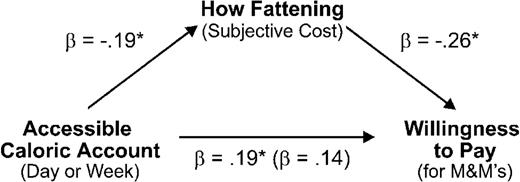
Unfixed Resources: Perceived Costs, Consumption, and the Accessible Account Effect
Abstract. Consumption depletes one's available resources, but consumers may be unaware of the total resources available for consumption and, therefore, be
the implication is that you also cannot build healthier social media by copying design choices that we know now consistently incentivize people to do this

Anuj Ahooja
You will not change someone's (especially a stranger's) mind by: 1. being rude 2. if you haven't understood the root of why they believe something 3. if you're quoting each other back and forth on a website that limits you to 300 characters per post
Relevant envy:
Mayor Zohran Kwame Mamdani
演出现场见! on.nyc.gov/broadway
This, and even more - to get super-rich almost requires *suppressing* the cultivation of a self or interiority. “Our system produces, elevates, and rewards psychopaths.” x.com/uTobian/status/20412132683884…

Levi Stahl
The empty boredom of the super-rich who never had to cultivate a self or interiority is the root cause of so many of our problems.
Some of us in the ActivityPub world feel jealous of AtProto’s success (like me). But more decentralization is a win for everyone. With Bridgy from @anew.social connecting protocols, this isn’t competition, it’s momentum. We’re stronger together, so let’s build the social web humanity deserves 🚀


