The Making of ‘Excuuuuse me, Princess!’: an oral history of The Legend of Zelda cartoon
How to build an oral history of an ‘80s Legend of Zelda cartoon

People are trying to claim real videos are deepfakes. The courts are not amused
The unleashing of powerful, generative AI on the public is raising concerns that as the technology becomes more prevalent, it will become easier to claim that anything is fake.
Cory Doctorow: Stories Are a Fuggly Hack - Locus
I've mentioned before, stories are weird. I mean, really, really weird. Nothing that happens in a piece of fiction has any consequence in the real world. Romeo and Juliet did not live, did not die, and the ''tragedy'' they represent is objectively less important than the tragedy of the live yogurt culture I digested at the breakfast table this morning. My theory is that the parts of our brains that …Read More
An Indian politician says scandalous audio clips are AI deepfakes. We had them tested
Deepfake experts noted that AI can be used as a cover by politicians when embarrassing audio and video clips of them emerge.

Jan Švankmajer
Jan Švankmajer is a Czech retired film director, animator, writer, playwright and artist. He draws and makes free graphics, collage, ceramics, tactile objects and assemblages. In the early 1960s, he explored informel, which later became an important part of the visual form of his animated films. He is a leading representative of late Czech surrealism. In his film work, he created an unmistakable and quite specific style, determined primarily by a compulsively unorthodox combination of externally disparate elements. The anti-artistic nature of this process, based on collage or assemblage, functions as a meaning-making factor. The author himself claims that the intersubjective communication between him and the viewer works only through evoked associations, and his films fulfil their subversive mission only when, even in the most fantastic moments, they look like a record of reality. Some of the works he created together with his wife Eva Švankmajerová.

Over Leveraged
The inside story of Peter Thiel's MKUltra by someone who thinks it was kind of good, actually.

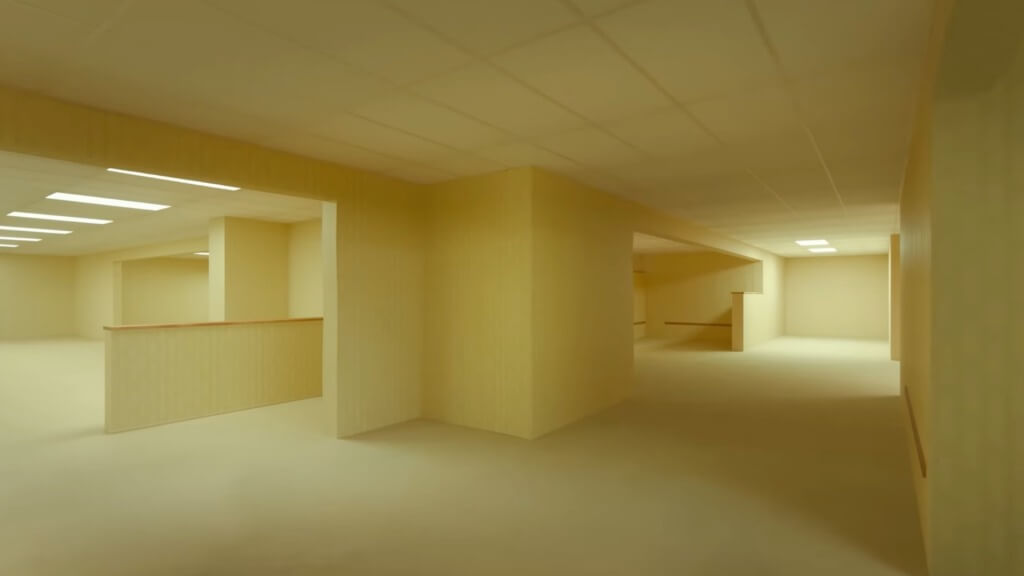
The internet's favorite horror subgenre is breaking into the big time
Backrooms brings liminal horror to the masses, and with it, a generation looking for a past that might not exist.
What AI can't fake about the real world (yet)
Why Do Movies Feel So Different Now?
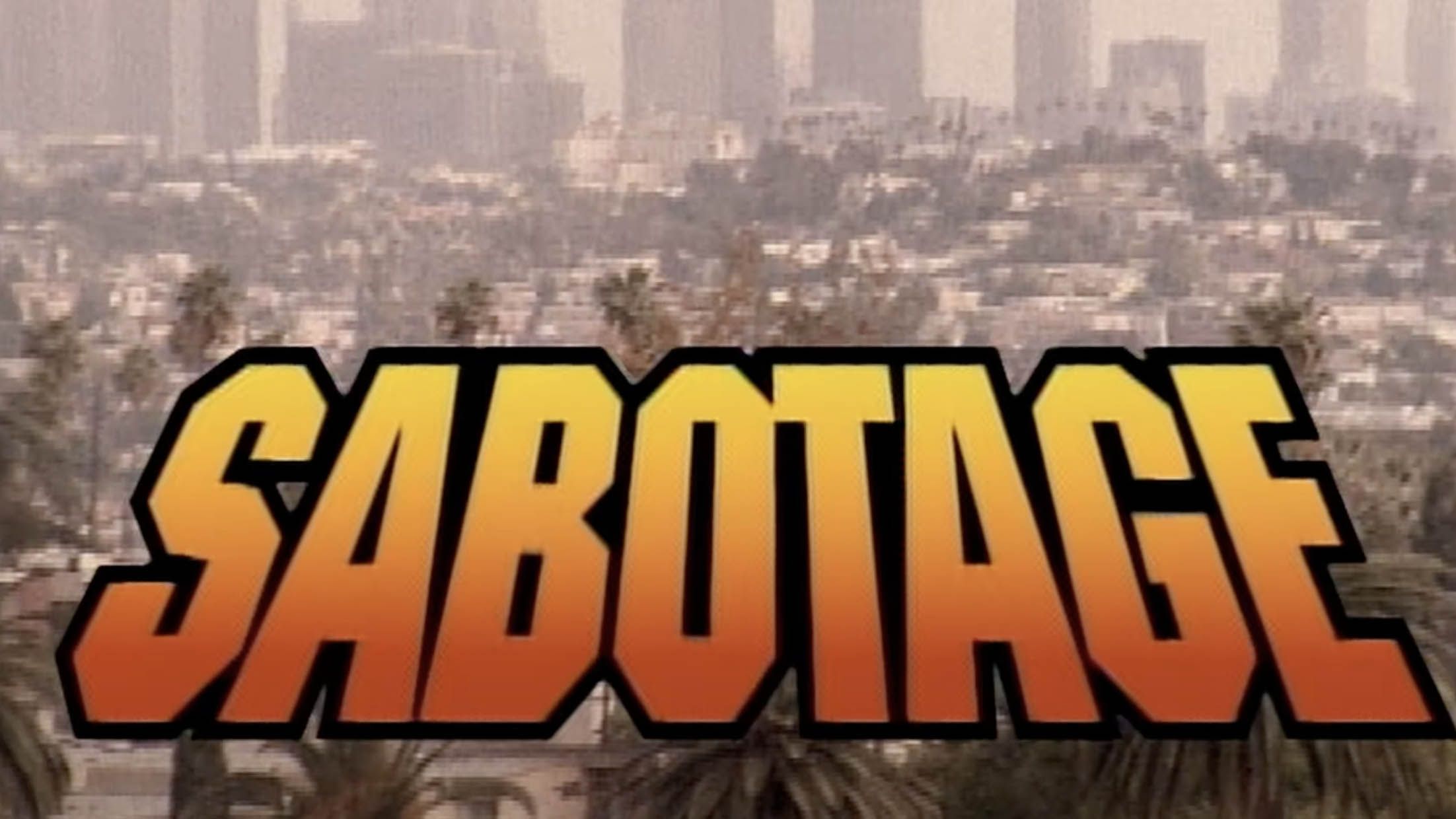
“No Anchorman, no Wes Anderson, and no Lonely Island if Sabotage did not exist”: New Vevo Footnotes version of Beasties Boys' landmark vid unleashed
It’s part of the Ill Communication's 30th anniversary celebrations
We speak often of AI as if it were a future event. But it is already here in the fabric of our being. What Karl Ove Knausgaard captures with devastating clarity in his recent essay ‘The Reenchanted… | Kenneth Mikkelsen | 19 comments
We speak often of AI as if it were a future event. But it is already here in the fabric of our being. What Karl Ove Knausgaard captures with devastating clarity in his recent essay ‘The Reenchanted World’ is the departure of the real. “We live in a virtual world, as if the world had been lifted out of itself, into the air, like a giant roof suspended above the ground,” he writes. It is an existential condition. Across philosophy, from Heidegger to Baudrillard, from Don DeLillo to Debord, a singular thread weaves: the world, once our shelter from the self, has become self-referential. Where once we encountered beings in our Zuhandensein—ready-to-hand, intimate, meaningful—we now face a procession of Vorhandensein: inert, objectified, mediated. Simulation replaces encounter. Perception is swallowed by spectacle. And the digital era, in Knausgaard’s terms, “distances culture from the body”. “It is not just the body that disappears—it is the awareness that we are dying,” he writes. What we face is not merely technological change, but what I would call existential dissonance: the erosion of resonance between our inner world, our social world, and the material world. It is the tension that arises when the way one lives, acts, and relates is misaligned with one’s deeper sense of meaning, reality, and value. It manifests itself as a disturbance in being — an unease that is not merely emotional, but rooted in a felt gap between one’s existence as it is and as it could or should be. It is the voice of the self calling from within the noise of the world. This is why Knausgaard’s essay matters for anyone working in, with, or around AI. Because the question isn’t: What can these systems do? It is: What do they undo? “We can explain everything. But we understand nothing,” he writes. Manipulated constructions of truth, in such a time, becomes a currency. As shown in recent events—from Francesca Gino’s research fraud at Harvard to Bezos’ all-female crew venture into space, and Trump’s detention camp —truth is no longer that which corresponds with reality, but that which performs and sells. As Baudrillard warned, the simulation no longer hides the real—it becomes it. And yet, something remains. Knausgaard writes not to despair, but to stay. In the body. In death. In silence. In the concrete. If you seek to understand what is happening—not just in AI, but in the very metaphysics of modern life—I suggest we begin not with data, but with dissonance. With the feeling that something vital is slipping from view, and that “being in the world” now requires resistance. “We are surrounded by mystery. And yet we act as if everything were known,” he writes. AI will never understand this. But we must. Knausgaard’s full essay from Harper’s Magazine can be read via link in comments. | 19 comments on LinkedIn

TV Tropes
TV Tropes, the all-devouring pop-culture wiki, catalogs and cross-references recurrent plot devices, archetypes, and tropes in all forms of media.

Weird Studies
Professor Phil Ford and writer J. F. Martel host a series of conversations on art and philosophy, dwelling on ideas that are hard to think and art that opens up rifts in what we are pleased to call "reality."
The Verification Ladder: A Framework for Evaluating Video When You Can’t Tell What’s Real
"Is this real?" isn't a straightforward question anymore. What to ask instead, and why the source often matters more than the footage itself.
Star Script Doctor Damon Lindelof Explains the New Rules of Blockbuster Screenwriting
“We live in a commercial world, where you’ve gotta come up with ‘trailer moments.’”