

To filter out minors, "you have to age verify everybody,” EFF’s Sophia Cope told @latimes.com, infringing on “1st Amendment rights of adults who may not want to have their driver’s license uploaded to this site that relates to gay & bisexual relationships.”

9th Circuit clears Grindr, dating app for gay men, in child sex trafficking case
www.latimes.comFeb 24, 2025 at 10:42 PM
Age-Verification Laws Seek to Erase LGBTQ+ Identity from the Internet
Age-verification laws are weaponized to censor LGBTQ+ and abortion-related content online under the guise of protecting children from porn.

What Would Online Age Verification Mean for Speech, Privacy, and Youth Online Safety?
Social media age verification laws in the United States
In the United States, age verification laws for social media are ostensibly designed to limit young people's access to content deemed problematic such as pornography and to reduce the negative impact of social media on the mental health and well-being of children and adolescents.

Age verification on porn sites is putting queer adult industry workers at risk
The laws requiring digital age checks — sold as child protection — are tanking the income of adult industry workers, risking their safety and even forcing them out of business.

Age Verification in the US
We continue to block access to Pornhub in more states that have passed age verification laws.
IACIS 2026 - OpenConf Abstract Submission, Peer Review, and Event Management System
As lawmakers across the United States move to require age verification for access to adult content online, new questions are emerging about the unintended risks these laws create. While intended to protect minors, many of these policies rely on systems that collect and store overly sensitive personal information such as government-issued IDs or biometric data without adequate safeguards. This introduces serious cybersecurity vulnerabilities, privacy concerns, and potential legal liability for platforms and users alike. Some major platforms have already withdrawn from certain states rather than comply, raising questions about the real-world feasibility of these laws. This study examines the intersection of digital privacy, cybersecurity, and legal compliance in the context of mandatory age verification. It analyzes the risks posed by identity-based and biometric systems, the role of third-party vendors, and the inconsistencies in how states define and enforce these requirements. The paper evaluates several age verification models and concludes that attribute-based verification systems that confirm age eligibility without revealing full identities offers the most secure and privacy-conscious path forward. The findings underscore a critical need for better-designed legislation that balances child protection with digital rights and security. This research provides targeted recommendations for policymakers, platform operators, and cybersecurity professionals, urging a shift toward transparent, accountable, and technically sound solutions before flawed systems become entrenched.
Age Verification Mandates Would Undermine Anonymity Online
Age verification systems are surveillance systems. Mandatory age verification, and with it, mandatory identity verification, is the wrong approach to protecting young people online. It would force

Who’s Harmed by Age Verification Mandates?
Age-verification laws may sound straightforward to some: protect young people online by making everyone prove their age. But in reality, these mandates force users into one of two flawed
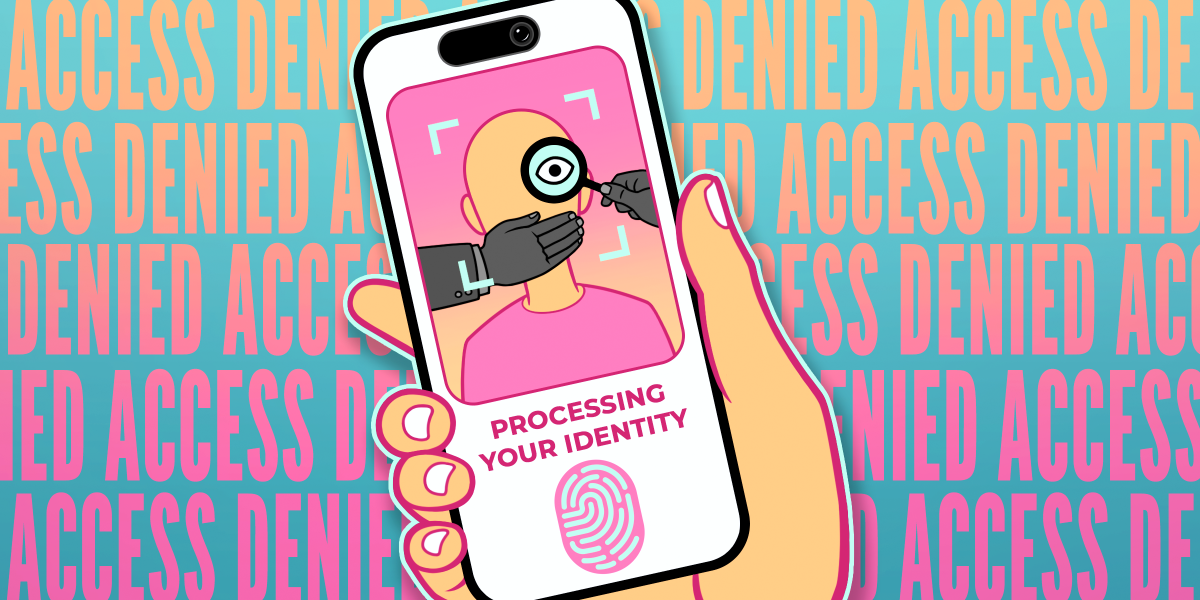
The Age-Gated Internet Is Sweeping the US. Activists Are Fighting Back
Half of the country now requires age verification to watch porn or access “harmful” content. Digital rights advocates are pushing back against legislation they say will make the internet less safe.

Age Verification Bills – Action Center
In 2022, Louisiana passed a law requiring the use of age verification on websites that contain a “substantial portion” (33.33%) of adult content. Websites must utilize commercial age verification systems that check a user’s government identification or “public or private transactional data” to confirm that a user is at least 18 years old.
438 Experts Said Age Verification Is Dangerous. Legislators Are Moving Forward With It Anyway. - Above the Law
From the seems-like-someone-should-pay-attention? dept

Who Really Sees Your ID When You Verify Your Age Online? - Intercede
We’re asked to prove our age online more than ever before. Whether we’re accessing social platforms, buying age‑restricted products, or visiting sites that require identity checks by law. Age verification has quickly become a standard part of the digital experience. But as these systems spread, so do the questions around what really happens to the … Continue reading ""

Online age-verification tools spread across U.S. for child safety, but adults are being surveilled
New age-verification laws and tools are designed for child safety on social media and the internet, but adults are in the crosshairs, say privacy experts.

The Right Wing Origins Of Age Verification Laws Don’t Disappear Just Because They’re Going Bipartisan.
I think it’s important to understand that, despite claims to the contrary, age verification is, inherently, a right-wing effort. While it’s currently true that age verification laws are…

Age verification: Child protection or privacy risk?
With more platforms and governments asking for age verification, we look at the options and the implications.

So, You’ve Hit An Age Gate. What Now?
EFF is against age gating and age verification mandates, and we hope we’ll win in getting existing ones overturned and new ones prevented. But mandates are already in effect, an…
