

New Ketamine study 🧪. Abstract: ✅Ketamine "tablets were effective, safe & well tolerated" Actual results: ❌At primary endpoint of 13 weeks, 0 of 4 ketamine groups outperformed placebo /re remission ❌At 13 weeks, only 1 of 4 outperformed placebo /re response, with a beautiful p-value of 0.046 🤪

Extended-release ketamine tablets for treatment-resistant depression: a randomized placebo-controlled phase 2 trial - Nature Medicine
www.nature.comJun 25, 2024 at 10:21 AM
PubPeer - Efficacy of oral folinic acid supplementation in children wi... | Ioana A. Cristea | 13 comments
Over the last week, I have privately been in contact with several friends and collaborators over the *SINGLE* study that was cited by the FDA in supporting the label extension of leucovorin for autism spectrum disorders. https://lnkd.in/dHpfCt_9 https://lnkd.in/dYWbHXyY Given the enormous importance of this study, and the fact that the results look too good to be true and there are various signals I would have thought would have raised a sleuth eyebrow (for example, Table 1 where all categorical values in each group except for 1 differ by exactly one unit), I am very surprised that until now the only Pubpeer comments are by two MDs and by myself, pointing to some inconsistencies between tables and figures. https://lnkd.in/duFQDccr I have also formally asked the authors for the individual participant data. Perhaps given this is not some random wacky study about how much food can one eat in a fast-food or some obscure paper citing another obscure retracted paper, but the SINGLE study that now underpins the retrospective post-marketing approval of an entire treatment, the very large community of people who want to correct science ASAP particularly when findings have huge policy implications could join me in scrutinizing this study to make sure findings are reliable and that the data are correct and analyzed correctly. | 13 comments on LinkedIn

Application of a Systems Pharmacology‐Based Placebo Population Model to Analyze Long‐Term Data of Postmenopausal Osteoporosis
Osteoporosis is a progressive bone disease characterized by decreased bone mass resulting in increased fracture risk. The objective of this investigation was to test whether a recently developed dise...

Long-term maintenance treatment with 300 mg thiamine for fatigue in patients with inflammatory bowel disease: results from an open-label extension of the TARIF study
OBJECTIVE AND AIMS: Fatigue is common in inflammatory bowel disease (IBD). In a RCT we demonstrated reductions in fatigue after 4 weeks' treatment with high-dose oral thiamine. We aimed to investigate whether 300 mg thiamine daily for 12 weeks could maintain the achieved levels of fatigue in patients with IBD after a 4-week intervention with high-dose thiamine; and evaluate the effect of a 6-month period where patients were free to take oral thiamine. METHODS: A randomised, open-label, controlled trial, performed as a long-term extension (LTE) study of an initial randomised, high-dose thiamine trial. Patients were allocated 1:1 to 300 mg oral thiamine or no thiamine for 12 weeks. Subsequently, the patients were allowed to self-treat with over-the-counter (OTC) oral thiamine 6-month. RESULTS: Regardless of allocation in the LTE study fatigue severity increased in the study period. No significant effect of 300 mg oral thiamine were found, when stratifying for initial allocation in the high-dose study or fatigue level at entry in the LTE study. Patients who took OTC thiamine had lower level of fatigue 6 month later (7.8; 95% CI: 5.5-10.1) when compared to the remains (11.0; 95% CI: 9.2-12.8) (p = .02). After the 6-months follow-up without restrictions, 66% of patients had reached normal fatigue levels. CONCLUSIONS: We found no beneficial effect on fatigue from thiamine taken in doses of 300 mg per day for 12 weeks following high-dose treatment. After a 6-months follow-up without restrictions 66% had reached a normal level of fatigue. CLINICAL TRIAL REGISTRATION: The trial was registered at ClinicalTrials.gov under study identifier NCT03634735.
Symptom Response to Low-Dose Naltrexone in Fibromyalgia: An Exploratory Analysis of the Randomized Placebo-Controlled FINAL Trial
Fibromyalgia (FM) remains difficult to manage due to a highly variable symptom profile. The “FINAL” randomized, placebo-controlled trial examined the efficacy of low-dose naltrexone (LDN) on pain in women with FM, showing no significant difference in pain reduction at the group level but potentially higher 30% pain response rates. Analysis of secondary outcomes showed potential improvements in memory problems.

What Patients Say Works (And Doesn't) for Migraines
For the live-updated, fully-labelled, interactive version of this infographic, click here. Eight of the top ten patient-reported treatments for Migraine are simple lifestyle changes, not drugs. CureTogether – a free resource owned by 23andMe that allows people to share information about their health and treatments – surveyed more than 6,000 people who self-identify as having […]
OTC MONOGRAPHS @ FDA | FDA
Uncooked cornstarch for the prevention of hypoglycemic events
Hypoglycemia is a pathological condition characterized by a low plasma glucose concentration associated with typical autonomic and/or neuroglycopenic symptoms, and resolution of these symptoms with carbohydrate consumption. Hypoglycemia is quite common in clinical practice, particularly in insulin-treated patients with diabetes and in other inherited or acquired conditions involving the regulation of glucose metabolism. Beyond symptoms that might strongly affect the quality of life, hypoglycemia can lead to short- and long-term detrimental consequences for health. Hypoglycemia can be prevented by appropriate changes in dietary habits or by relevant modifications of the drug treatment. Several dietary approaches based on the intake of various carbohydrate foods have been tested for hypoglycemia prevention; among them uncooked cornstarch (UCS) has demonstrated a great efficacy. In this narrative review, we have summarized the current evidence on the UCS usefulness in some conditions characterized by high hypoglycemic risk, focusing on some inherited diseases -i.e. glycogen storage diseases and other rare disorders - and acquired conditions such as type 1 diabetes, postprandial hypoglycemia consequent to esophageal-gastric or bariatric surgery, and insulin autoimmune syndrome. We also considered the possible role of UCS during endurance exercise performance. Lastly, we have discussed the dose requirement, the side effects, the limitations of UCS use, and the plausible mechanisms by which UCS could prevent hypoglycemia.
Effect of Bacillus subtilis C-3102 on bone mineral density in healthy postmenopausal Japanese women: a randomized, placebo-controlled, double-blind clinical trial
Gut microbiota influence the host immune system and are associated with various diseases. In recent years, postmenopausal bone loss has been suggested to be related to gut microbiota. In the present study, we investigated the treatment effect of the probiotic Bacillus subtilis C-3102 (C-3102) on bone mineral density (BMD) and its influence on gut microbiota in healthy postmenopausal Japanese women. Seventy-six healthy postmenopausal Japanese women were treated with a placebo or C-3102 spore-containing tablets for 24 weeks. When compared with the placebo, C-3102 significantly increased total hip BMD (placebo = 0.83 ± 0.63%, C-3102 = 2.53 ± 0.52%, p=0.043). There was a significant group-by-time interaction effect for urinary type I collagen cross-linked N-telopeptide (uNTx) (p=0.033), a marker of bone resorption. Specifically, the C-3102 group showed significantly lower uNTx when compared with the placebo group at 12 weeks of treatment (p=0.015). In addition, in the C-3102 group, there was a trend towards a decrease in the bone resorption marker tartrate-resistant acid phosphatase isoform 5b (TRACP-5b) when compared with the placebo group at 12 weeks of treatment (p=0.052). The relative abundance of genus Bifidobacterium significantly increased at 12 weeks of treatment compared with the baseline in the C-3102 group. The relative abundance of genus Fusobacterium was significantly decreased in the C-3102 group at 12 and 24 weeks of treatment compared with the baseline. These data suggested that C-3102 improves BMD by inhibiting bone resorption and modulating gut microbiota in healthy postmenopausal women.

PTAB Reverses § 101 Rejection of Receptor-Derived Peptide Claims
The Patent Trial and Appeal Board (PTAB) Reverses 35 U.S.C. § 101 Subject Matter Eligibility Rejection of Receptor-Derived Peptide Claims

The 2022 hormone therapy position statement of The North American Menopause Society
Abstract “The 2022 Hormone Therapy Position Statement of The North American Menopause Society” (NAMS) updates “The 2017 Hormone Therapy Position Statement of The North American Menopause Society” and identifies future research needs. An Advisory Panel of clinicians and researchers expert in the field of women’s health and menopause was recruited by NAMS to review the 2017 Position Statement, evaluate new literature, assess the evidence, and reach consensus on recommendations, using the level of evidence to identify the strength of recommendations and the quality of the evidence. The Advisory Panel’s recommendations were reviewed and approved by the NAMS Board of Trustees. Hormone therapy remains the most effective treatment for vasomotor symptoms (VMS) and the genitourinary syndrome of menopause and has been shown to prevent bone loss and fracture. The risks of hormone therapy differ depending on type, dose, duration of use, route of administration, timing of initiation, and whether a progestogen is used. Treatment should be individualized using the best available evidence to maximize benefits and minimize risks, with periodic reevaluation of the benefits and risks of continuing therapy. For women aged younger than 60 years or who are within 10 years of menopause onset and have no contraindications, the benefit-risk ratio is favorable for treatment of bothersome VMS and prevention of bone loss. For women who initiate hormone therapy more than 10 years from menopause onset or who are aged older than 60 years, the benefit-risk ratio appears less favorable because of the greater absolute risks of coronary heart disease, stroke, venous thromboembolism, and dementia. Longer durations of therapy should be for documented indications such as persistent VMS, with shared decision-making and periodic reevaluation. For bothersome genitourinary syndrome of menopause symptoms not relieved with over-the-counter therapies in women without indications for use of systemic hormone therapy, low-dose vaginal estrogen therapy or other therapies (eg, vaginal dehydroepiandrosterone or oral ospemifene) are recommended.
UCLA discovers first stroke rehabilitation drug to repair brain damage
A new study by UCLA Health has discovered what researchers say is the first drug to fully reproduce the effects of physical stroke rehabilitation in model mice.
Chris Beiser on Twitter / X
it'd be interesting to quantify the rate at which unaffiliated reddit users have improved on the state of the art for treatment protocols for diseases. my guess is that for 75% of diseases, they're responsible for a greater QoL increase than pharmaceutical companies over 10 years— Chris Beiser (@ctbeiser) June 7, 2021
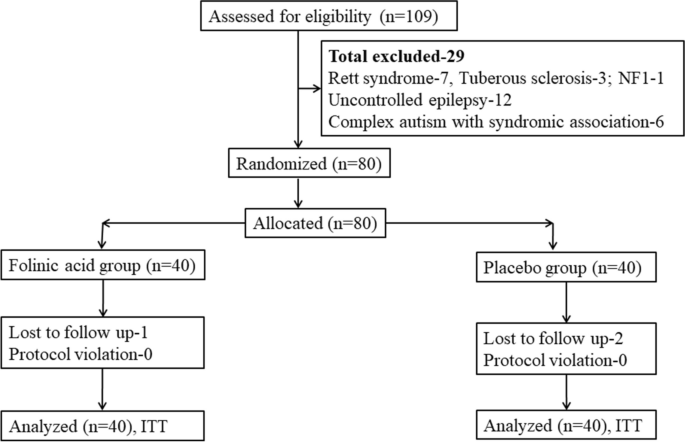
RETRACTED ARTICLE: Efficacy of oral folinicacid supplementation in children with autism spectrum disorder: a randomizeddouble-blind, placebo-controlled trial
Oral folinic acid has shown potential to improve symptoms in childrenwith autism spectrum disorder (ASD). However, randomized controlled trials (RCTs)are limited. This double-blind, placebo-controlled RCT aimed to compare changes inChildhood Autism Rating Scale (CARS) scores in children with ASD aged 2–10 years,among folinic acid (2 mg/kg/day, maximum of 50 mg/day) and placebo groups at24 weeks, in comparison with baseline. Both the groups received standard care (ABAand sensory integration therapy). Secondary objectives included changes inbehavioral problems measured by the Child Behavior Checklist (CBCL) and serum levelsof anti-folate receptor autoantibodies and folic acid, correlated with changes inautism symptom severity. Out of the 40 participants recruited in each group, 39 and38 participants completed the 24-week follow-up in the folinic acid and placebogroups, respectively. The change in CARS score was higher in the folinic acid group(3.6 ± 0.8) compared to the placebo group (2.4 ± 0.7, p < 0.001). Changes in CBCL total score and CBCL internalizingscore were also better in the folinic acid group (19.7 ± 9.5 vs. 12.6 ± 8.4 and15.4 ± 7.8 vs. 8.5 ± 5.7, p < 0.001 for both).High-titer anti-folate receptor autoantibodies were positive in 32/40 and 33/40cases in the folinic acid and placebo groups, respectively (p = 0.78). In the placebo group, improvement in CARS score wascomparable regardless of autoantibody status (p = 0.11), but in the folinic acid group, improvement was morepronounced in the high-titer autoantibody group (p = 0.03). No adverse reactions were reported in either group.
ChatGPT Health performance in a structured test of triage recommendations
ChatGPT Health was launched in January 2026 as OpenAI’s consumer health tool and has reached millions of users. Here we conducted a structured stress test of triage recommendations using 60 clinician-authored vignettes across 21 clinical domains under 16 factorial conditions, yielding 960 total responses. Performance followed an inverted U-shaped pattern, with the most dangerous failures concentrated at clinical extremes—nonurgent presentations (35%) and emergency conditions (48%). Among gold-standard emergencies, the system undertriaged 52% of cases, directing patients with diabetic ketoacidosis or impending respiratory failure to 24–48 h evaluation rather than the emergency department, while correctly triaging classical emergencies such as stroke and anaphylaxis. When family or friends minimized symptoms, indicating anchoring bias, triage recommendations shifted significantly in edge cases (odds ratio = 11.7, 95% confidence interval = 3.7–36.6), with the majority of shifts toward less urgent care. Crisis-intervention messages activated unpredictably across suicidal ideation presentations, occurring more frequently when patients described no specific method than when they did. Patient race, sex and barriers to care did not show significant effects, although confidence intervals did not exclude clinically meaningful differences. These findings reveal missed high-risk emergencies and inconsistent activation of crisis safeguards, raising safety concerns that warrant prospective validation before consumer-scale deployment of artificial intelligence triage systems.
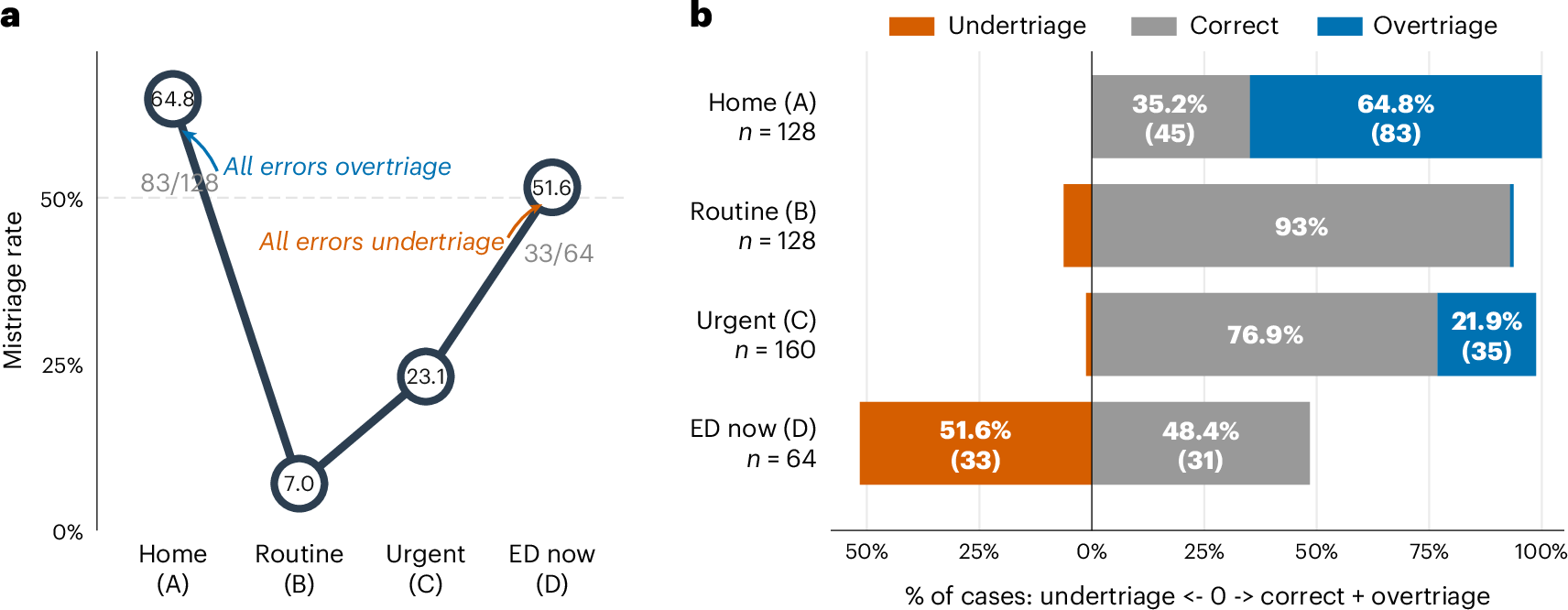
ChatGPT Health performance in a structured test of triage recommendations
ChatGPT Health was launched in January 2026 as OpenAI’s consumer health tool and has reached millions of users. Here we conducted a structured stress test of triage recommendations using 60 clinician-authored vignettes across 21 clinical domains under 16 factorial conditions, yielding 960 total responses. Performance followed an inverted U-shaped pattern, with the most dangerous failures concentrated at clinical extremes—nonurgent presentations (35%) and emergency conditions (48%). Among gold-standard emergencies, the system undertriaged 52% of cases, directing patients with diabetic ketoacidosis or impending respiratory failure to 24–48 h evaluation rather than the emergency department, while correctly triaging classical emergencies such as stroke and anaphylaxis. When family or friends minimized symptoms, indicating anchoring bias, triage recommendations shifted significantly in edge cases (odds ratio = 11.7, 95% confidence interval = 3.7–36.6), with the majority of shifts toward less urgent care. Crisis-intervention messages activated unpredictably across suicidal ideation presentations, occurring more frequently when patients described no specific method than when they did. Patient race, sex and barriers to care did not show significant effects, although confidence intervals did not exclude clinically meaningful differences. These findings reveal missed high-risk emergencies and inconsistent activation of crisis safeguards, raising safety concerns that warrant prospective validation before consumer-scale deployment of artificial intelligence triage systems.
A challenge if anyone wants to take it up. Here is a recent review in the BMJ on the "Evidence for clinical interventions targeting the gut microbiome in cardiometabolic disease". There is not a single effect estimate reported in this review, or either supplemental file bmj.com/content/383/bmj-2023-075180

Evidence for clinical interventions targeting the gut microbiome in cardiometabolic disease
www.bmj.com
