

🧵 Democracy feels like it's in a rough state at the moment across the globe, and we hear various explanations, like polarisation, extremism, disinformation, and loss of trust. But what if those explanations are mainly symptoms and we've been trying to treat them rather than the underlying causes?
Apr 6, 2026 at 12:37 PM
It’s Not Polarization; It’s the Radicalization of the Political Right
Polarization has become the master concept for diagnosing contemporary democratic crises. The notion denotes three features: symmetry between parties, politics as an opinion space where positions diverge, and mutual repulsion between opposing camps. Yet none of these capture current realities. Across democracies, the central dynamic is not two poles drifting apart but the transformation of the political right into authoritarianism, norm breaking, and openness to political violence. Social democratic and center-right parties tend to respond in the opposite way from what “polarization” implies: by accommodating rightward. Attempts to salvage the polarization frame with modifiers (“asymmetric,” “affective,” “sectarian,” “pernicious”) concede these realities but risk hollowing out the concept’s definitional core. These limitations reveal a deeper misdiagnosis: when one party turns antidemocratic and illiberal, incivility and conflict are inevitable—but they are symptoms, not the root problem. Misdiagnosing them as the central issue leads to viewing civility and compromise as remedies, thereby risking the legitimation of authoritarian actors. This article proposes an alternative lens: the radicalization of the political right. Developed in the study of extremism, the radicalization framework better captures asymmetric change, identity-driven politics, and the mainstreaming of illiberalism. It foregrounds identity fusion, threat narratives, elite entrepreneurship, and escalation. Concepts are never politically innocent and persisting with “polarization” risks both misdiagnosing and normalizing authoritarian threats.
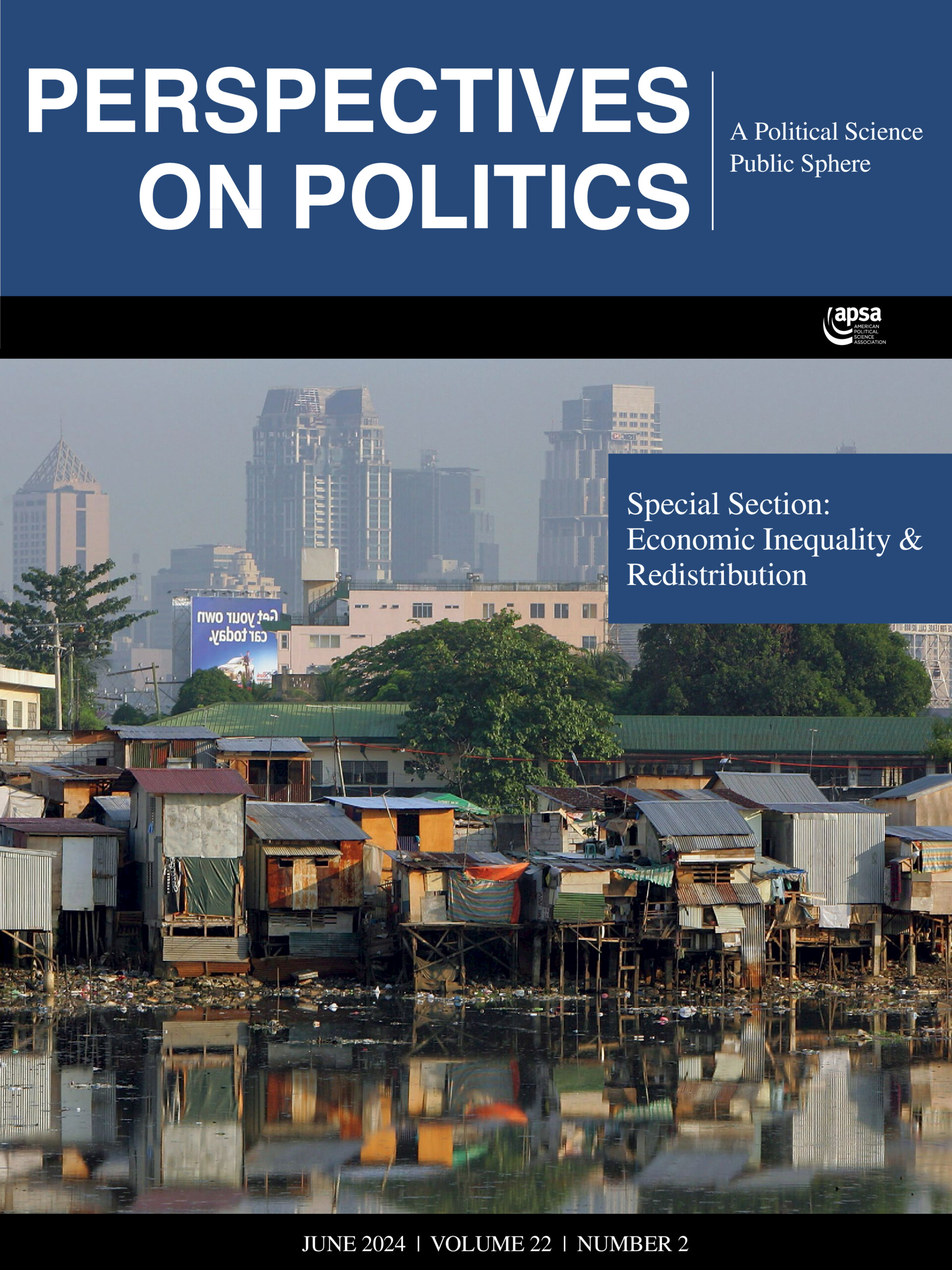
It’s Not Polarization; It’s the Radicalization of the Political Right
Polarization has become the master concept for diagnosing contemporary democratic crises. The notion denotes three features: symmetry between parties, politics as an opinion space where positions diverge, and mutual repulsion between opposing camps. Yet none of these capture current realities. Across democracies, the central dynamic is not two poles drifting apart but the transformation of the political right into authoritarianism, norm breaking, and openness to political violence. Social democratic and center-right parties tend to respond in the opposite way from what “polarization” implies: by accommodating rightward. Attempts to salvage the polarization frame with modifiers (“asymmetric,” “affective,” “sectarian,” “pernicious”) concede these realities but risk hollowing out the concept’s definitional core. These limitations reveal a deeper misdiagnosis: when one party turns antidemocratic and illiberal, incivility and conflict are inevitable—but they are symptoms, not the root problem. Misdiagnosing them as the central issue leads to viewing civility and compromise as remedies, thereby risking the legitimation of authoritarian actors. This article proposes an alternative lens: the radicalization of the political right. Developed in the study of extremism, the radicalization framework better captures asymmetric change, identity-driven politics, and the mainstreaming of illiberalism. It foregrounds identity fusion, threat narratives, elite entrepreneurship, and escalation. Concepts are never politically innocent and persisting with “polarization” risks both misdiagnosing and normalizing authoritarian threats.
We Need To Rethink Democracy
The Global State of Democracy 2026: Democracy in an Age of Conflict
In the face of increasing political and societal fragmentation, the Global State of Democracy 2026 explains the patterns that define the direction of democratization around the world. Drawing on the latest data from the Global State of Democracy Indices, the report documents both democratic stagnation and key declines in indicators that measure the credibility of elections, the effectiveness of legislatures, respect for freedoms of expression and the press, and access to justice. These phenomena affect countries across thespectrum of democratic performance.
The Global State of Democracy 2026: Democracy in an Age of Conflict
In the face of increasing political and societal fragmentation, the Global State of Democracy 2026 explains the patterns that define the direction of democratization around the world. Drawing on the latest data from the Global State of Democracy Indices, the report documents both democratic stagnation and key declines in indicators that measure the credibility of elections, the effectiveness of legislatures, respect for freedoms of expression and the press, and access to justice. These phenomena affect countries across thespectrum of democratic performance.
Democracy Tracker | The Global State of Democracy
Each report describes an event that affects the state of democracy in a given country, with assessments made relative to that country's context, not as comparisons or rankings between countries.
The Dispersion of Power: A Critical Realist Theory of Democracy
Abstract The Dispersion of Power is an urgent call to rethink centuries of conventional wisdom about what democracy is, why it matters, and how to make it better. Drawing from history, social science, psychology, and critical theory, it explains why elections do not and cannot realize the classic ideal of popular rule, and why prevailing strategies of democratic reform often make things worse. Instead, Bagg argues, we should see democracy as a way of protecting public power from capture—an alternative vision that is at once more realistic and more inspiring. Despite their many shortcomings, real-world elections do prevent the most extreme forms of tyranny, and are therefore indispensable. In dealing with the vast inequalities that remain, however, we cannot rely on standard solutions such as electoral reform, direct democracy, deliberation, and participatory governance. Instead, Bagg shows, protecting and enriching democracy requires addressing underlying inequalities of power directly. In part, this entails substantive policies attacking the advantages of wealthy elites. Even more crucially, deepening democracy requires the organization of oppositional, countervailing power among ordinary people. Neither task is easy, but historical precedents exist in both cases—and if democracy is to survive contemporary crises, leaders and citizens alike must find ways to revive and reinvent these essential democratic practices for the twenty-first century.

Political polarization at its worst since the Civil War
Data scientists try to explain the U.S. government’s shifting ideologies over the past four decades.
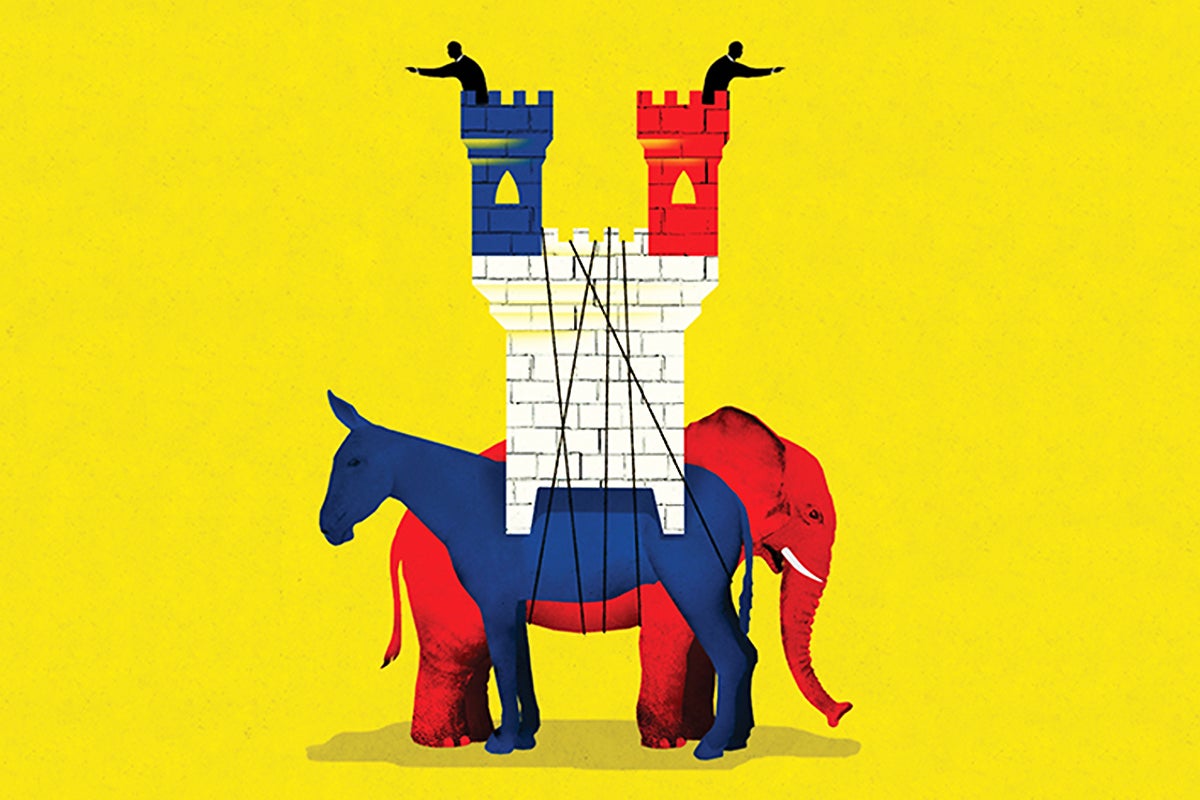
Democracy has Hamlet’s Problem: The Search for Relevance in a Complex World
To cope with the complexity of the world, cognitively limited agents must employ framing to identify what is relevant and stabilise meaning. Yet democracy rests on the Popperian fallibilist imperat...

Political Fairytale
Why is centrism failing so badly? Because at its heart is a mistaken idea of how politics works.

Do social media threaten democracy?
Facebook, Google and Twitter were supposed to save politics as good information drove out prejudice and falsehood. Something has gone very wrong

Anti-democratic attitudes are highly contagious, new psychology study finds
The rise of anti-democratic sentiments might be driven by social contagion. Researchers have discovered that citizens often adapt their personal support for authoritarian rule to align with the political views of those around them.
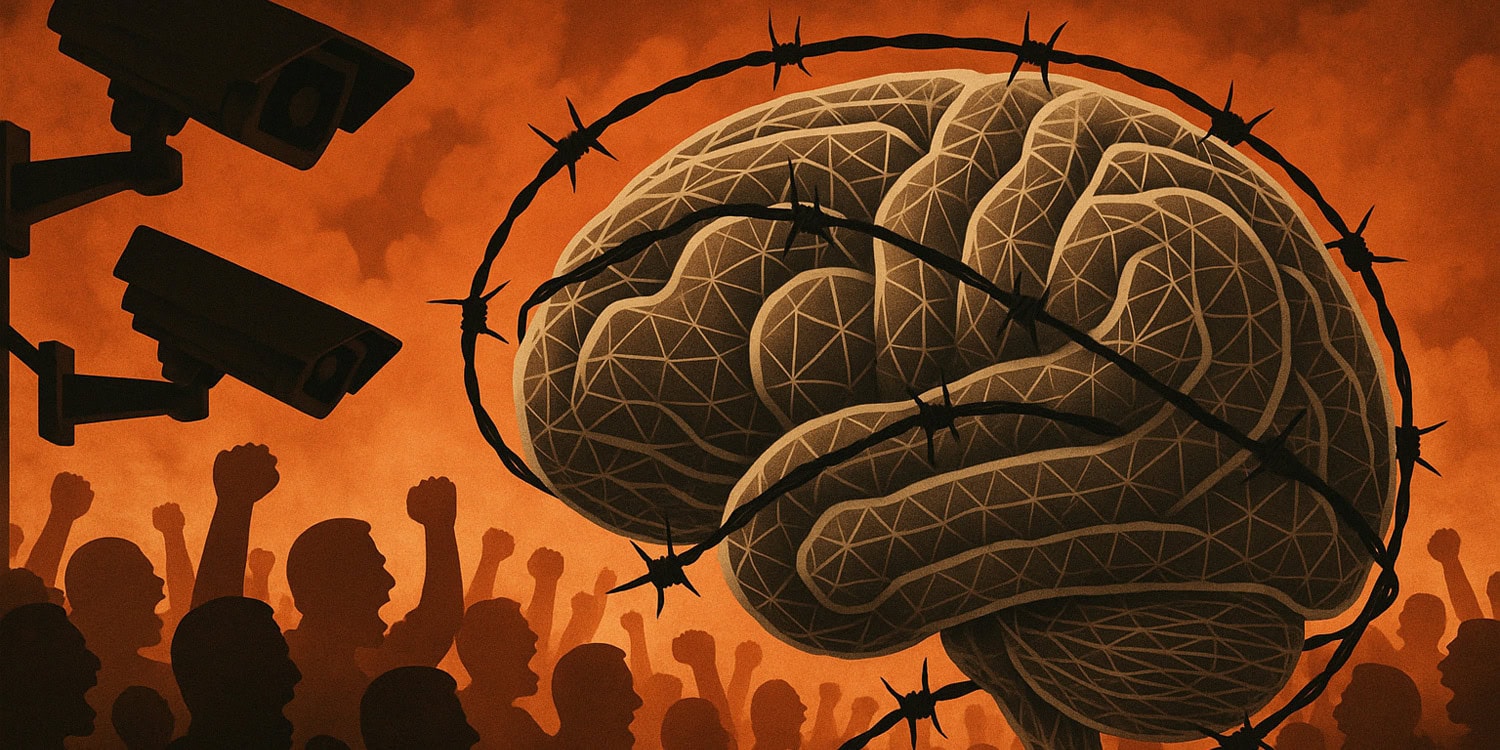
Jeremy Gilbert on Twitter / X
Really useful analysis of NR / neo-monarchism/ long-termism as authoritarian responses to the perception that democracy just can't get anything done (cos it's locked in to the short-termism of the popularity / electoral cycle). Free to read here: https://t.co/U4z0qmBReM https://t.co/NG4XIUM6O8— Jeremy Gilbert (@jemgilbert) September 21, 2026
When Do Parties Lie? Misinformation and Radical-Right Populism Across 26 Countries - Petter Törnberg, Juliana Chueri, 2026
The spread of misinformation has emerged as a global concern. Academic attention has recently shifted to emphasize the role of political elites as drivers of mi...

‘Polarization’ has become the master concept for diagnosing our current democratic crisis. But this is not polarization. It is the radicalization of the political right. By misdiagnosing it, we risk becoming complicit in the crisis. 🧵 Just out in Perspectives on Politics doi.org/10.1017/S1537592726105246
Democracy is an epistemic discipline, it only works if truth can constrain power. Without a faster, more transparent architecture for shared reality, the arc of democracy bends away from substance, through simulation, and toward authoritarianism. Without major action, it's the inevitable end state.

