

It can also be argued that authoritarianism is just politically superior at administering a political economy of broken promises and stagnating or falling standards of living. hup.harvard.edu/books/9780674976788

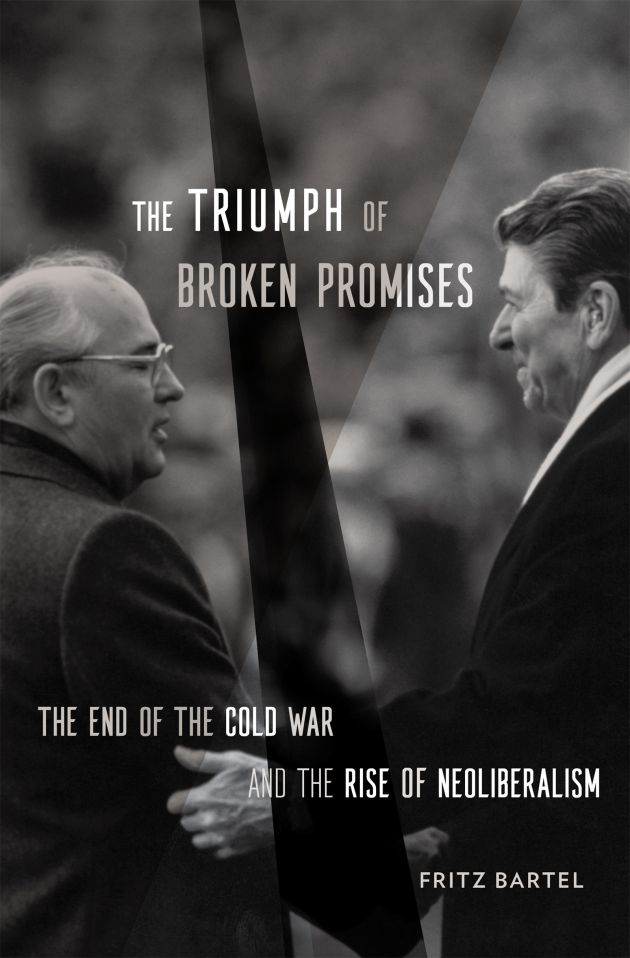
The Triumph of Broken Promises — Harvard University Press
www.hup.harvard.eduMay 17, 2026 at 9:08 PM
The Myth of Authoritarian Efficiency
When it comes to getting stuff done, democracies win every time.
Actually, Democracy Dies in H.R.
New research sheds light on how mediocre employees help would-be authoritarians maintain power.

Dictatorship, Democracy, and Development
Under anarchy, uncoordinated competitive theft by “roving bandits” destroys the incentive to invest and produce, leaving little for either the population or the bandits. Both can be better off if a bandit sets himself up as a dictator—a “stationary bandit” who monopolizes and rationalizes theft in the form of taxes. A secure autocrat has an encompassing interest in his domain that leads him to provide a peaceful order and other public goods that increase productivity. Whenever an autocrat expects a brief tenure, it pays him to confiscate those assets whose tax yield over his tenure is less than their total value. This incentive plus the inherent uncertainty of succession in dictatorships imply that autocracies will rarely have good economic performance for more than a generation. The conditions necessary for a lasting democracy are the same necessary for the security of property and contract rights that generates economic growth.
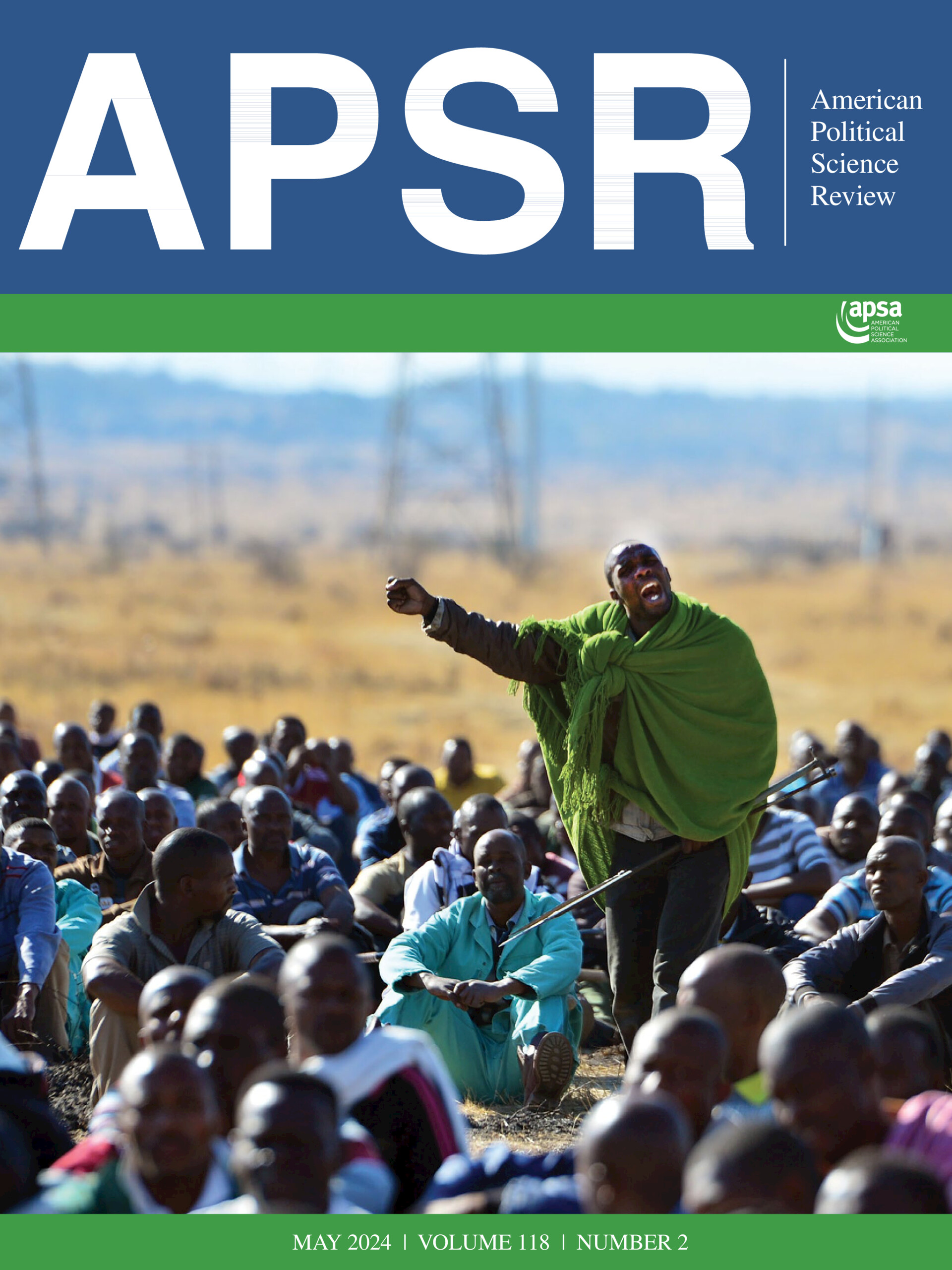
How to stop a dictator
I spent months studying how authoritarians like Trump lose. The answer is shockingly simple.

Researchers Detail How AI Systems Can Enable Authoritarianism
A new preprint study of authoritarianism-enabling AI presents another set of evidence of the gaps in safeguards, writes Tim Bernard.

The rise of AI sovereignty: Authoritarian technological imaginaries as a form of reflexive control
Recent literature increasingly examines generative artificial intelligence's (AI's) role in disinformation and propaganda as a key driver of digital authoritarianism. Yet, less attention has been paid to how authoritarian regimes may influence the global governance of AI itself. This essay addresses this gap by analysing the impact of authoritarian technological imaginaries, focusing on the rise of ‘AI sovereignty’ as a central concept shaping global AI governance. It adopts a conceptual framework that combines the notion of imaginaries with the concept of reflexive control, originating in Soviet strategic thought and referring to influencing an adversary's perceptions so they act in ways aligned with the initiator's goals, to study authoritarian diffusion and the global politics of AI. Through an examination of public statements by the Russian president, the study shows how Russia constructs an AI imaginary that extends Cold War logics of nuclear competition into the digital era, framing AI as a matter of security and survival rather than ethics or rights. Drawing on the Russian case, the analysis identifies three frames that underpin the authoritarian AI imaginary: AI as a tool for power and domination; Western AI as a cultural threat; and AI as a guarantor of state efficiency. The article argues that such imaginaries shape the cognitive environment of global policy debates, promoting sovereignty-centred and securitised approaches to AI governance. It suggests that recognising the role of reflexive control in authoritarian diffusion helps distinguish legitimate Global South concerns from authoritarian influence and supports more inclusive and resilient models of AI governance.

The rise of AI sovereignty: Authoritarian technological imaginaries as a form of reflexive control
Recent literature increasingly examines generative artificial intelligence's (AI's) role in disinformation and propaganda as a key driver of digital authoritarianism. Yet, less attention has been paid to how authoritarian regimes may influence the global governance of AI itself. This essay addresses this gap by analysing the impact of authoritarian technological imaginaries, focusing on the rise of ‘AI sovereignty’ as a central concept shaping global AI governance. It adopts a conceptual framework that combines the notion of imaginaries with the concept of reflexive control, originating in Soviet strategic thought and referring to influencing an adversary's perceptions so they act in ways aligned with the initiator's goals, to study authoritarian diffusion and the global politics of AI. Through an examination of public statements by the Russian president, the study shows how Russia constructs an AI imaginary that extends Cold War logics of nuclear competition into the digital era, framing AI as a matter of security and survival rather than ethics or rights. Drawing on the Russian case, the analysis identifies three frames that underpin the authoritarian AI imaginary: AI as a tool for power and domination; Western AI as a cultural threat; and AI as a guarantor of state efficiency. The article argues that such imaginaries shape the cognitive environment of global policy debates, promoting sovereignty-centred and securitised approaches to AI governance. It suggests that recognising the role of reflexive control in authoritarian diffusion helps distinguish legitimate Global South concerns from authoritarian influence and supports more inclusive and resilient models of AI governance.
The Authoritarian Stack
How Tech Billionaires Are Building a Post-Democratic America — And Why Europe Is Next
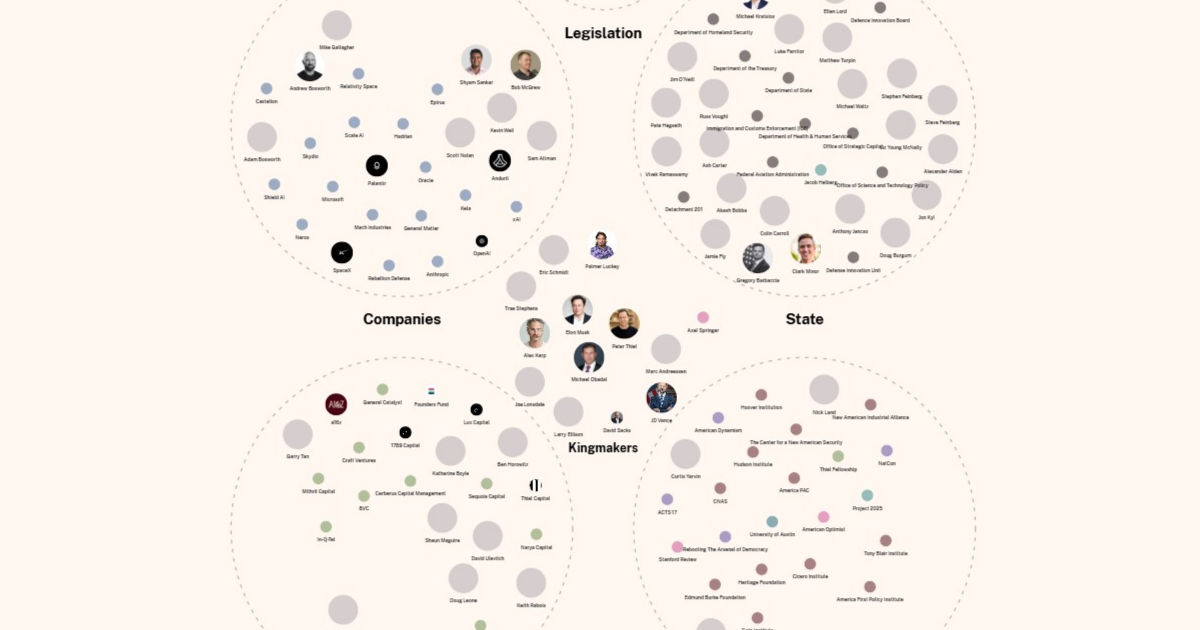
The Authoritarian Stack
How Tech Billionaires Are Building a Post-Democratic America — And Why Europe Is Next
The Authoritarian Stack: Mapping Big Tech’s Capture of State Power - Rosa-Luxemburg-Stiftung
A new project exposes the infrastructure of techno-oligarchic control — and why Europe must act

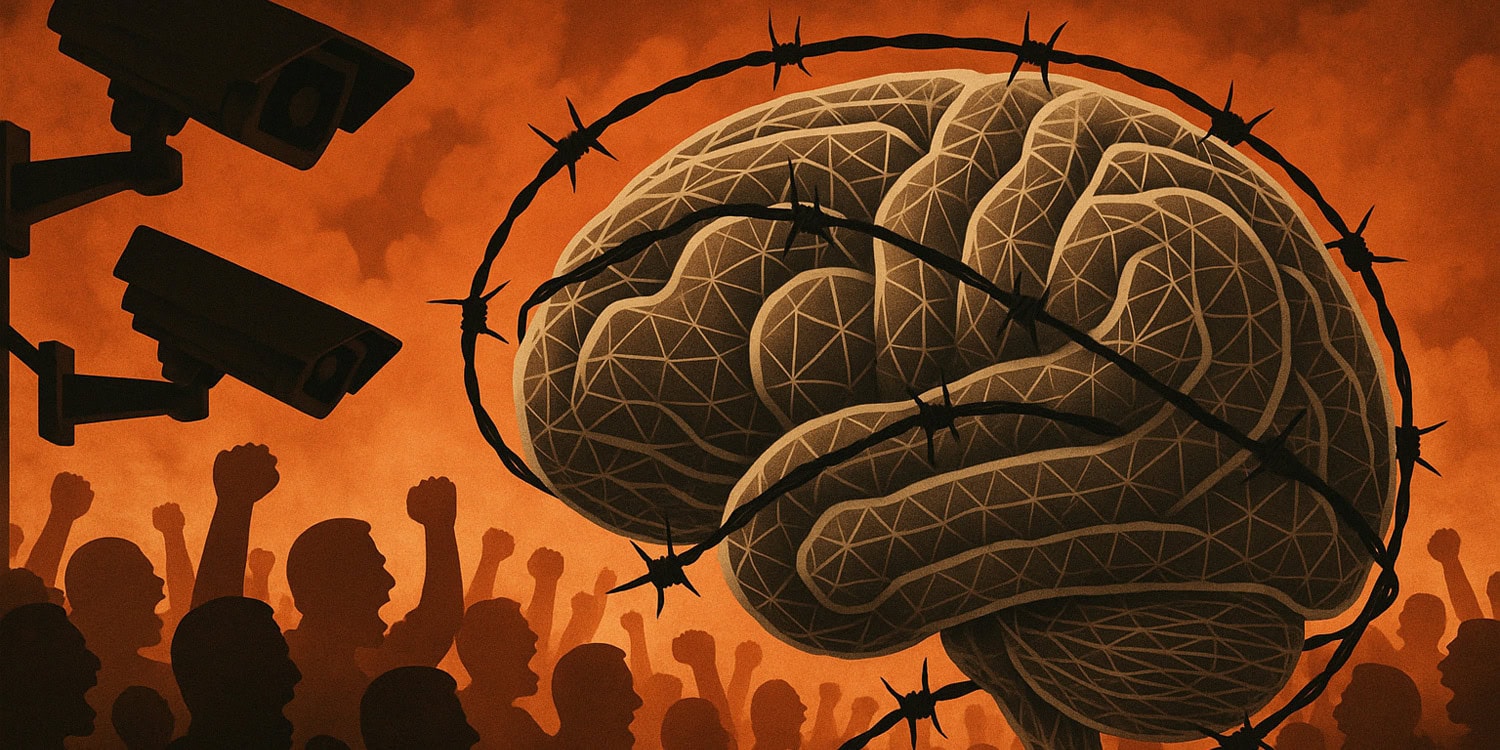
Anti-democratic attitudes are highly contagious, new psychology study finds
The rise of anti-democratic sentiments might be driven by social contagion. Researchers have discovered that citizens often adapt their personal support for authoritarian rule to align with the political views of those around them.
The Triumph of Broken Promises — Harvard University Press
A powerful case that the economic shocks of the 1970s hastened both the end of the Cold War and the rise of neoliberalism by forcing governments to impose austerity on their own people.Why did the Cold War come to a peaceful end? And why did neoliberal economics sweep across the world in the late twentieth century? In this pathbreaking study, Fritz Bartel argues that the answer to these questions is one and the same. The Cold War began as a competition between capitalist and communist governments to expand their social contracts as they raced to deliver their people a better life. But the economic shocks of the 1970s made promises of better living untenable on both sides of the Iron Curtain. Energy and financial markets placed immense pressure on governments to discipline their social contracts. Rather than make promises, political leaders were forced to break them.In a sweeping narrative, The Triumph of Broken Promises tells the story of how the pressure to break promises spurred the end of the Cold War. In the West, neoliberalism provided Western leaders like Ronald Reagan and Margaret Thatcher with the political and ideological tools to shut down industries, impose austerity, and favor the interests of capital over labor. But in Eastern Europe, revolutionaries like Lech Walesa in Poland resisted any attempt at imposing market discipline. Mikhail Gorbachev tried in vain to reform the Soviet system, but the necessary changes ultimately presented too great a challenge.Faced with imposing economic discipline antithetical to communist ideals, Soviet-style governments found their legitimacy irreparably damaged. But in the West, politicians could promote austerity as an antidote to the excesses of ideological opponents, setting the stage for the rise of the neoliberal global economy.
"You have to use it. You have to trust it.": Forced Adoption of AI is The Subtext of Davos
Authoritarianism is the AI Bailout; But If AI Doesn't Need a Bailout, Does it Need Authoritarianism?

The Dispersion of Power: A Critical Realist Theory of Democracy
Abstract The Dispersion of Power is an urgent call to rethink centuries of conventional wisdom about what democracy is, why it matters, and how to make it better. Drawing from history, social science, psychology, and critical theory, it explains why elections do not and cannot realize the classic ideal of popular rule, and why prevailing strategies of democratic reform often make things worse. Instead, Bagg argues, we should see democracy as a way of protecting public power from capture—an alternative vision that is at once more realistic and more inspiring. Despite their many shortcomings, real-world elections do prevent the most extreme forms of tyranny, and are therefore indispensable. In dealing with the vast inequalities that remain, however, we cannot rely on standard solutions such as electoral reform, direct democracy, deliberation, and participatory governance. Instead, Bagg shows, protecting and enriching democracy requires addressing underlying inequalities of power directly. In part, this entails substantive policies attacking the advantages of wealthy elites. Even more crucially, deepening democracy requires the organization of oppositional, countervailing power among ordinary people. Neither task is easy, but historical precedents exist in both cases—and if democracy is to survive contemporary crises, leaders and citizens alike must find ways to revive and reinvent these essential democratic practices for the twenty-first century.

Donald Trump: A Critical Theory-Perspective on Authoritarian Capitalism
This paper analyses economic power, state power and ideological power in the age of Donald Trump with the help of critical theory. It applies the critical theory approaches of thinkers such as Franz Neumann, Theodor W. Adorno and Erich Fromm. It analyses changes of US capitalism that have together with political anxiety and demagoguery brought about the rise of Donald Trump. This article draws attention to the importance of state theory for understanding Trump and the changes of politics that his rule may bring about. It is in this context important to see the complexity of the state, including the dynamic relationship between the state and the economy, the state and citizens, intra-state relations, inter-state relations, semiotic representations of and by the state, and ideology. Trumpism and its potential impacts are theorised along these dimensions. The ideology of Trump (Trumpology) has played an important role not just in his business and brand strategies, but also in his political rise. The (pseudo-)critical mainstream media have helped making Trump and Trumpology by providing platforms for populist spectacles that sell as news and attract audiences. By Trump making news in the media, the media make Trump. An empirical analysis of Trump’s rhetoric and the elimination discourses in his NBC show The Apprentice underpins the analysis of Trumpology. The combination of Trump’s actual power and Trump as spectacle, showman and brand makes his government’s concrete policies fairly unpredictable. An important question that arises is what social scientists’ role should be in the conjuncture that the world is experiencing.See also the related blog post "How The Frankfurt School Helps Us To Understand Donald Trump’s Twitter Populism"http://www.huffingtonpost.co.uk/christian-fuchs1/how-the-frankfurt-school-_b_14156190.html?utm_hp_ref=uk-donald-trumpThe German translation of this shorter piece was published in Der Falter 5/2017: 21-23.
the viability of many right-wing intellectuals and intellectual spaces is enormously dependent on the largesse of reactionary billionaires and foreign governments, who help them circumvent a marketplace of ideas where they would otherwise post extraordinarily poor sales

Don Moynihan
Its fair to ask if Orban's successful cultivation of the Western right wing intellectuals reflected that their networks were already dependent on patronage. Rod Dreher was funded by a weird billionaire, and when he stopped paying his salary, Orban did. Dreher already looking for a new gig.

