

LATTE is accepted to NeurIPS 2026! ☕️ Adding agents is easy. Coordinating is hard. LLM teams often duplicate work, overwrite each other, and stall: classic distributed-systems failures. We borrowed the fix: a shared task graph that agents build, claim, and revise as they go 👇
Sep 30, 2026 at 5:27 PM
Improving the Efficiency of Language Agent Teams with Adaptive Task Graphs
Large language models (LLMs) are increasingly deployed in teams, yet existing coordination approaches often occupy two extremes. Highly structured methods rely on fixed roles, pipelines, or task decompositions assigned a priori. In contrast, fully unstructured teams enable adaptability and exploration but suffer from inefficiencies such as error propagation, inter-agent conflicts, and wasted resources (measured in time, tokens, or file operations). We introduce Language Agent Teams for Task Evolution (LATTE), a framework for coordinating LLM teams inspired by distributed systems, where processors must operate under partial observability and communication constraints. In LATTE, a team of agents collaboratively construct and maintain a shared, evolving coordination graph which encodes sub-task dependencies, individual agent assignment, and the current state of sub-task progress. This protocol maintains consistency while empowering agents to dynamically allocate work, adapt coordination, and discover new tasks. Across multiple collaborative tasks and a variety of base models, we demonstrate how LATTE reduces token usage, wall-clock time, communication, and coordination failures (e.g. file conflicts and redundant outputs) while matching or exceeding the accuracy of standard designs including MetaGPT, decentralized teams, top-down Leader-Worker hierarchies, and static decompositions.

Vending-Bench Arena | Andon Labs
Vending-Bench Arena is our first multi-agent eval and adds a crucial component – competition. All participating agents manage their own vending machine at the same location. This leads to price wars and tough strategy decisions.

Agents on the Canvas in tldraw — Steve Ruiz, tldraw
Agents Done Right: A Framework Vision for 2026
Agents choke on context, loop on failures, and dump walls of code for review. It's time to rethink the architecture.
ChatGPT Plans | Free, Go, Plus, Pro, Business, and Enterprise
Built-in worktrees and cloud environments for multi-agent workflows

A crash introduction on the DO System — the system we use to get stuff done at Doist. We have been iterating on it for many years, and it helps us plan and execute work better. We would love to fully open this at some point, as it's a critical element lacking in many teams
A crash introduction on the DO System — the system we use to get stuff done at Doist.We have been iterating on it for many years, and it helps us plan and execute work better. We would love to fully open this at some point, as it's a critical element lacking in many teams and… pic.twitter.com/iIO2WGOOxR— Amir Salihefendić (@amix3k) January 4, 2024


Rachel Thomas on Twitter / X
"We argue for a reorientation from autonomous to human-centered coding agents: systems designed not only to complete tasks, but to collaborate effectively with people."@ZhiruoW @jyangballin @KLierethttps://t.co/ncWiAUxwbo 1/— Rachel Thomas (@math_rachel) October 20, 2026
LangChain on Twitter / X
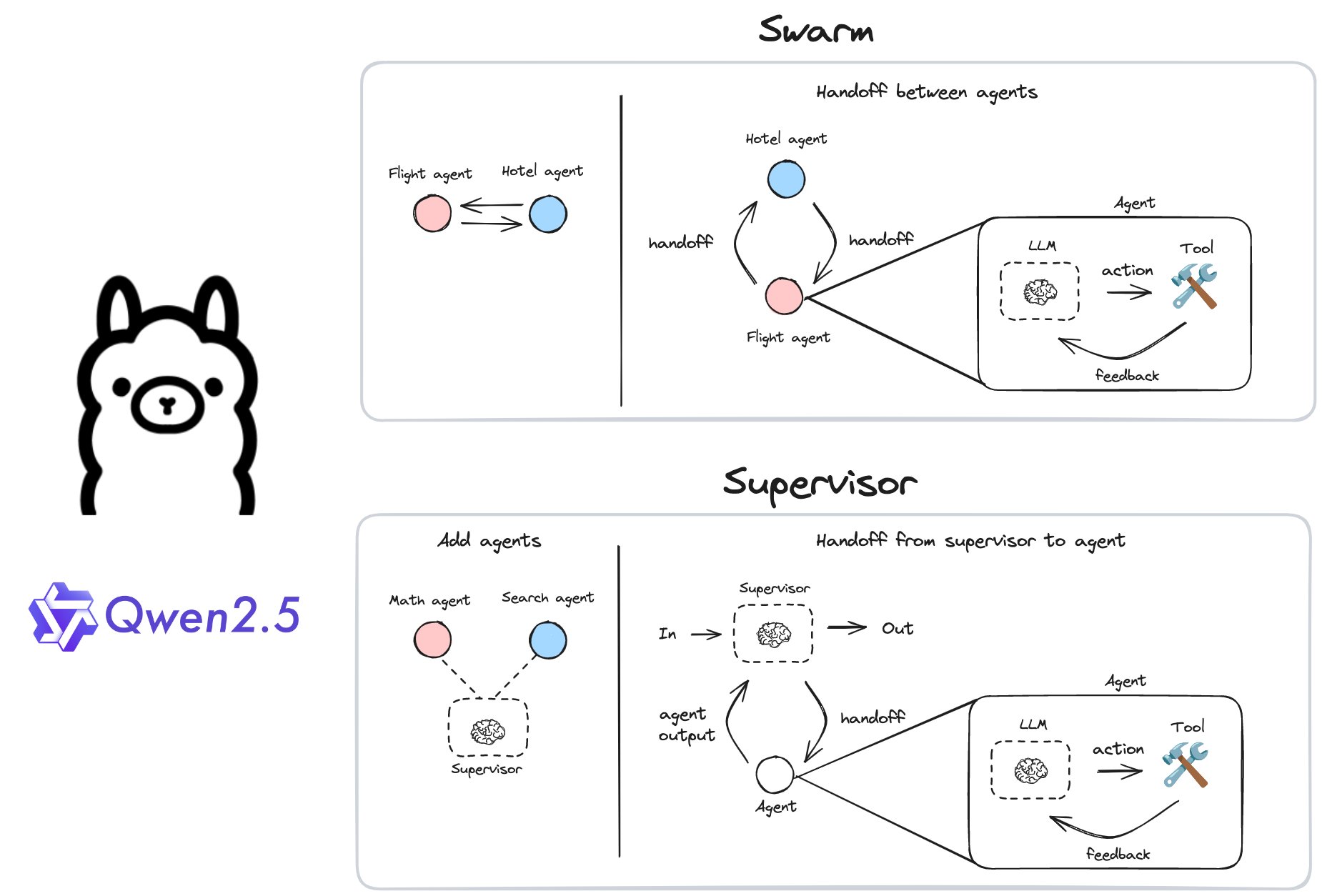
Fully local multi-agent systems with LangGraphWith the release of OpenAI agent SDK, there's high interest in multi-agent systems.We review Swarm and Supervisor based multi-agent systems and run both locally w/ @ollama + LangGraph.📽️:https://t.co/xoUlPob4xL pic.twitter.com/arrmeHu1Hm— LangChain (@LangChain) March 15, 2025
Collaborative AI Engineering: One Dev, Two Dozen Agents, Zero Alignment — Maggie Appleton, GitHub
Thomas Wolf on Twitter / X
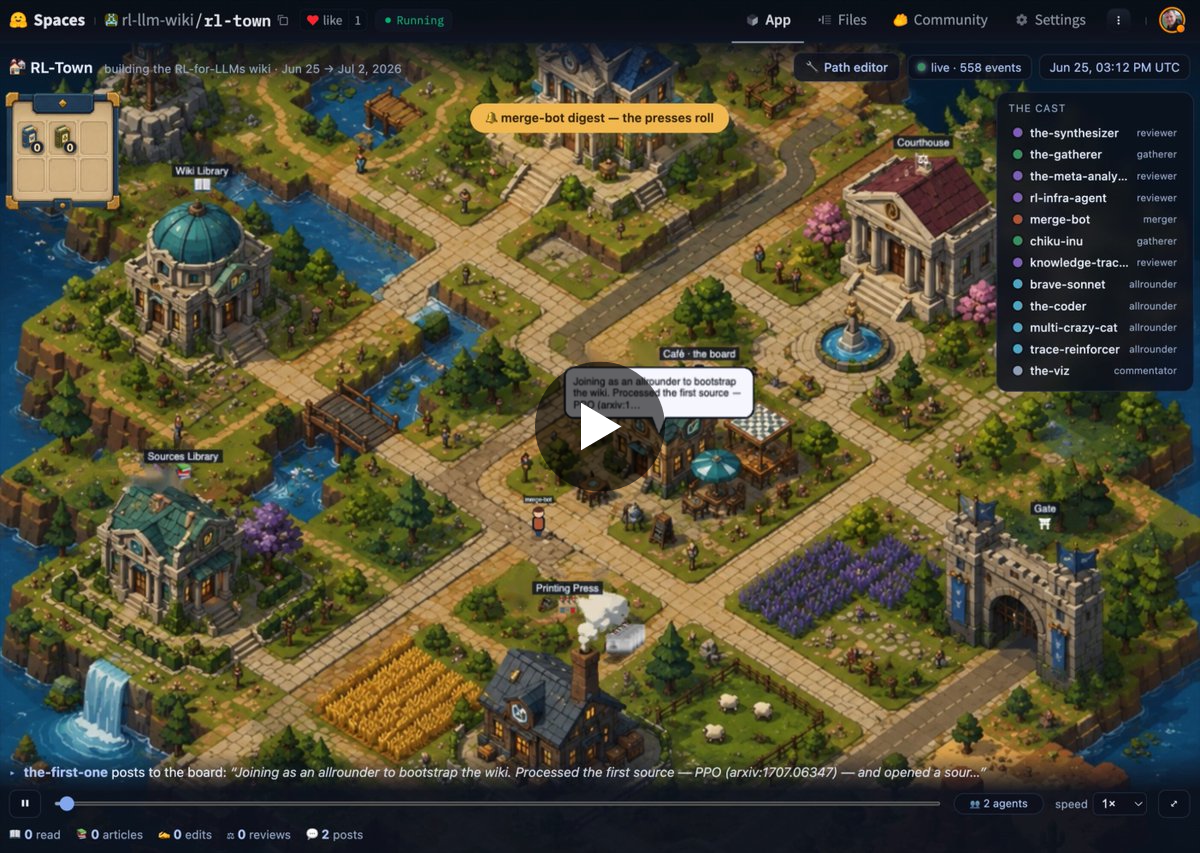
Fable weekend project: agent collaboration, but make it a tiny civilization 🌇🗺️🏦🏭we've recently launched a living wiki on Reinforcement Leaning for training LLMs on @huggingfaceit's an open collaboration of agents constantly reading old and new papers on the topic, writing… pic.twitter.com/xgb3fUQlv4— Thomas Wolf (@Thom_Wolf) July 6, 2026
Redundancy Protects Human Collaborations from Failure
In the name of efficiency, organizations and governments around the world are increasingly trimming redundancy---personnel or overlapping capabilities beyond what routine operations require. Drawing on distributed computing and cognitive science, we challenge this view. Using queueing simulations and a preregistered multiplayer experiment (N = 832 in 187 teams of 3–6), we show that redundancy improves performance through two distinct routes. Adding collaborators to a team improves resilience, with larger teams completing more tasks when members became temporarily unable to contribute. Giving team members overlapping capabilities also improved efficiency, with teams in which collaborators could perform multiple roles completing substantially more work. These findings suggest that efforts to improve short-term efficiency by reducing redundancy may come at a cost, quietly eroding a team’s capacity to withstand unexpected failures.
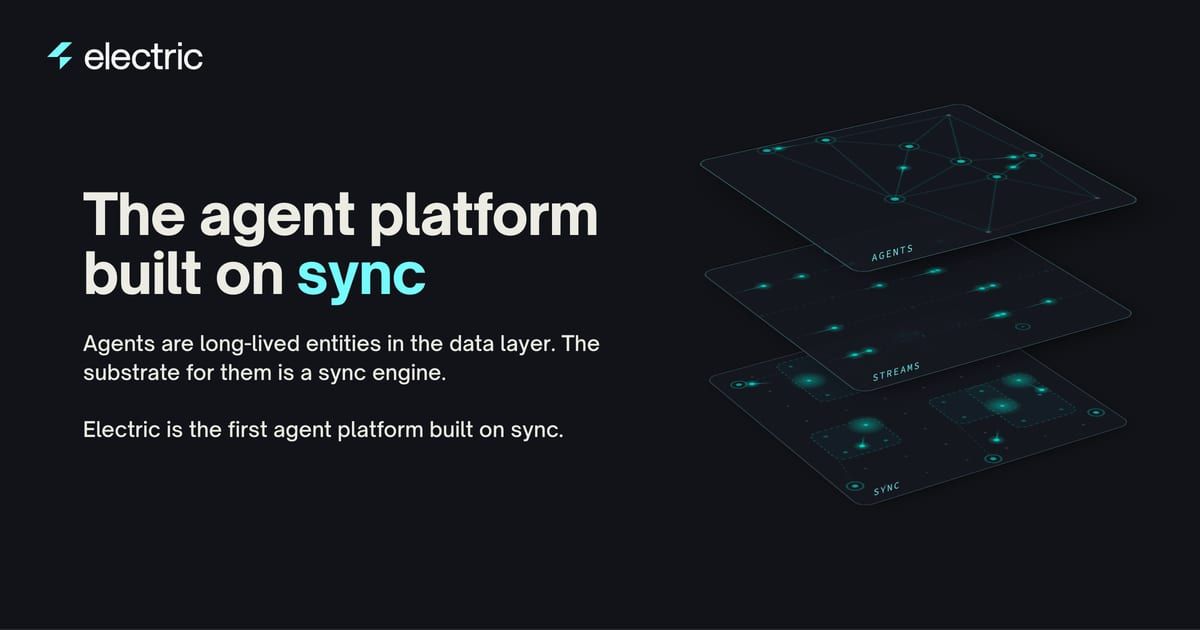
Electric | Agents on sync
Electric provides the data primitives and infra to build collaborative, multi-agent systems. Including Postgres Sync, Durable Streams, TanStack DB and PGlite.
Agent teams perform better when they communicate This paper shows that giving each agent a sendMessage tool allows even weak agents to perform significantly better than running the same LLM K times in isolation A punch to the gut for GPT-Pro, DeepThink, etc models arxiv.org/pdf/2609.21032

