

Redundancy Protects Human Collaborations from Failure
In the name of efficiency, organizations and governments around the world are increasingly trimming redundancy---personnel or overlapping capabilities beyond what routine operations require. Drawing on distributed computing and cognitive science, we challenge this view. Using queueing simulations and a preregistered multiplayer experiment (N = 832 in 187 teams of 3–6), we show that redundancy improves performance through two distinct routes. Adding collaborators to a team improves resilience, with larger teams completing more tasks when members became temporarily unable to contribute. Giving team members overlapping capabilities also improved efficiency, with teams in which collaborators could perform multiple roles completing substantially more work. These findings suggest that efforts to improve short-term efficiency by reducing redundancy may come at a cost, quietly eroding a team’s capacity to withstand unexpected failures.
These Desk Organization Ideas Will Keep Your Office Tidy and Increase Productivity
An organized desk isn’t just about the aesthetic — it’s also about function.

Efficiency is the Enemy
If you ever find yourself stressed, overwhelmed, sinking into stasis despite wanting to change, or frustrated when you can’t respond to new opportunities, you need more slack in your life. Here’s how slack works and why you need more of it.
The productivity pit: how Slack is ruining work
Job software like Teams, Slack, and Workplace were supposed to make us more productive. They haven’t.

Beyond the Holacracy Hype
Most observers who have written about holacracy and other forms of self-management take extreme positions, either celebrating these “bossless,” “flat” work environments for fostering flexibility and engagement or denouncing them as naive experiments that ignore how things really get done. To gain a more accurate, balanced perspective, the authors—drawing on examples from Zappos, Morning Star, and other companies—examine why these structures have evolved and how they operate, both in the trenches and at the level of enterprise strategy and policy. Self-organization models typically share three characteristics: Teams are the structure. Within them, individual “roles” are collectively defined and assigned to accomplish the work. Teams design and govern themselves, while nested within a larger structure. Leadership is contextual. It’s distributed among roles, not individuals, and responsibilities shift according to fit and as the work changes. Adopting self-management wholesale—using it to determine what should be done, who should do it, and how people will be rewarded across an entire enterprise—is hard, uncertain work, and the authors argue that in many environments it won’t pay off. But their research and experience also suggest that elements of self-organization can be valuable tools for companies of all kinds, and they look at circumstances where it makes more sense to blend the new approaches with traditional models.


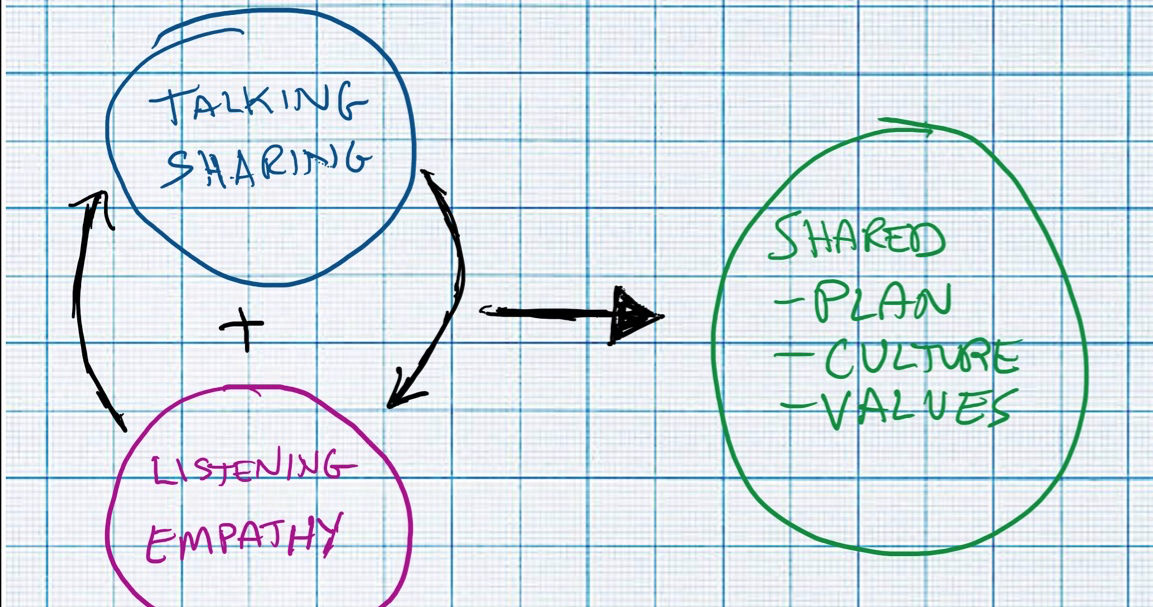
Reaching Peak Meeting Efficiency
Meetings are undeniably the most important tool for build a high-performance team with shared values

4 Mental Traps That Kill Productivity
A productivity mindset has many enemies: meetings, multitasking, and interruptions from devices and coworkers. Here's how to neutralize them.

Distributed teams are rewriting the rules of office(less) politics | TechCrunch
When we think about designing our dream home, we don’t think of having a thousand roommates in the same room with no doors or walls. Yet in today’s

Distributed teams are rewriting the rules of office(less) politics | TechCrunch
When we think about designing our dream home, we don’t think of having a thousand roommates in the same room with no doors or walls. Yet in today’s
The solution to (nearly) everything: working less | Rutger Bregman
Excessive work and pressure are status symbols. But overtime is deadly. If we worked less we’d make fewer errors, address inequality and have a better life

Accountability sinks
In The Unaccountability Machine, Dan Davies argues that organizations form “accountability sinks,” structures that absorb or obscure the consequences of a decision such that no one can be held dire...
Why time management is ruining our lives | Oliver Burkeman
The Long Read: All of our efforts to be more productive backfire – and only make us feel even busier and more stressed

Twist: Organized work communication for flexible teams
See how much more efficient your teamwork can be (even across time zones). Named a World Changing Idea by Fast Company.

1/ Governments and organizations often cut staff and overlapping roles in the name of efficiency. But what looks unnecessary on a normal day may be essential when something goes wrong. Our new preprint tests how redundancy protects human teams 🧵👇
Oct 2, 2026 at 2:14 PM
