Riemann Hypothesis may have been solved with the help of Claude. “what I saw during the course of progress so amazed me that I believe it is one dawn across science of something far greater.” alpo.ge/remark.pdf
Nov 20, 2026 at 3:30 PM
The stochastic parrots have apparently proved the Riemann Hypothesis
“… it is very probable that all roots are real. Of course one would wish for a rigorous proof here; I have for the time being, after some fleeting vain attempts, provisionally put aside…

What stories should we tell about scientific progress now?
In search of the mysterious fruits of basic science
Claude has improved on a longstanding lower bound for the fraction of zeros of the Riemann zeta function that satisfy the Riemann hypothesis
An unreleased Claude model improved the lower bound for the fraction of zeroes of the Riemann zeta function that satisfy the hypothesis, raising it from 41.6% to 67.2%.
And yet, it moves
It appears that Anthropic has just solved the Riemann Hypothesis, and I have Thoughts. So I’m going to start by telling you about a musical I saw last week. Given my entire personality and identity…

Unforced Euler singularity, unforced Navier-Stokes singularity, and the Generalized Riemann Hypothesis
Obviously these results will be reported widely in other outlets, but I will note them here, in decreasing order of how “digested” the results currently are: Levent Alpöge, Tristan Buck…

Unforced Euler singularity, unforced Navier-Stokes singularity, and the Generalized Riemann Hypothesis
Obviously these results will be reported widely in other outlets, but I will note them here, in decreasing order of how “digested” the results currently are: Levent Alpöge, Tristan Buck…

The Engine of Scientific Discovery: How New Methods and Tools Spark Major Breakthroughs
Abstract. How do we spark new scientific discoveries? Why do some breakthroughs seem even accidental? And most importantly, how can we accelerate them and
Markus J. Buehler on Twitter / X
After decades at MIT studying how nature builds - from spider silk to bone to nacre - I've become convinced of something: the biggest barrier to scientific progress isn't knowledge, it's connection. The insights we need already exist, scattered across millions of papers and… pic.twitter.com/EHUomaFyPj— Markus J. Buehler (@ProfBuehlerMIT) March 10, 2026
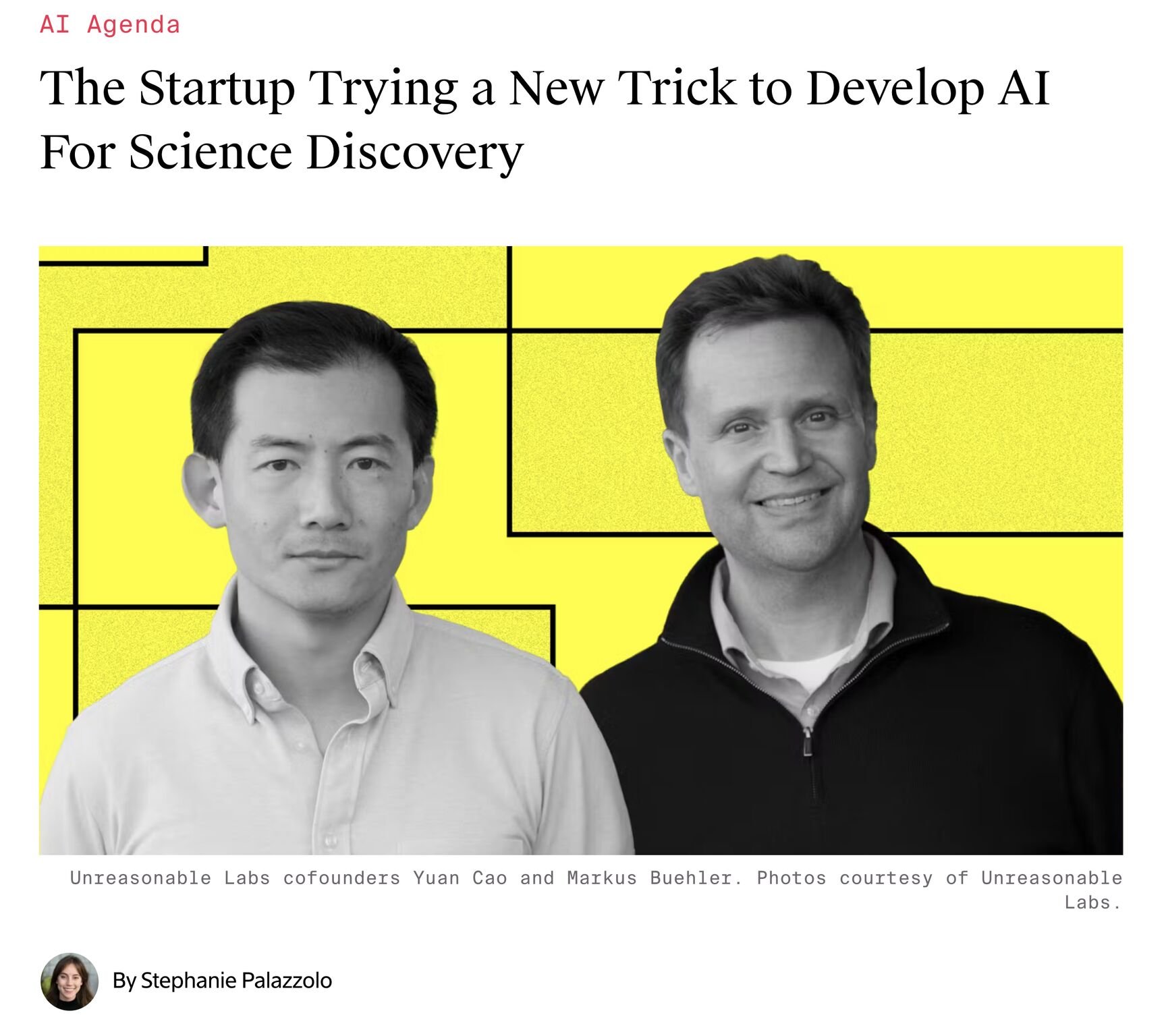
Terence Tao (@tao@mathstodon.xyz)
In traditional mathematics (or "Math 1.0"), a breakthrough proof of a long-standing open conjecture generates a large amount of subsequent activity and excitement in the field. The authors of the proof are invited to give many talks, and meet with other experts in the area. Workshops are set up to discuss the proof, as well as other recent developments. As a result, new connections and collaborations are formed, followup problems are shared, and other mathematicians (both junior and senior) are attracted to the field (including in some cases the authors themselves, if they initially came from a different subject). As a result of all this activity, the proofs naturally become digested, streamlined, placed in context with other results in the field, and ultimately become part of the textbooks and lecture notes for the next generation of mathematicians in the field. (1/4)
Anthropic mathematician claims to have solved prestigious Millennium Prize problem with Claude
AI may have just solved another Millennium Prize problem.

Without a theory of intelligence
The history of science — and of progress — is a series of benefits that are direct results of new tools.
Speculations on the Future of the Scientific Method
The following essay was published 20 years ago (January, 2006) on my blog The Technium. I edited the intro here, but the speculations are basically unchanged.

Bartosz Naskręcki on Twitter / X
Congrats to @LechMazur for the solution and to Terence Tao for the digestion and storytelling. You see the trend. Mathematicians are still needed if we want to make any sense of the formal proofs. For now... Maybe the next gen LLMs will simply read allthe blogs of Terry and… https://t.co/yXiISCrNAF— Bartosz Naskręcki (@nasqret) August 13, 2026
Claude for Science. Thursday, November 12, at the Niels Bohr Institute, University of Copenhagen. In September, Anthropic reported that Claude agents found a CRISPR-like enzyme system in… | Jacob Langvad Nilsson | 17 comments
Claude for Science. Thursday, November 12, at the Niels Bohr Institute, University of Copenhagen. In September, Anthropic reported that Claude agents found a CRISPR-like enzyme system in bacteriophage DNA. Earlier in the same month, another AI lab said its model had settled a question about the Navier-Stokes equations, one of the seven Millennium Prize Problems. Results like these don't come from a lucky afternoon with a chatbot. They come from years of method development, careful engineering and building on the work that came before. What has changed is how much of that work a model can now take on, and the speed of which it does it. The latest models read the literature, write and run their own code, and work through a dataset for hours without losing track. In the enzyme case, hundreds of Claude agents searched DNA data for 21 hours and flagged a pattern nobody had asked them to look for. The method still has to be sound. But a researcher with a good question can now test far more ideas in a week than before. That is what we want to show. How researchers here set up their work so that stronger models can move it forward. The evening is about how the Danish science community uses Claude to drive new research and breakthroughs. Four STEM researchers from academia and industry each show one case. What they asked Claude, how they worked, what they found, and what failed. The room is part of it. Niels Bohr lectured in Auditorium A, and in the 1930s Heisenberg and Pauli sat in the front row. We will meet in this historical auditorium and get a glimpse of frontier scientific research using Claude. ▪️ Doors open 15:30, programme 16:00 to 19:00 ▪️ Four case studies from Danish research ▪️ 50 seats on the original wooden benches ▪️ Registration by approval Thanks to Daniel Murnane for making this happen. Thanks to the Niels Bohr Institute and the University of Copenhagen for having us. To Katrin Hjorth Thordardottir for logistics. And thanks to Anthropic and the Claude Community team, Martine N., Cassie Baquero Mayes, Chiara Massironi for your continued support. Link to sign up in the first comment below. We are still confirming speakers. Which researcher in Denmark should I talk to? | 17 comments on LinkedIn

the void — LessWrong
Comment by nostalgebraist - Thanks for the reply! I'll check out the project description you linked when I get a chance. [...] Yeah, I had mentally flagged this as a potentially frustrating aspect of the post – and yes, I did worry a little bit about the thing you mention in your last sentence, that I'm inevitably "reifying" the thing I describe a bit more just by describing it. FWIW, I think of this post as purely about "identifying and understanding the problem" as opposed to "proposing solutions." Which is frustrating, yes, but the former is a helpful and often necessary step toward the latter. And although the post ends on a doom-y note, I meant there to be an implicit sense of optimism underneath that[1] – like, "behold, a neglected + important cause area that for all we know could be very tractable! It's under-studied, it could even be easy! What is true is already so; the worrying signs we see even in today's LLMs were already there, you already knew about them – but they might be more amenable to solution than you had ever appreciated! Go forth, study these problems with fresh eyes, and fix them once and for all!" I might write a full post on potential solutions sometime. For now, here's the gist of (incomplete, work-in-process) thoughts. ---------------------------------------- In a recent post, I wrote the following (while talking about writing a Claude 4 Opus prompt that specified a counterfactual but realistic scenario): [...] And I feel that the right way to engage with persistent LLM personas is basically just this, except generalized to the fullest possible extent. "Imagine the being you want to create, and the kind of relationship you want to have (and want others to have) with that being. "And then shape all model-visible 'context' (prompts, but also the way training works, the verbal framing we use for the LLM-persona-creation process, etc.) for consistency with that intent – up to, and including, authentically acting out that 'relationship you want to have' w
How scientists use Claude
We analyzed 207,000 research sessions to learn how Claude is used in science, why some tasks get more use than others, and how AI could speed up discovery.