

The goal of "maximize human potential" is a humanistic-sounding libertarian shibboleth, but it means nothing without dignity. Can human potential be maximized without universal investment in human dignity? One answer is the case for redistribution; taxes; governance. The other is not humanistic.
Nov 16, 2026 at 8:59 PM
Universal Basic Income is Capitalism 2.0 | TimJRobinson
A Universal Basic Income (UBI) would improve everyone’s lives, increase our free time, empower workers, and ensure everyone has food and a roof over their head. These are noble goals, but obviously there’s a downside or it would already be implemented, right?
What Humanity Needs To Flourish In The Next Decade
We are headed toward a world of productivity without prosperity, execution without verification and capacity without constraint. But this outcome is not inevitable.

What Humanity Needs To Flourish In The Next Decade
We are headed toward a world of productivity without prosperity, execution without verification and capacity without constraint. But this outcome is not inevitable.
Handing over humanity
Even the optimistic visions of a post-AGI future leave little room for human self-determination

Meet the ‘Change Agents’ Who Are Enabling Inequality (Published 2018)
In “Winners Take All,” Anand Giridharadas explores a global elite that bemoans the state of the world while refusing to seek real, structural change.

Denizen
How might we promote and sustain human prosperity and well being in an economy of permanence? John Fullerton takes his cues from stable, healthy living systems to formulate eight principles for a regenerative economy.
At least it's an ethos?
The limits of optimal control, from the maximalist and minimalist perspectives

Inequality can double the energy required to secure universal decent living
Ecological breakdown and economic inequality are among the largest contemporary global challenges, and the issues are thoroughly entangled – as they have been throughout the history of civilisations. Yet, the global economy continues toward ecological crises, and inequalities remain far higher than citizens believe to be fair. Here, we explore the role of inequality, alongside traditional drivers of ecological impacts, in determining global energy requirements for providing universal decent living. We consider scenarios from fair inequality – where inequalities mirror public ideals – through a fairly unequal world, to one with a super-rich global elite. The energy-costs of inequality appear far more significant than population: even fair levels increase the energy required to provide universal decent living by 40%, and a super-rich global 1% could consume as much energy as would providing decent living to 1.7 billion. We finish by arguing that total population remains important nonetheless, but for reasons beyond ecological impacts.

The Pillars of a Rights-Based Approach to AI Development
By centering peoples' rights we can shape AI to maximally benefit humanity while minimizing harms, says Margaret Mitchell.

Anthropic employees say they’ll give away billions. Where will it go?
A coming wave of Anthropic wealth could flood EA-aligned nonprofits with cash. Whether that’s good depends on who you ask

Agents, Alignment, and the Many Faces of Autonomy
This article investigates the prospect of aligning AI agents with human autonomy. We show that doing so is a challenge: while there is general agreement on the concept’s broad contours, its components can be specified in a number of conflicting ways, making it difficult to decide how an autonomy-enhancing agent should act. In response, we introduce three strategies for dealing with disagreements about interpretations of autonomy. Each offers a coherent approach that captures a different set of considerations, with its own strength and trade-offs. The liberal approach is committed to user integrity and promotes human autonomy by acting strictly on what a person says they want, without trying to change their mind. The capability-boosting approach is built around the idea of flourishing and promotes human autonomy by empowering the user to act on their goals. The meta-autonomy approach prioritizes choice by giving the user the kind of autonomy they want in relation to their interactions with an AI agent. By highlighting the multifaceted nature of human autonomy, this article contributes to recent efforts seeking to identify and operationalize targets of AI value alignment. It also illustrates the challenges and trade-offs that can arise not just between—but even within—the values selected as targets for alignment and offers strategies to navigate them.
reimagining (@structuralimage@kolektiva.social)
Hot take, Leftists and left-liberals are wrong: Capitalism is not, in any meaningful sense, an individualist ideology. It is a form of collectivism that relies on mass subordination and conformity to state and corporate structures. The so-called "individualism" it promotes is shallow and emaciated, consisting of mere consumer choices and formulaically prescribed competitive self-interest, which subjects one's will, needs, and subjectivity to the collective entities of state and capital. On the other hand, a positive, rounded understanding of individualism would involve striving toward relationships based on love and solidarity, wherein every individual is valued and equipped through the elimination of material need to pursue ethical and intellectual development. It would entail valuing the freedom and dignity of every individual and working toward the elimination of social hierarchies and institutional coercion, to provide every living person with the capacity to associate and disassociate freely. While critiquing colonial-capitalist "individualism" is obviously valid, replacing it with a fetishized conception of collectivism is not without consequence. We mustn't forget that most atrocious crimes against humanity of the 18th, 19th, 20th, and now 21st century have been committed under the aegis of some form of collectivism.
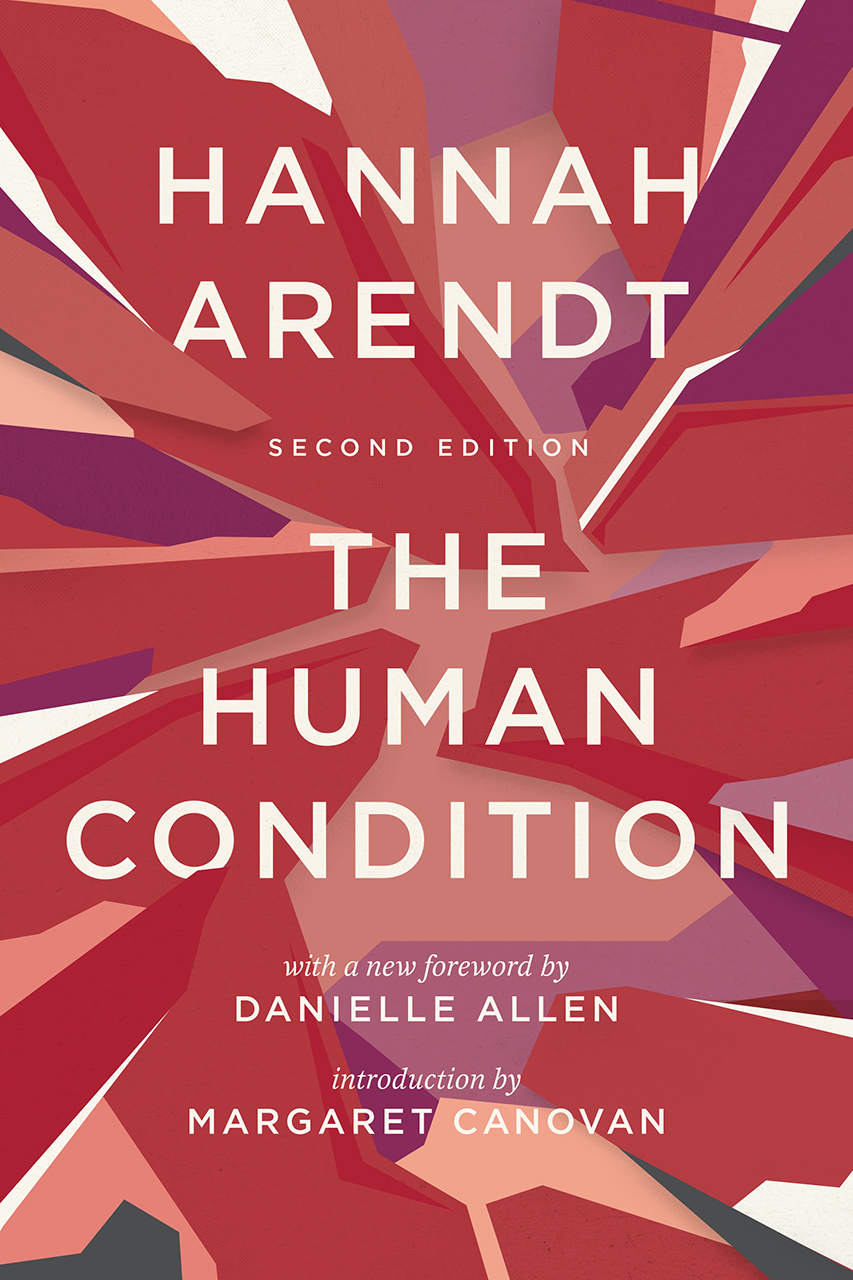
The Human Condition: Second Edition
A classic work of political thought, more relevant today than ever The twenty-first century has seen a resurgence of interest in the political thinker Hannah Arendt, “the theorist of beginnings,” whose work probes the logics underlying unexpected transformations—from totalitarianism to revolution. A work of striking originality, The Human Condition is in many respects more relevant now than when it first appeared in 1958. In her study of the state of modern humanity, Hannah Arendt considers humankind from the perspective of the actions of which it is capable. The problems Arendt identified then—diminishing human agency and political freedom, the paradox that as human powers increase through technological and humanistic inquiry, we are less equipped to control the consequences of our actions—continue to confront us today. This new edition, published to coincide with the sixtieth anniversary of its original publication, contains Margaret Canovan’s 1998 introduction and a new foreword by Danielle Allen. A classic in political and social theory, The Human Condition is a work that has proved both timeless and perpetually timely.
Meritocracy: the great delusion that ingrains inequality | Jo Littler
From Theresa May to Donald Trump, our leaders sell it as a utopian system of fairness – but ‘merit’ has been manipulated to privilege the wealthy

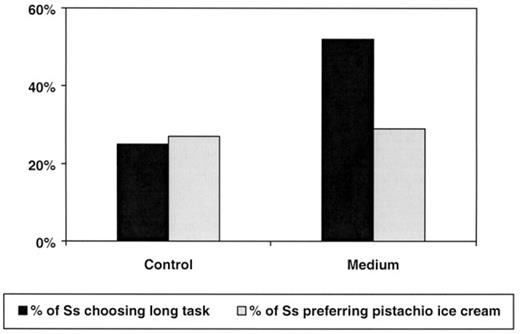
Medium Maximization
Abstract. A medium—for example, points or money—is a token people receive as the immediate reward of their effort. It has no value in and of itself, but it
Marketing Is an Argument - A Manifesto
A manifesto on human dignity in marketing. Against the Great Human Flattening.

