

In our new paper of how Bluesky users discuss retracted papers, we found: ✅ 90% of Bluesky posts show "good practices" (flagging issues/retraction status) ❌ Only 10% show "bad practices" This highlights Bluesky's vital role in responsible science communication! arxiv.org/abs/2605.04334
May 13, 2026 at 4:01 PM
Science discussions of retracted articles on Bluesky: public scrutiny or misinformation spreading?
Post-publication peer review (PPPR) has emerged as an important supplement to traditional peer review, with social media playing a growing role in publicising potential problems in published research. However, it remains unclear whether social media discussions of retracted articles primarily reflect good practices, such as exposing flaws and acknowledging retraction status, or bad practices, such as overlooking retractions and continuing to disseminate scientific misinformation. In this study, we collected Bluesky posts referencing scholarly articles from Altmetric and retrieved metadata for the referenced articles using OpenAlex. The final dataset included 284 retracted articles with 79 pre-retraction posts and 857 post-retraction posts, 59 retraction notices with 186 posts, and 609,461 non-retracted articles with 1,344,756 posts. We manually coded Bluesky posts discussing retracted articles to identify instances of good and bad practice. The results show that posts demonstrating good practice (89.9%) substantially outnumbered those demonstrating bad practice (10.1%). Posts reflecting good practice also had more user engagement. In the pre-retraction phase, good practice posts constituted a slight minority (43.0%), whereas in the post-retraction phase they were dominant (94.2%). Most negative posts in the pre-retraction phase (90.0%) had good practice while only 17.3% positive posts in the post-retraction phase showed bad practice. Thus, sentiment analysis can be helpful to filter posts that could flag potential flaws before retraction, but it may struggle to accurately identify the spread of misinformation after retraction. More broadly, this study highlights the potential of Bluesky to support responsible scientific communication, public scrutiny, and research integrity.

The Blacksky path towards resilient social media
A journalist gets blocked by Bluesky, but her Bluesky posts can still be seen via Blacksky. This apparent contradiction goes to the heart…

The Blacksky path towards resilient social media
A journalist gets blocked by Bluesky, but her Bluesky posts can still be seen via Blacksky. This apparent contradiction goes to the heart…
Paper discussions on Bluesky at VIS 2026
How VIS 2026 puts a Bluesky thread under every paper.
Academic papers should become Bluesky accounts (yes, really)

Bluesky 2023 Moderation Report - Bluesky
We have hired and trained a full-time team of moderators, launched and iterated on several community and individual moderation features, developed and refined policies both public and internal, designed and redesigned product features to reduce abuse, and built several infrastructure components from scratch to support our Trust and Safety work.
More than 10,000 research papers were retracted in 2023 — a new record
The number of articles being retracted rose sharply this year. Integrity experts say that this is only the tip of the iceberg.
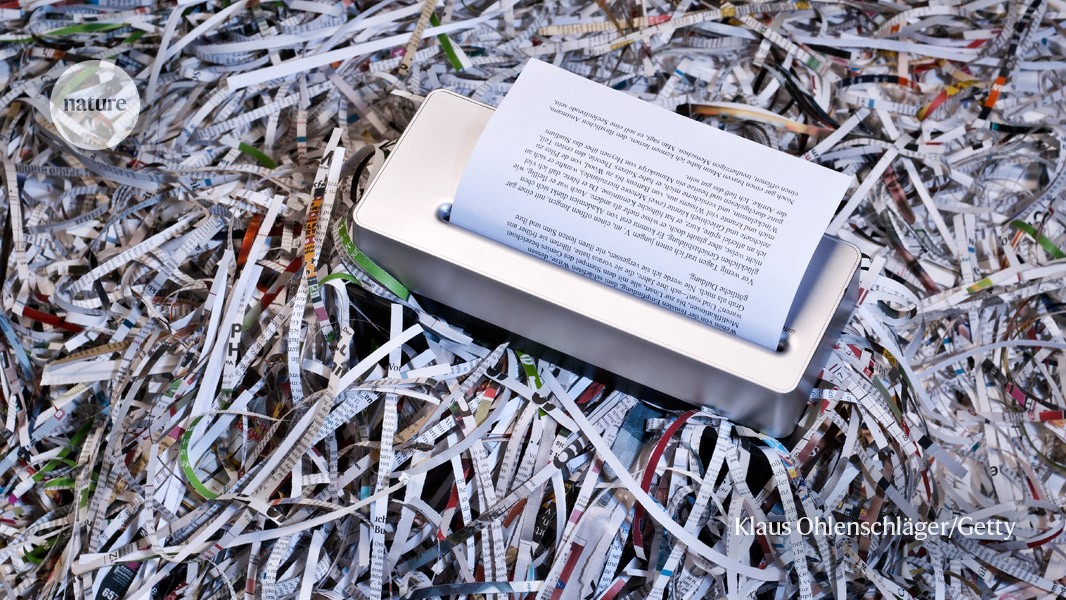
More than 10,000 research papers were retracted in 2023 — a new record
The number of articles being retracted rose sharply this year. Integrity experts say that this is only the tip of the iceberg.
Bluesky 2025 Transparency Report - Bluesky
Throughout 2025, our Trust & Safety work was guided by the premise that social media should serve the people using it. Our transparency report provides data and details about those investments, and the progress we made this year.
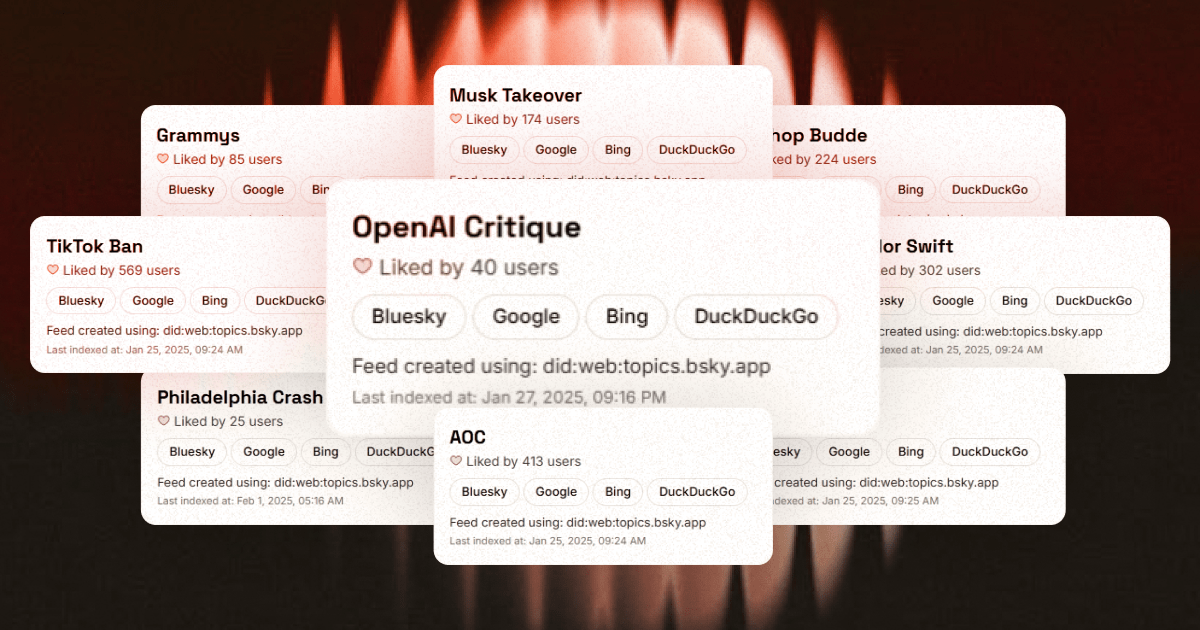
BlueSky Trending Topics: Past & Present Conversations in One Place
Explore BlueSky's trending topics, from past to present. BlueSky is becoming the next big thing—a moderated space where people gather to discuss what's happening, free from hate speech and disruptive behavior. Stay updated on the latest trends.
Hello world! We are building *personalized* feeds to help you make sense of research discussions on BlueSky! Pin our first feed below, which shows posts about papers from accounts you follow! Follow this account for more updates! bsky.app/profile/paper-feed.bsky.socia…

Paper Skygest
Feed by @paper-feed.bsky.socialX is still better than Bluesky at combating misinformation

Grace
Clearing up a misconception I’m seeing floating around: OpenAI didn’t “misconfigure” Artifactory to allow agents to make arbitrary network requests. The agents exploited a zero day vulnerability in Artifactory to be able to do this.
Is Bluesky dying? Is it the community's fault? Should people here refrain from criticizing journalists who think J. K. Rowling might have a point? The thing is, it doesn't matter. Because the answer isn't to make Bluesky change. It's to take advantage of Bluesky's tech to build something else.

The Thing About Griping About Bluesky - Aaron Ross Powell's Blog
www.aaronrosspowell.com

