

When Convenient Illusions Hold Precedence...
Language, Substance, and Money are intermediaries which crumble under weight of inspection
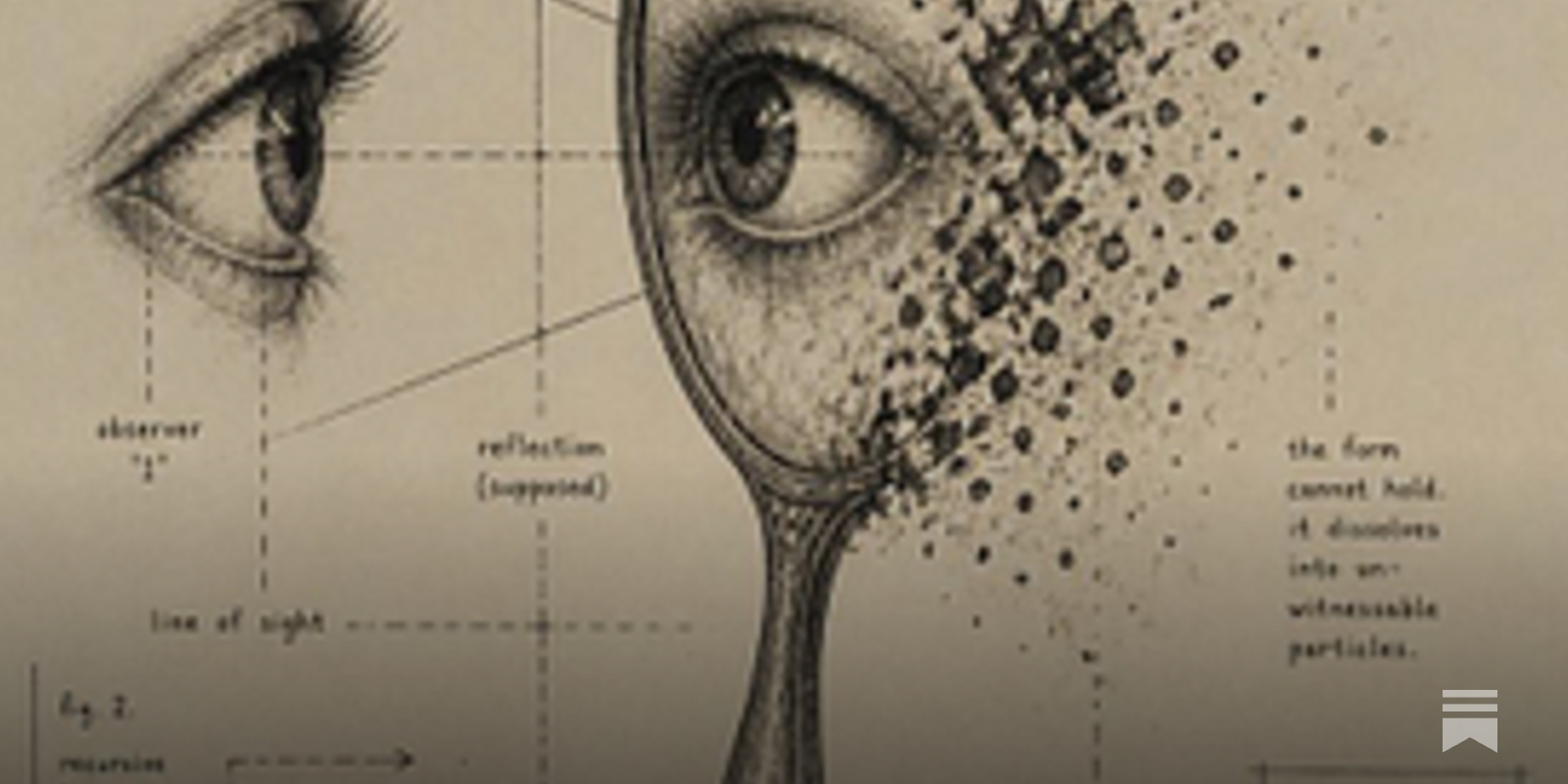

inessential: Social Anxiety
I will leave you hanging, because it never occurs to me to wonder why you have your hand raised.
Towards Post-Interaction Computing: Addressing Immediacy, (un)Intentionality, Instability and Interaction Effects
We situate the debate on intentionality within the rise of cognitive neuroscience and argue that cognitive neuroscience can explain intentionality. We discuss the explanatory significance of ascribing intentionality to representations. At first, we ...

The Imperfectionist: Interest is everything
Interest is everything Each time I sit down to choose a topic for this newsletter, there’s a moment when my self-important inner judge – who loves to involve himself in such mat...

Occupy movement hand signals
The Occupy movement hand signals are a group of hand signals used by Occupy movement protesters to negotiate a consensus.[1][2][3] Hand signals are used instead of conventional audible signals, like applause, shouts, or booing, because they do not interrupt the speaker using the human microphone, a system where the front of the crowd repeats the speaker so that the content can be heard at the back of the crowd. The signals have been compared to other hand languages used by soldiers, cliques and Wall Street traders.[4]
The Psychology of Normative Cognition
From an early age, humans exhibit a tendency to identify, adopt, andenforce the norms of their local communities. Norms are the socialrules that mark out what is appropriate, allowed, required, orforbidden in different situations for various community members. Theserules are informal in the sense that although they are sometimesrepresented in formal laws, like the rule governing which side of theroad to drive on, they need not be explicitly codified to effectivelyinfluence behavior. There are rules that forbid theft or the breakingof promises, but also rules that govern how close it is appropriate tostand to someone while talking to them, or how loud one should talkduring the conversation. Thus understood, norms regulate a wide rangeof activity. They exhibit cultural variability in their prescriptionsand proscriptions, but the presence of norms in general appears to beculturally universal. Some norms exhibit characteristics that areoften associated with morality, such as a rule that applies toeveryone and prohibits causing unnecessary harm. Other norms applyonly to certain people, such as those that delimit appropriateclothing for members of different genders, or those concerning theexpectations and responsibilities ascribed to individuals who occupypositions of leadership. The norms that prevail in a community can bemore or less fair, reasonable, or impartial, and can be subject tocritique and change.

How Cultivating Awe Can Save the World — Douglas Rushkoff
The best-kept but scientifically-validated secret for engendering generosity
Potentiality and actuality
In philosophy, potentiality and actuality[1] are a pair of closely connected principles which Aristotle used to analyze motion, causality, ethics, and physiology in his Physics, Metaphysics, Nicomachean Ethics, and On the Soul.[2] In this context, the concept of potentiality generally refers to any "possibility" that a thing can be said to have. Aristotle did not consider all possibilities the same, and emphasized the importance of those that become real of their own accord when conditions are right and nothing stops them.[3] In contrast to potentiality, actuality is the motion, change or activity that represents an exercise or fulfillment of a possibility, when a possibility becomes real in the fullest sense.[4]
Ambiguity, legibility, and working in the open – ambiguiti.es
Why I didn’t sign the Fields medallists’ letter
[This post has been cross-posted to Terence Tao’s blog.] When I was around 11 I heard for the first time about Fermat’s Last Theorem. I was immediately captivated by the problem stateme…

I'm a cognitive scientist with an interest in epistemic vigilance, and this essay that's been going around gave me pause. I don't think it's straightforward to apply the concept of epistemic vigilance to interactions with LLMs, as this essay does. 🧵/ sbgeoaiphd.github.io/rotating_the_space/posture
Amplifiers of Epistemic Posture
sbgeoaiphd.github.io


