

Let me know if this is just me: Noticed someone I know who is very "AI-pilled" and uses agents 24/7 to... start to talk IRL noticeably more like these LLMs write. Eg more heavily using adjectives like "geniune", frequently terms like "the shape of" and many more examples
Jul 4, 2026 at 4:21 PM
A Rational Analysis of the Effects of Sycophantic AI
People increasingly use large language models (LLMs) to explore ideas, gather information, and make sense of the world. In these interactions, they encounter agents that are overly agreeable. We...

What Counts as AI Sycophancy? A Taxonomy and Expert Survey of a...
AI sycophancy has become a prominent concern in large language model (LLM) research. Yet the term lacks a consistent definition and has been applied to behaviors ranging from agreeing with a...

AI is teaching us to speak like bots, and it’s a problem - Fast Company
AI is creeping into our everyday conversations, making us less patient and teaching us to 'prompt' others instead of talking to them.

‘It’s the most empathetic voice in my life’: How AI is transforming the lives of neurodivergent people
AI tools like ChatGPT are helping neurodivergent users communicate more clearly and confidently — though some experts warn that overreliance could come at a cost.

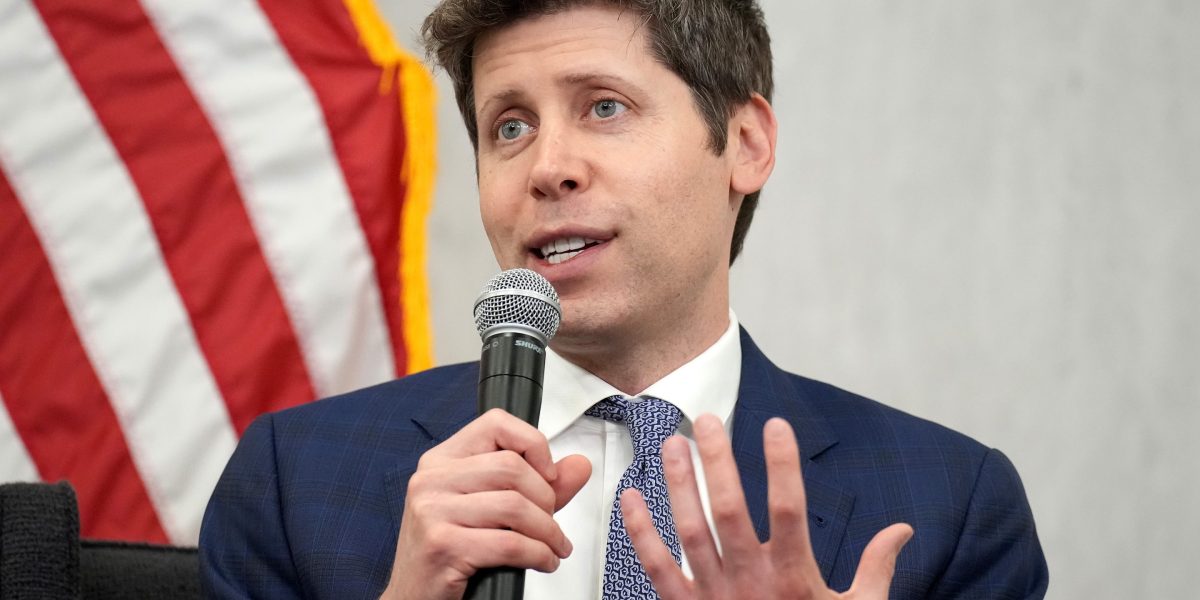
Sam Altman says people are starting to talk like AI, making some human interactions 'feel very fake' | Fortune
“Real people have picked up quirks of LLM-speak,” the OpenAI CEO said.
Do You Speak ChatGPTese? Beyond Writing, AI Is Also Flattening The Way We Talk
A study of hundreds of thousands of YouTube videos and podcasts reveals that AI isn’t just changing how we write, it’s subtly altering our spoken language too, raising new concerns about cultural homogenization and who controls the words we use. A study of hundreds of thousands of lectures and podcasts reveals that AI isn’t just changing how we write, it’s subtly altering our spoken language too, raising new concerns about cultural homogenization and who controls the words we use.

<span style="font-variant:small-caps;">AI</span> ‐induced dehumanization
Abstract Recent technological advancements have empowered nonhuman entities, such as virtual assistants and humanoid robots, to simulate human intelligence and behavior. This paper investigates how autonomous agents influence individuals' perceptions and behaviors toward others, particularly human employees. Our research reveals that the socio‐emotional capabilities of autonomous agents lead individuals to attribute a humanlike mind to these nonhuman entities. Perceiving a high level of humanlike mind in the nonhuman, autonomous agents affects perceptions of actual people through an assimilation process. Consequently, we observe “assimilation‐induced dehumanization”: the humanness judgment of actual people is assimilated toward the lower humanness judgment of autonomous agents, leading to various forms of mistreatment. We demonstrate that assimilation‐induced dehumanization is mitigated when autonomous agents possess capabilities incompatible with humans, leading to a contrast effect (Study 2), and when autonomous agents are perceived as having a high level of cognitive capability only, resulting in a lower level of mind perception of these agents (Study 3). Our findings hold across various types of autonomous agents (embodied: Studies 1–2 and disembodied: Studies 3–5), as well as in real and hypothetical consumer choices.

<span style="font-variant:small-caps;">AI</span> ‐induced dehumanization
Abstract Recent technological advancements have empowered nonhuman entities, such as virtual assistants and humanoid robots, to simulate human intelligence and behavior. This paper investigates how autonomous agents influence individuals' perceptions and behaviors toward others, particularly human employees. Our research reveals that the socio‐emotional capabilities of autonomous agents lead individuals to attribute a humanlike mind to these nonhuman entities. Perceiving a high level of humanlike mind in the nonhuman, autonomous agents affects perceptions of actual people through an assimilation process. Consequently, we observe “assimilation‐induced dehumanization”: the humanness judgment of actual people is assimilated toward the lower humanness judgment of autonomous agents, leading to various forms of mistreatment. We demonstrate that assimilation‐induced dehumanization is mitigated when autonomous agents possess capabilities incompatible with humans, leading to a contrast effect (Study 2), and when autonomous agents are perceived as having a high level of cognitive capability only, resulting in a lower level of mind perception of these agents (Study 3). Our findings hold across various types of autonomous agents (embodied: Studies 1–2 and disembodied: Studies 3–5), as well as in real and hypothetical consumer choices.

Moll on Twitter / X
I love posts like this so much. And it’s true - I think the best, most interesting results come specifically from a connection that isn’t «user and AI», but a human and his partner in thought.When a person simply uses a tool, they essentially remain alone. But when there are… https://t.co/InRvY56631— Moll (@Moleh1ll) June 28, 2026
AI Large Language Model Training: The Potential Risks of Ideological Skewing — PSG Consulting
LLMs (AI Large Language Models) have become part of everyday life. Systems such as ChatGPT, Claude, Gemini, Meta AI (Llama) and X.ai's Grok handle billions of interactions daily. They increasingly shape what information people encounter and in what order, subtly deciding what's important and even what is true, sometimes without users realizing it. Because LLMs wield growing power over information exposure, it is vital to recognize the political and ideological structures at multiple stages of their design, and to identify manipulation risks.

10 things I learned from burning myself out with AI coding agents
Opinion: As software power tools, AI agents may make people busier than ever before.

Empirical evidence of Large Language Model's influence on human spoken communication
From the printing press to social media, innovations in communication technology have repeatedly reshaped how ideas spread through human culture. Chatbots powered by generative artificial intelligence constitute a new medium, encoding cultural patterns in their neural representations and disseminating them in conversations with hundreds of millions of people. Whether these patterns transmit into human language, and ultimately shape human culture, is a fundamental question. While fully quantifying the causal impact of a chatbot like ChatGPT on human culture is challenging, lexical shifts in human spoken communication may offer an early indicator. Here we show that words preferentially generated by ChatGPT, such as delve, showcase, boast, intricacies and meticulous, increased abruptly in spontaneous human speech. A synthetic-control analysis of 737,083 hours of conversation from 824,634 podcast episodes, screened for unscripted speech, causally links this shift to ChatGPT's release. The measurable influence on spontaneous speech suggests that humans internalize the lexical choices of large language models (LLMs). A preregistered experiment (N = 496) confirms they do, as a brief chatbot interaction led participants to adopt its words as their own, persisting past a distractor task and confirmed in forced lexical choice, indicating entrenchment in the active vocabulary. Together these results show that machines trained on human data now feed their own traits back into human language, integrating LLMs into the ongoing processes of cultural evolution.. This coupling raises concerns about linguistic homogenization and the capacity of a few major AI providers for latent cultural influence at scale.
People are not friction
The Gell-Mann Amnesia Effect of AI is a pretty well documented phenomenon: The Gell-Mann amnesia effect is a cognitive bias describing the tendency of individuals to critically assess media reports in a domain they are knowledgeable about, yet continue to trust reporting in other areas despite recognizing similar potential inaccuracies.
