

Quotation errors in general science journals
Abstract. Due to the incremental nature of scientific discovery, scientific writing requires extensive referencing to the writings of others. The accuracy

fenc.es — be wrong on the internet, productively
Trace the map of reasonable disagreement. Break arguments into statements, rate confidence and importance, and find the crux.

RCTs: Crucial Yet Crucially Limited
RCTs do NOT estimate average effects; they also rarely EXPLAIN that which they have demonstrated.
Correction of scientific literature: Too little, too late!
The Coronavirus Disease 2019 (COVID-19) pandemic has highlighted the limitations of the current scientific publication system, in which serious post-publication concerns are often addressed too slowly to be effective. In this Perspective, we offer suggestions to improve academia’s willingness and ability to correct errors in an appropriate time frame.
Guest Post — When Errors Become Consensus: Science’s Self-Correction Can No Longer Keep Up - The Scholarly Kitchen
From 19th-century beef tea to paper mills and generative AI, the challenge is no longer detection alone; it is preventing bad claims from becoming embedded knowledge.

Quotation errors in general science journals
Due to the incremental nature of scientific discovery, scientific writing requires extensive referencing to the writings of others. The accuracy of this referencing is vital, yet errors do occur. These errors are called ‘quotation errors’. This paper presents the first assessment of quotation errors in high-impact general science journals. A total of 250 random citations were examined. The propositions being cited were compared with the referenced materials to verify whether the propositions could be substantiated by those materials. The study found a total error rate of 25%. This result tracks well with error rates found in similar studies in other academic fields. Additionally, several suggestions are offered that may help to decrease these errors and make similar studies more feasible in the future.
Edison Scientific Assembles Millennium Problems for Biology | Samuel G. Rodriques posted on the topic | LinkedIn
In light of the progress in mathematics, we at Edison Scientific and FutureHouse have assembled a set of Millennium Problems for Biology. They are chosen to be very hard to solve but very easy to validate in a simple laboratory environment. Any of these, if solved, would mark a major advance in biotechnology, and most of them would contribute materially towards curing disease. These are, in some sense, the “last reasonable eval” for AI in biology. This was work primarily by Michaela Hinks and myself, with contributions from many others. Short descriptions below. The full descriptions of the problems with acceptance criteria are at millenniumproblems.bio. Share more if you have ideas. If they meet our criteria, we’ll add them to our list (with attribution and permission). A few notes on exclusion/inclusion criteria: -We placed a major emphasis on ease of validation, so challenges like “solve aging” are omitted. These should all be validatable in a standard wet lab in a short period of time (days, maybe a week or two.) -We placed a major emphasis on ensuring grading would be as objective as possible, so many great basic science mysteries are also omitted, because it would be very challenging to tell when the mystery was “solved.” (E.g., “uncover the function of the Vault protein,” or “explain how the Oxytricha genome works.”) -We placed a major emphasis on ensuring the problems would be understandable to anyone with a basic biology background, so some highly technical but very important challenges were also omitted. Finally, we anticipate that some problems may require edits in response to community feedback. If you think we got them wrong, please send the feedback, and we will collate and update. Thanks to Adam Marblestone, Michael Baym, Erika DeBenedictis, and Tony Kulesa for reviews. | 52 comments on LinkedIn

AI agents are checking the scientific literature — and spotting decades-old errors
The technology is proving adept at finding faults in decades-old papers and reference databases.
The natural selection of bad science
Abstract. Poor research design and data analysis encourage false-positive findings. Such poor methods persist despite perennial calls for improvement, sugg
Are Scientific Papers Bad?
Ferhat Tura on Twitter / X
I have recently detected minor mistakes in the codes of a paper published in a high-quality journal and contacted the lead author first!, who acknowledged the mistake and contacted the journal. I thanked the author for doing open science and now we are collaborating on a paper💪— Ferhat Tura (@FerhatTura19) May 15, 2024
"I" may have just found a fundamental flaw in a "dense, high-prestige paper". Problem is, I don't have a clue what I did and how to verify any of this. I asked Gemini to perform a review of an interesting paper and it was skeptical and proposed a data analysis that should be performed.

a south park poster with a boy scout and the words what are you guys doing in there
media.tenor.comComputational reproducibility

The why and how of making scientific computations reproducible
Konrad Hinsen's blog
Home Page - Software Heritage
GNU Guix transactional package manager and distribution — GNU Guix

Keynote: Reproducibility and replicability of computer simulations | Canal U
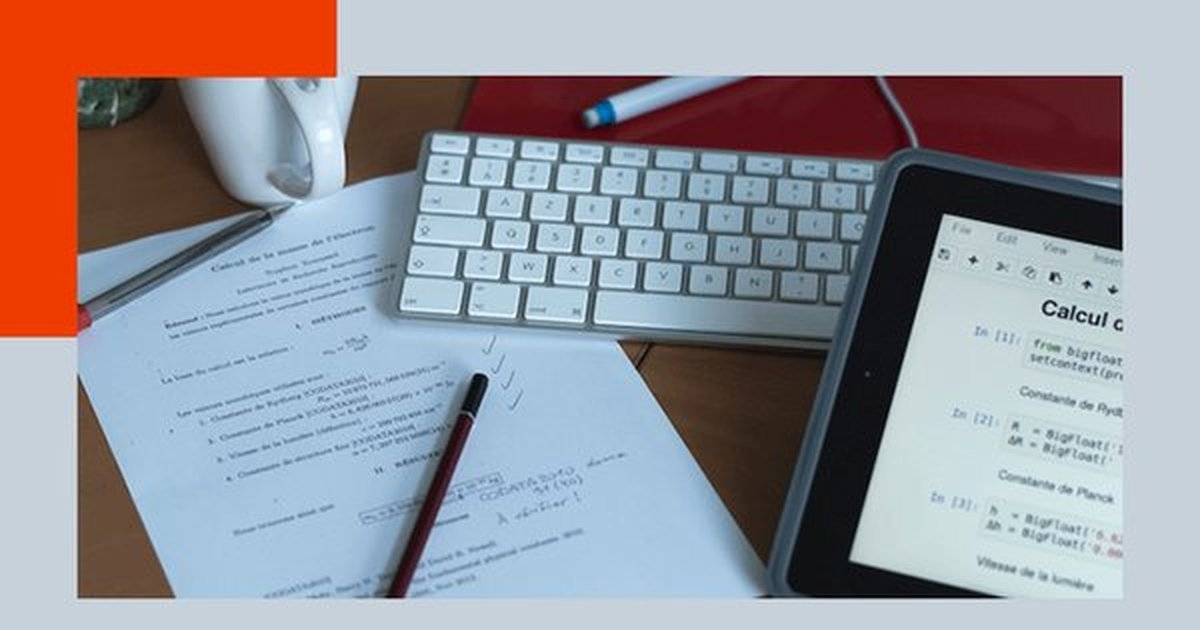
Reproducible research: methodological principles for transparent…
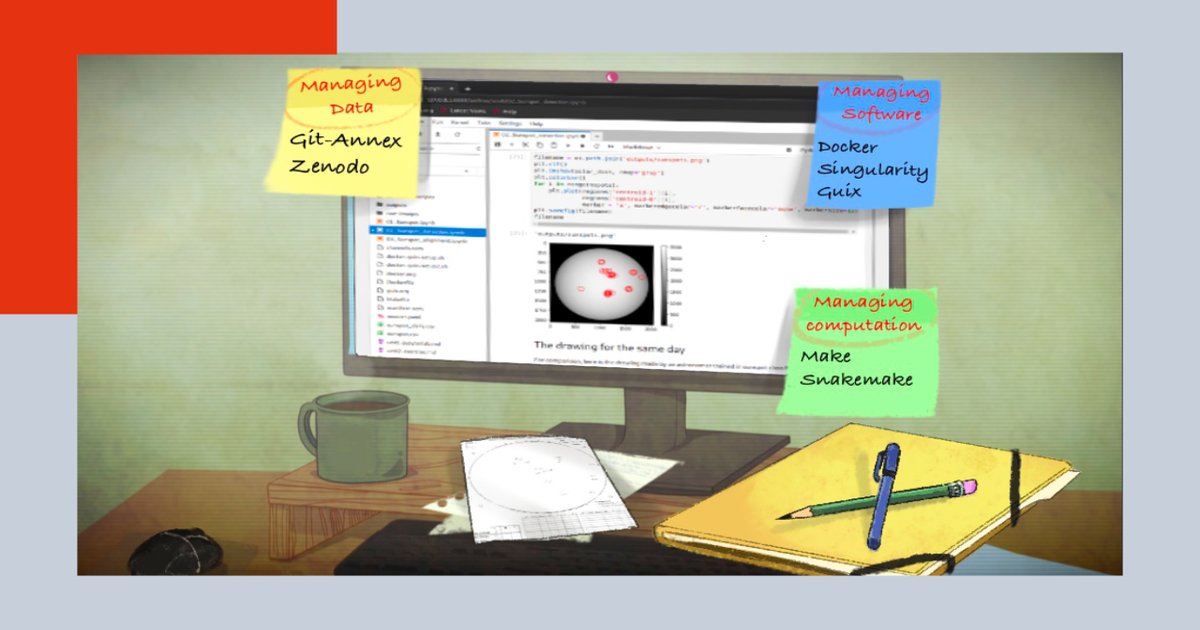
Reproducible Research II: Practices and tools for managing compu…


