Sweet, group-controlled communities that a decentralized organization can control with a gnosis safe * We can't actually use a gnosis safe for this because blockchains give everyone the ick so we have to reinvent something that'll be like a gnosis safe only worse

bryan newbold
some thoughts on how to implement public community spaces in atproto. I think it is important for us to stretch what the protocol can do; and there are some great opportunities for self-hosting, moderation, customization, etc
Feb 5, 2026 at 3:32 AM
Building the Open Internet - Gnosis
In an era where technology increasingly divides rather than unites, Gnosis stands at the intersection of possibility and purpose. What began as a prediction market in 2015 has evolved into the backbone of decentralized finance and now emerges as something far more revolutionary: the architect of a truly open internet.

Centralization vs Decentralization - AVC
Decentralization is one of, if not the most, discussed features of the crypto tech stack. In a decentralized system, no single body controls the system. We have most certainly not reached the era fully decentralized systems, but that is what most of the world-class technologists working in the crypto sector are focused on getting us […]
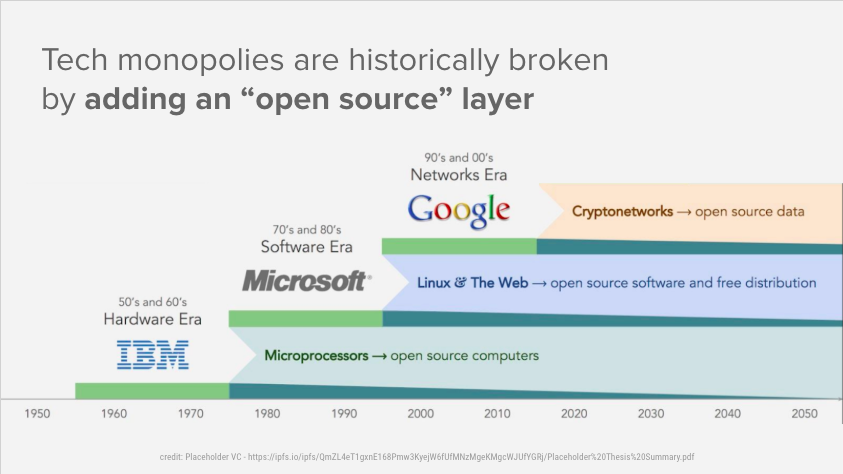
Decentralization is Not Enough
Is decentralization a solution for all or a safe haven for nerds? It’s not enough to save ourselves, says Nolan Lawson.

Harnessing Collective Intelligence better than LLMs w/ Sean Geobey
Decentralization: Worth The Wait — Open Tech Strategies | Blog
Ethan Zuckerman has a piece in Wired that says building decentralization tools is a sucker's bet. He and his coauthors, Chelsea Barabas and Neha Narula, mention the FreedomBox, which I helped lead, as an example of how difficult this stuff is. They point to a list of things that make decentralized efforts prone to failure and conclude:
Decentralized Intelligence: Stigmergy, Simple Rules, and the Future of Organizational Coordination
The Global Council for Behavioral Science is a global community advancing behavioral science research, education, and ethical real-world application.

Holographic consensus—part 1
Decentralized governance is the field of protocols that coordinate large number of agents into a collective action, implemented with smart…
How Decentralization Can Win
This is a guest post by Melody He, founder and partner at Spartan Group, a blockchain investment fund and advisory firm in Singapore…

New Paradigms in Trust and Safety: Navigating Defederation on Decentralized Social Media Platforms
Defederation on decentralized social media offers new possibilities for online governance. Experts consider how it can be used responsibly, in a way that balances speech and safety.

A Spectrum of Consent
Blockchain & Decentralized Identity Architect — Internet Cryptography Pioneer — Co-author TLS Security Standard — Collaborative Tools & Patterns

Welcome to the Web of Trust
Empowering individuals to co-create decentralized systems for lasting mutual benefit.

Turing-Complete Governance — The Collective Intelligence Project
It is fiendishly difficult to get lots of people to make decisions and work together both non-hierarchically and effectively. Because blockchain technology enables decentralized consensus at scale, the implications for human decision-making and coordination are immensely promising; if we can use it
Trust and Faith in Our Web
I’m not Brennan, but I’m very interested in decentralization and a fan of AtProto specifically, so I’d like to weigh in. First I should mention I’ve personally never been able to get into microblogging, so I haven’t touched bluesky myself, despite having an account for ATProto reasons. But I agree it’s concerning that the company chooses to continue to host the content of harmful individuals and calling that act “neutral”. I’m certainly against the idea of the “marketplace of ideas” as it’s cle...

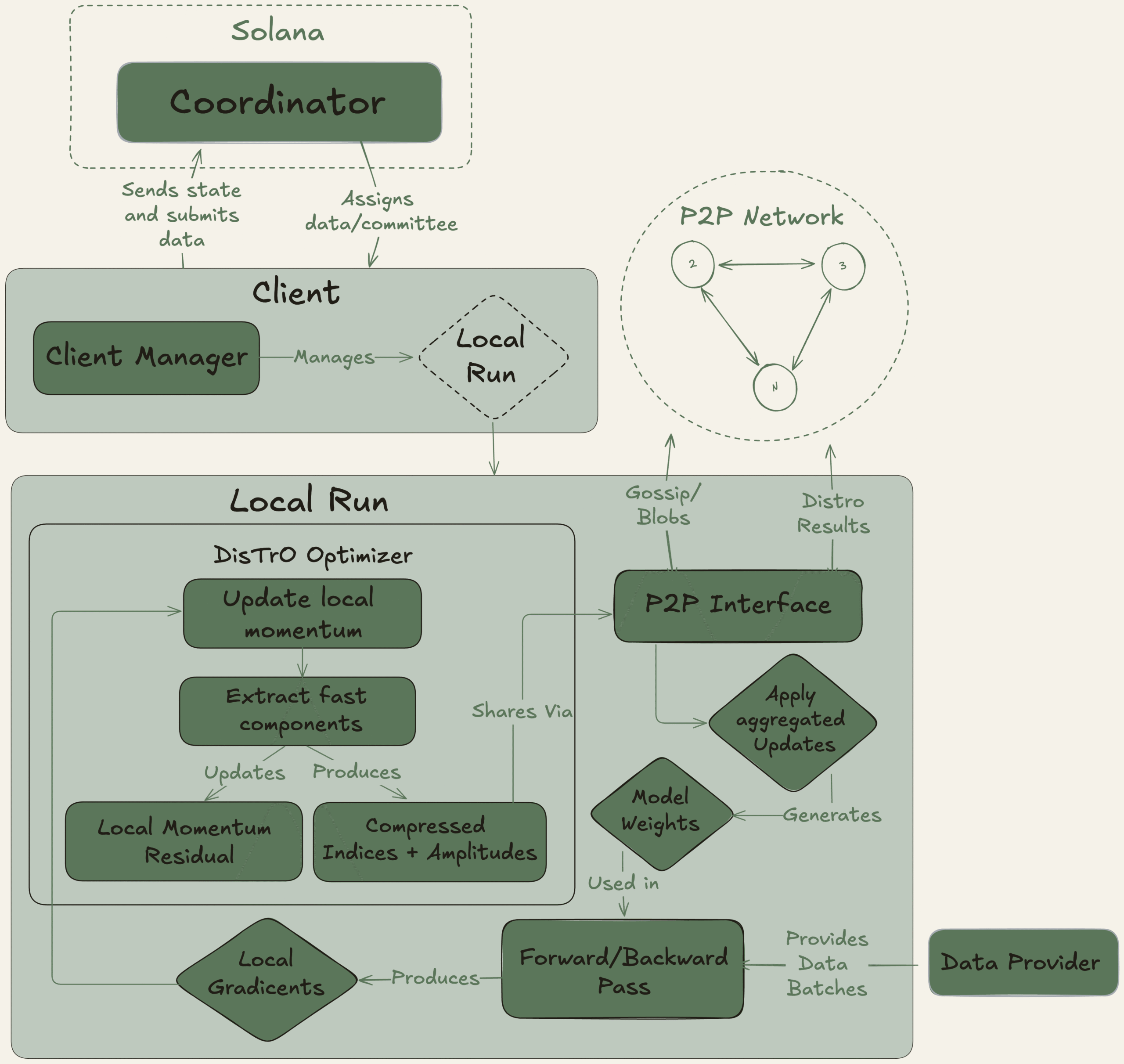
Democratizing AI: The Psyche Network Architecture - NOUS RESEARCH
Psyche is an open infrastructure that democratizes AI development by decentralizing training across underutilized hardware. Building on DisTrO and its predecessor DeMo, Psyche reduces data transfer by several orders of magnitude, making distributed training practical. Coordination happens on the Solana blockchain, ensuring a fault-tolerant and censorship-resistant network.
Radical Servers - riseup.net
Here is a list of either anti-capitalist, anti-hierarchy, autonomous, feminist, or radical server projects. Some of them are revolutionary collectives which provide free or mutual aid services to radical and grassroots activists. Others are more focused on privacy or on decentralisation. None of them are focused on money. Riseup is not endorsing these projects, but is keeping a list for people to be able to choose! Please read carefully the terms of service of the projects, as some may be subject to law-enforcement or surveillance laws.