

Lucas Gautheron conducts a really interesting online design experiment to show popularity feedback kills diversity and innovation. Super cool work!! #IC2S2 @ic2s2.bsky.social
Jul 29, 2026 at 6:46 PM
The A.I.-Design Aesthetic That’s Taking Over the Internet
How Anthropic’s new tool, Claude Design, is creating overnight web-design clichés.

Popularity Feedback Constrains Innovation in Cultural Markets
Real-world creative processes ranging from art to science rely on social feedback-loops between selection and creation. Yet, the effects of popularity feedback on collective creativity remain poorly understood. We investigate how popularity ratings influence cultural dynamics in a large-scale online experiment where participants ($N = 1\,008$) iteratively \textit{select} images from evolving markets and \textit{produce} their own modifications. Results show that exposing the popularity of images reduces cultural diversity and slows innovation, delaying aesthetic improvements. Popularity feedback is associated with changes to both selection and creative stages. During selection, popularity information triggers cumulative advantage, with participants preferentially building upon popular images, reducing diversity. During creation, participants make less disruptive changes, and are more likely to expand existing visual patterns. Feedback loops in cultural markets thus not only shape selection, but also, directly or indirectly, the form and direction of cultural innovation.

danielebruneo/remarkable2-hacks
A collection of hacks, mods, tools, tips & tricks, specifically focused on the reMarkable 2
HAH — social media art experiments
HAH — social media art experiments
Aesthetics Wiki | Fandom
Thank you to the winner of our redesign contest, Ethan Duke! The background and wordmark are both his work. You can check him out on both Instagram and Twitter at @theduke2442! The dark mode was designed by Gwenanenn.


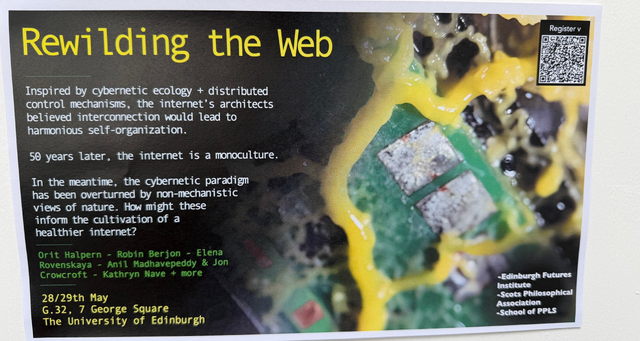
Rewilding the Web: my workshop report from Edinburgh
Notes from a wonderfully interdisciplinary Edinburgh workshop on 'Rewilding the Web', ranging coopetition and biological variety through the philosophy of self-organisation, polycrisis governance, protopian science fiction, and moderation seen through the lens of artisanal cheese.
Dark Patterns Won - Ron Bronson
Many moons ago, I used to post a lot on Twitter about so-called deceptive design/dark patterns that proliferate consumer UIs. There were sites

Atomic Design by Brad Frost
Learn how to create and maintain digital design systems, allowing your team to roll out higher quality, more consistent UIs faster than ever before.
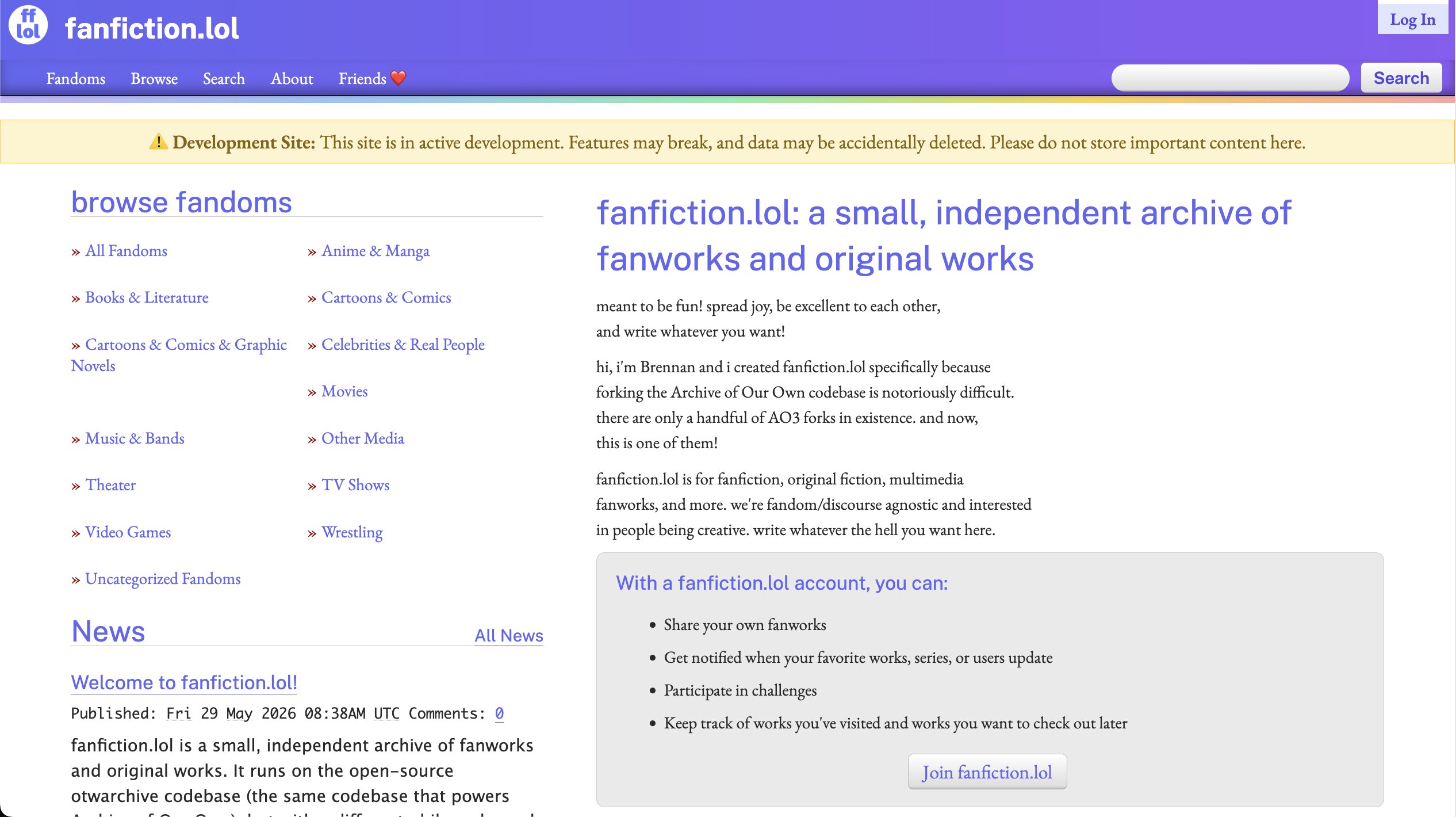
Announcing Fanfiction.lol: A Manifesto on Human Creativity and AO3
I deployed my own AO3 fork called fanfiction.lol, an independent fanfiction archive with no invite queue, fandom-agnostic moderation, and expanded content warnings. A manifesto on why fan communities deserve free infrastructure, the history of transformative works from Virgil to AO3, and the challenges of running a volunteer-powered archive at scale.
Embracing Playful Imperfection With The CSS random() Function — Smashing Magazine
Design systems thrive on consistency, so where does randomness fit in? Through playful demos of organic typography, bouncing letters, and splayed cards, Brecht De Ruyte shows how the new CSS `random()` function brings a little imperfection to the web without JavaScript libraries or preprocessor loops that generate hundreds of lines of static CSS.
Today some of the most innovative creators & podcasters are launching social websites that will bring millions of their fans to the social web: verge.surf.social decoder.surf.social versionhistory.surf.social vergecast.surf.social wired.surf.social 404media.surf.social poweruser.surf.social
Thank you for sharing ronan, one of the places where I still also like to look for these community experiments is @holochain.bsky.social , here is a nice write up for some background decent.holoventures.io)

Decent Infrastructure in an Authoritarian World
decent.holoventures.io

