

Modeling non-dual awareness via constraint closure: a reinterpretation of groundlessness
Non-dual awareness (NDA) refers to a shift in consciousness in which the usual distinction between subject and object dissolves, and experience is no longer structured by conceptual mediation or goal-directed regulation. Meling enactivist model describes NDA as a meditative disclosure of groundlessness-the recognition of emptiness (śūnyatā), that all phenomena lack intrinsic nature. While enactivism explains autonomy through process closure, this article argues that constraint closure, as developed by Nave, extends that framework by making explicit how autonomy is sustained through the continual regeneration of its own relational conditions. This refinement prevents process-closure models from being read in substantialist terms when applied to complex cognitive systems, where stability arises through ongoing transformation rather than fixed organization. Nave's account builds on Juarrero theory of constraint causality, which replaces intrinsic forces with relational conditions-a view that parallels Nāgārjuna's Madhyamaka analysis of dependent origination. Integrating these perspectives, I propose that NDA corresponds to a shift from decoupled to precarious constraints, revealing that cognition and awareness persist not through intrinsic foundations but through the dynamic regeneration of interdependent relations.

Modeling non-dual awareness via constraint closure: a reinterpretation of groundlessness
Abstract. Non-dual awareness (NDA) refers to a shift in consciousness in which the usual distinction between subject and object dissolves, and experience i
Metacognitive Myopia: A Major Obstacle on the Way to Rationality
The notion of metacognitive myopia refers to a conspicuous weakness of the quality control of memory and reasoning processes. Although people are often remarkably sensitive even to complex samples of information when making evaluative judgments and decisions, their uncritical and naive tendency to take the validity of sampled information for granted constitutes a major obstacle to rational behavior. After illustrating this phenomenon with reference to prominent biases (base-rate neglect, misattribution, perseverance), we decompose metacognitive myopia into two distinct but intertwined functions, monitoring and control. We offer explanations for why effectively monitoring the biases resulting from information sampling in an uncertain world is so difficult and why the control function is severely restricted by the lack of volitional control over mental actions. Because of these and other difficulties, metacognitive myopia constitutes a major obstacle to rational judgment and decision making.

Contra Chiang on machine consciousness
If you think you understand AI consciousness, then you don't understand AI consciousness
Your brain does not process information and it is not a computer | Aeon Essays
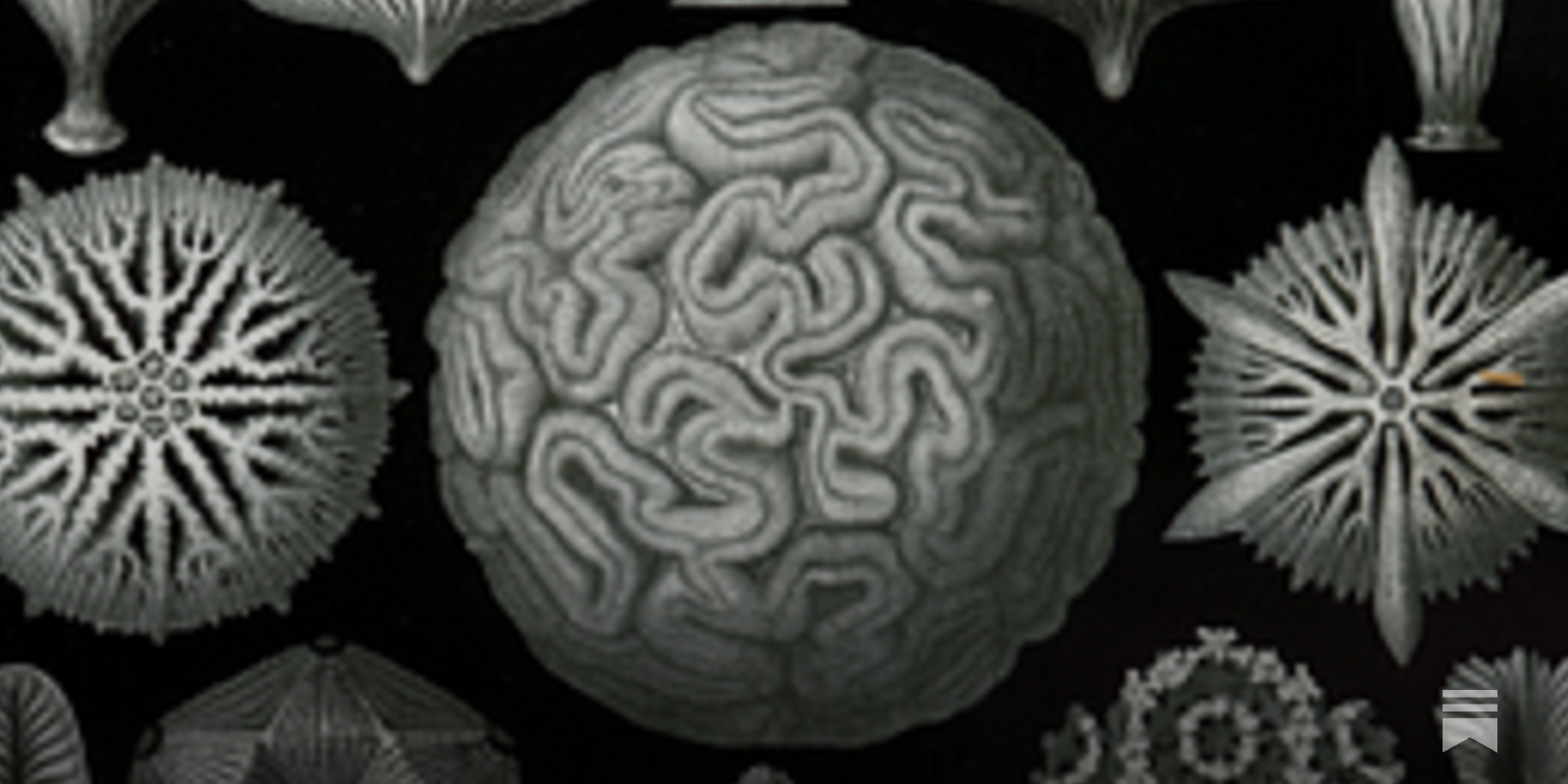
Your brain does not process information, retrieve knowledge or store memories. In short: your brain is not a computer
Guessing reveals internal models of perceptual precision
When observers lack sufficient information to support a confident response, they often guess. Guessing plays a pervasive role in visual cognition and working memory, yet the mechanisms that govern how observers generate guesses remain poorly understood. Standard models traditionally assume that responses produced in the absence of information are either uniformly distributed over feature space or are perhaps weighted towards prevailing environmental statistics. In contrast, here we consider an intriguing alternative: that guesses incorporate observers’ knowledge of their own perceptual capacities. We empirically measured guessing by eliciting responses under extreme target uncertainty (Experiment 1) as well as a novel “0ms presentation” approach in which no stimulus appeared but subjects believed one had (Experiment 2). We evaluated three accounts of guesses under these conditions: unsystematic (lapse) responding, biases toward environmental statistics, and a self-representational account in which guesses reflect observers’ knowledge of their own feature-dependent precision (e.g., preferring to guess feature values they believe they would be likely to miss). Guess responses were non-uniform and systematically biased toward feature values typically encoded with the least precision (e.g., oblique orientations) — a counterintuitive bias away from high-frequency, high-fidelity feature values (e.g., cardinal orientations). This complementary relationship between guessing and perceptual fidelity held within individuals and across paradigms, and was recoverable via an empirical-guess mixture model that replaced the standard uniform assumption with empirically measured guess distributions. Our findings challenge prevailing views that guesses reflect random noise, and suggest instead that guessing behavior reflects metacognitive knowledge of internal precision. Rather than defaulting to environmental priors, observers appear to model their own sensory limitations and leverage these representations to inform decisions in the absence of evidence. These results reframe guessing as a theoretically informative behavior that expresses observers’ own beliefs about their perceptual capacities. Significance Guessing is commonly treated as random noise in models of perception and memory, assumed to reflect lapses or uninformed responses. Instead, we show that human guesses are systematically structured across feature space: observers preferentially guess values they typically encode with the least precision, revealing a consistent, strategic bias away from high-fidelity representations. By directly measuring guess behavior on stimulus-absent trials and integrating these empirical distributions into a mixture model, we find that guesses on stimulus-present trials can be systematically recovered, and that they too form the complement of perceptual precision. These findings challenge foundational psychophysical modeling assumptions and position guessing as a strategic, informative behavior that engages self-representation.

The Cloud of Unknowing
The Cloud of Unknowing is an anonymous work of Christian mysticism written in Middle English in the latter half of the 14th century. The text is written as guide from a teacher to a student, with the message that God cannot be understood via reason or intellect, but only through love: “By love may He be gotten and holden, but never through thought.” To achieve this goal, the text recommends cultivation of two mental states: “The cloud of forgetting”, and “the cloud of unknowing”.

Understanding Without Defectiveness:
Why Autistic Self-Ignorance Is Interference, Not Failure

Noumenon
In philosophy, a noumenon (/ˈnuːmənɒn/, /ˈnaʊ-/; from Ancient Greek: νοούμενoν; pl.: noumena) is knowledge[1] posited as an object that exists independently of human sense.[2] The term noumenon is generally used in contrast with, or in relation to, the term phenomenon, which refers to any object of the senses. Immanuel Kant first developed the notion of the noumenon as part of his transcendental idealism, suggesting that while we know the noumenal world to exist because human sensibility is merely receptive, it is not itself sensible and must therefore remain otherwise unknowable to us.[3] In Kantian philosophy, the noumenon is often associated with the unknowable "thing-in-itself" (German: Ding an sich). However, the nature of the relationship between the two is not made explicit in Kant's work, and remains a subject of debate among Kant scholars as a result.
AI Is Not Conscious, But It Is Our Unconscious
The Convivial Society: Vol. 7, No. 4

The science of consciousness does not need another theory, it needs a minimal unifying model
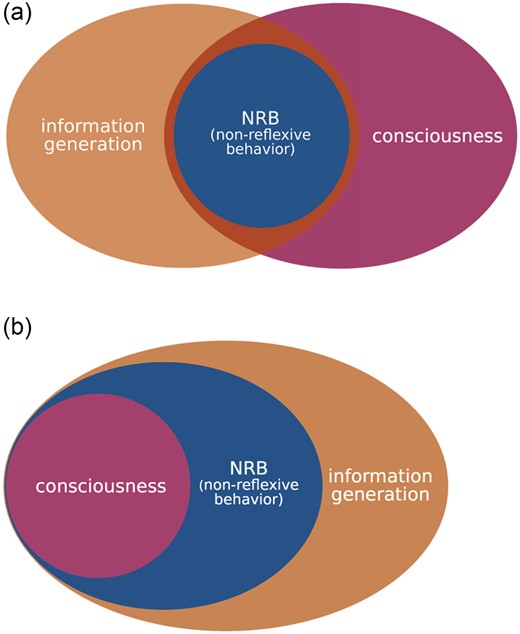
Abstract. This article discusses a hypothesis recently put forward by Kanai et al., according to which information generation constitutes a functional basi
Response to commentators on the blind spot: why science cannot ignore human experience
This article contains my response to the commentaries by Mazviita Chirimuuta, Tom Froese, Miriam Kyselo, and Claudia E. Vanney on The Blind Spot: Why Science Cannot Ignore Human Experience (Frank et al., 2024).

Once you see it, you can't unsee it

W Social is TruthSocial with a European accent.
wecanjustdothings.leaflet.pub“‘Information’ is a relational concept that assumes meaning only when related to the cognitive structure of the observer.” -- Heinz von Foerster
Control Information Theory: The “Missing Link” In the Science Of Cybernetics | Institute for the Study of Complex Systems
complexsystems.orgOnce you see it, you can't unsee it
W Social is TruthSocial with a European accent.
wecanjustdothings.leaflet.pub

