

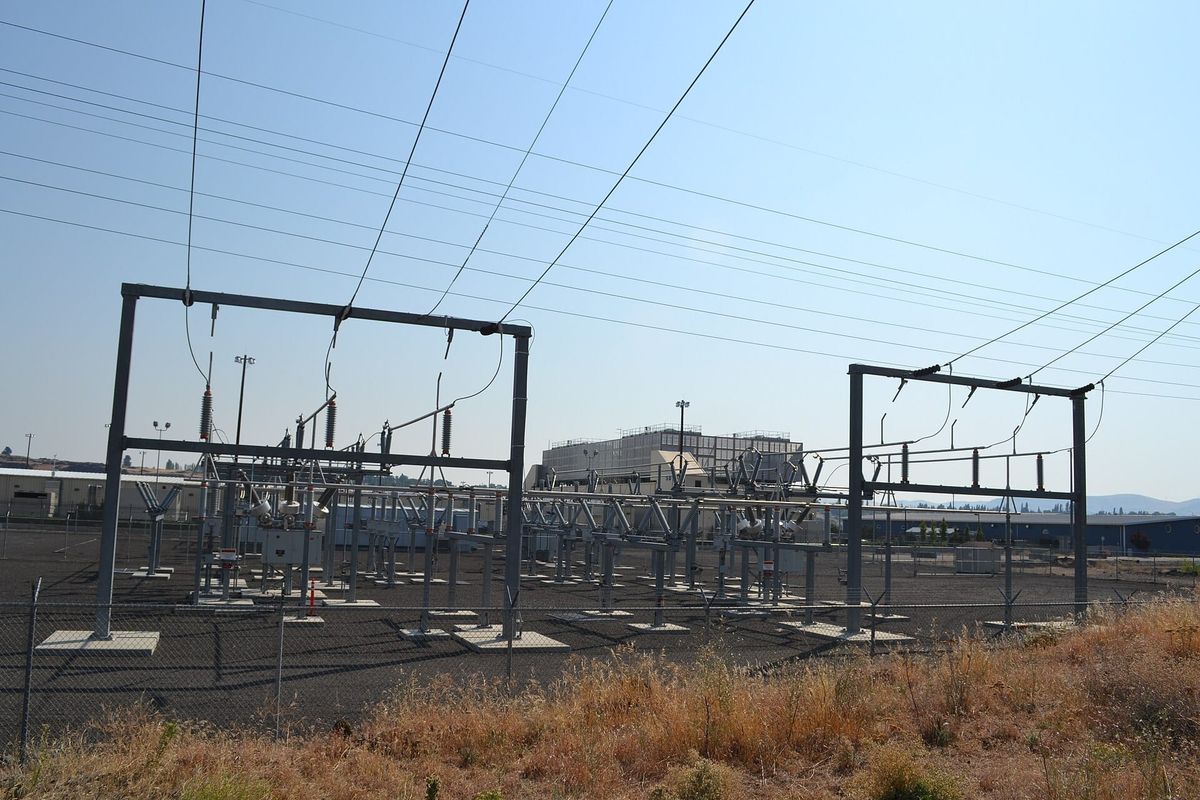
You wanna know why the disabled dont buy that bullshit about ai being an "accessibility tool"? Because we recognize the use of ai is disabling more people. Its harming actual communities where these data centers are built. Data centers are poisoning the environment around them.
Oct 14, 2026 at 2:55 PM
The Web Is Being Made Accessible for AI, Not People
Jonathan Zong and Frank Elavsky critique how AI-driven infrastructure changes obscure accessibility and reveal whose needs society chooses to prioritize.

AI Doesn't Fix Accessible Systems. It Depends on Them. — Anna E. Cook
Why AI depends on the foundation accessible design systems build — and how "AI will fix accessibility" is producing the opposite outcome at industry scale.

Artificial Intelligence (AI) and Accessibility Research Symposium 2023
Accessibility resources free online from the international standards organization: W3C Web Accessibility Initiative (WAI).
Substrates via Accessibility
The social model of disability holds that disability is produced by environments, not by bodies — that when software fails to accommodate a person’s needs, the environment is disabling them. We argue that the dominant organization of computing produces such interaction mismatches structurally: the commodity form of software requires a standardized consumer, and everyone whose needs diverge from this imagined subject is disabled by the software environment. The substrates research community has identified properties — disclosure, composability, malleability — that would address this, but the commodity form actively selects against these properties because they dissolve the boundaries on which exchange value depends. This raises a question: how can infrastructure organized against the grain of commodity logic be made durable? We find a precedent in accessibility infrastructure — sustained not by patronage but by the organized counter-power of disability rights movements. Through Allio, a system for cross-application augmentation built on accessibility APIs, we illustrate both what this foundation makes possible and where its limits lie. We argue that the accessibility case reframes the substrates programme’s central challenge as political-economic: the question of who sustains substrate infrastructure, and through what social mechanisms, is as important as the question of what properties it should have.
Nothing About Us, Without Us: Disability Justice and AI
Intersectionality, ways that AI can support the disabled, and how we can win the race to make AI more inclusive.

The influence of artificial intelligence on individuals with disabilities
The rapid advancement of artificial intelligence (AI) is reshaping assistive technologies, offering new possibilities for enhancing the independence, communication and quality of life of individuals with disabilities. This study presents a qualitative scoping review of 47 peer-reviewed articles published between 2018 and 2025, examining how AI has been integrated into assistive tools across domains such as mobility, communication, cognitive support, education and independent living. Specific AI applications include object recognition, gesture-based control, navigation assistance, emotion detection and natural language processing. The review highlights significant progress in personalization and real-time adaptation, while also identifying persistent challenges such as algorithmic bias, cost barriers, data privacy concerns and unequal access, particularly in low-resource settings. Ethical considerations and the need for inclusive, user-centered design approaches are emphasized. The study also underscores future research priorities, including standardization of development protocols, empirical evaluation of long-term effectiveness and policy frameworks to ensure equitable access. By synthesizing recent developments and critical gaps, this review contributes to understanding how AI can responsibly and effectively support assistive technologies, ultimately promoting more inclusive environments for people with disabilities.
The influence of artificial intelligence on individuals with disabilities
The rapid advancement of artificial intelligence (AI) is reshaping assistive technologies, offering new possibilities for enhancing the independence, …
WebAIM: The WebAIM Million - The 2026 report on the accessibility of the top 1,000,000 home pages
For the eighth consecutive year, WebAIM conducted an accessibility evaluation of the home pages for the top 1,000,000 web sites. The evaluation was conducted using the WAVE stand-alone API (with additional tools to collect site technology and category data). The results provide an overview of and insight into the current state of web accessibility for individuals with disabilities as well as trends over time.
People Hate Datacenters, Survey Finds
The data drops as Sen. Bernie Sanders calls for a moratorium on datacenter construction. 'We need to take a deep breath. We need to make sure that AI and robotics work for all of us, not just a handful of billionaires.'
Why Tech Needs More Designers With Disabilities
A life-threatening encounter with AI technology convinced me that the needs of people with disabilities need to be engineered into our autonomous future.

AI Data Centres - Platform | The Australian Greens
Labor has rolled out the red carpet for hyperscale AI data centres.

AI Grifters Are Making Anti-Data Center Slop With AI
There are hundreds of anti-data center Facebook pages churning out AI-generated slopaganda.

I work at a public library. People who want to use AI seem to have no trouble doing so. People who don't want to use AI have a harder time. I crowdsourced and then finalized this document "How to disable or avoid intrusive AI" and then gave it a short URL: notoai.org Please pass along if it's useful
I work at a public library. People who want to use AI seem to have no trouble doing so. People who don't want to use AI have a harder time. I crowdsourced and then finalized this document "How to disable or avoid intrusive AI" and then gave it a short URL: notoai.org Please pass along if it's useful

