

I am often told that public critique of published articles must also solve the issues found. I think this frequently enforced requirement hinders scientific self-correction. Blog post: mmmdata.io/posts/2025/07/critique-does-n…
Jul 5, 2025 at 12:01 PM
Guest Post — When Errors Become Consensus: Science’s Self-Correction Can No Longer Keep Up - The Scholarly Kitchen
From 19th-century beef tea to paper mills and generative AI, the challenge is no longer detection alone; it is preventing bad claims from becoming embedded knowledge.
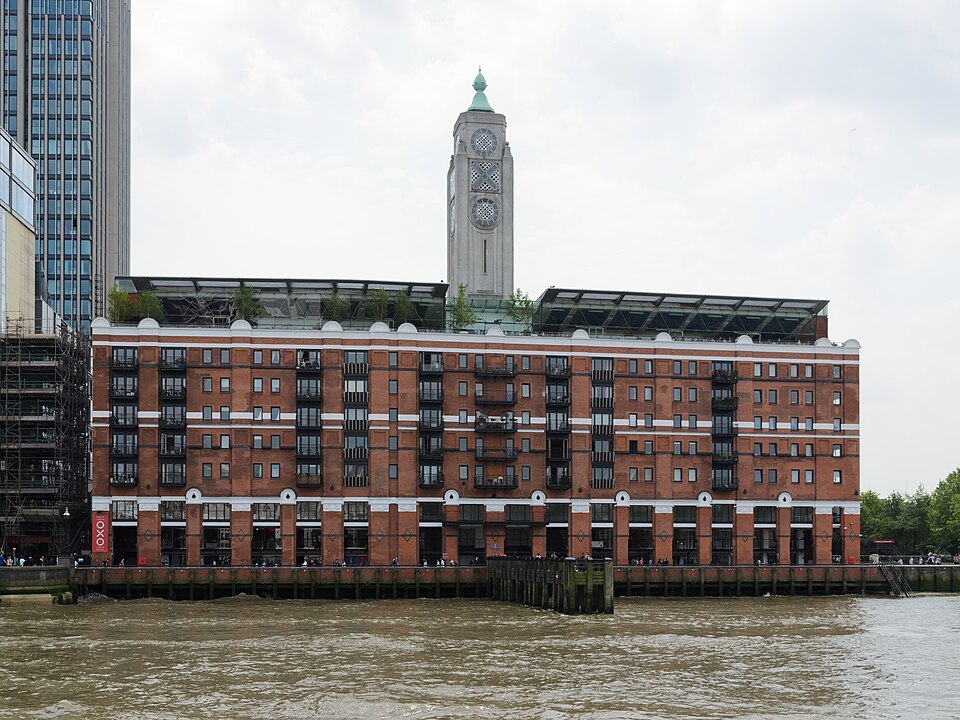
When Nature Calls: The Enshittification of Science and Its Enablers
Proof-of-work papers, policy laundering, and the collapse of self-correction
Correction of scientific literature: Too little, too late!
The Coronavirus Disease 2019 (COVID-19) pandemic has highlighted the limitations of the current scientific publication system, in which serious post-publication concerns are often addressed too slowly to be effective. In this Perspective, we offer suggestions to improve academia’s willingness and ability to correct errors in an appropriate time frame.
Post-publication critique at top-ranked journals across scientific disciplines: a cross-sectional assessment of policies and practice
Journals exert considerable control over letters, commentaries and online comments that criticize prior research (post-publication critique). We assessed policies (Study One) and practice (Study Two) related to post-publication critique at 15 top-ranked journals in each of 22 scientific disciplines ( N = 330 journals). Two-hundred and seven (63%) journals accepted post-publication critique and often imposed limits on length (median 1000, interquartile range (IQR) 500–1200 words) and time-to-submit (median 12, IQR 4–26 weeks). The most restrictive limits were 175 words and two weeks; some policies imposed no limits. Of 2066 randomly sampled research articles published in 2018 by journals accepting post-publication critique, 39 (1.9%, 95% confidence interval [1.4, 2.6]) were linked to at least one post-publication critique (there were 58 post-publication critiques in total). Of the 58 post-publication critiques, 44 received an author reply, of which 41 asserted that original conclusions were unchanged. Clinical Medicine had the most active culture of post-publication critique: all journals accepted post-publication critique and published the most post-publication critique overall, but also imposed the strictest limits on length (median 400, IQR 400–550 words) and time-to-submit (median 4, IQR 4–6 weeks). Our findings suggest that top-ranked academic journals often pose serious barriers to the cultivation, documentation and dissemination of post-publication critique.
Quotation errors in general science journals
Abstract. Due to the incremental nature of scientific discovery, scientific writing requires extensive referencing to the writings of others. The accuracy

It’s time to get rid of the peer-reviewed paper
The peer-reviewed journal article, perhaps the single most important device behind the expansion of scientific knowledge in the last century, is an extraordinarily expensive way to share novelty: e…

Guest Post — Now is the Time for AI in Peer Review, and Publishing Policies Need to Recognize This - The Scholarly Kitchen
Today's post asks us to acknowledge the role of AI in peer review and ensure practical guidance and policies that help scholars respond with consistency and confidence.

Guest Post — Research Needs a Shared Standard for AI Disclosure - The Scholarly Kitchen
Today's guest post presents outcomes of the WCRI's (World Conferences on Research Integrity) Focus Track to address this gap in clarity and standardization of AI disclosure.

Andreas De Block on Twitter / X
It took Nature three years to publish this rebuttal, which clearly demonstrates the fundamental flaws in the original paper. In the meantime, the paper's conclusions influenced scientific debate and policy decisions. Such delays in correcting flawed research do real damage. https://t.co/QI3Ei3PE70— Andreas De Block (@DeblockBlock) August 13, 2026
So maybe now we can agree that having an unchecked research integrity militia who unfortunately has the ear of the press and increasingly that of the the publishers, but who fiercely rejects any… | Ioana A. Cristea
So maybe now we can agree that having an unchecked research integrity militia who unfortunately has the ear of the press and increasingly that of the the publishers, but who fiercely rejects any minimal ethics or code of conduct, is a (growing) problem? Also, that 1. problems have to be investigated before deciding they are are legitimate and serious; 2. this investigation is not social media, blogs and the press; 3. this investigation should not be on the front page of journals and Retraction Watch; 4. there are degrees of seriousness and some things can just be corrected or are simply not very consequential (no, it's not a house of bricks where we have to check every brick, that's a dumb analogy), so being absolutely hysterical and overdramatic about any lie, inaccuracy or mistake is purposeful at worse and should be ignored at best and 5. it is not only unnecessary, but harmful, to also go into other, non-academic things the person did or does to complete "investigations" that you (press, sleuth, blogger, etc) do not have the tools and information to do completely and accurately (this fixation would be called harassment in the before times). Others will justly write about what the institutions did or did not do, but what I want to say is that we really should end it with the blank credit we give to any and all allegations that come from the establish research integrity truth fighters.

Dark-Moneyed Denialists Are Running 'Fixing Science' Symposium of Doubt
The “Fixing Science” symposium, which is hosted by the National Association of Scholars and kicks off today in Oakland, California, includes credible speakers who want to improve some areas of science hurt by the use of poor statistical methods or making irreproducible claims. Unfortunately, they are outnumbered by people who have often cast doubt on mainstream climate, environmental, and health sciences. For […]
How times change! A decade ago, a failed replication of work by the same lab led to 'repligate' and blog posts such as psychol.cam.ac.uk/cece/blog Now, failed replications can be published an no one blinks an eye. That is progress due to all the scholars working hard to improve science!
We've written about how social media companies and other technology firms manipulate the scientific record in their favor. In our revisions, we will need to address how they have captured the state department to literally prevent researchers who criticize them FROM EVEN ENTERING THE COUNTRY.

Jameel Jaffer
This wild document is the basis for the State Department's decision to cancel the visas and green cards of tech researchers who study the social media platforms and of tech regulators who enforce privacy and transparency laws. Disclosed to us last night in @thecoalition.bsky.social v. Rubio.
When should a paper be corrected? Last December, @elisabethbik.bsky.social and other sleuths began flagging papers by a prominent bioengineer, Ali Khademhosseini. They found over 80 with image issues. Khademhosseini and his colleagues have issued over 40 corrections, but avoided retractions.

Science sleuths raise concerns about scores of bioengineering papers
www.nature.com


