

Living in Data: A Citizen's Guide to a Better Information Future (Paperback)
Jer Thorp’s analysis of the word “data” in 10,325 New York Times stories written between 1984 and 2018 shows a distinct trend: among the words most closely associated with “data,” we find not only its classic companions “information” and “digital,” but also a variety of new neighbors—from “scandal” and “misinformation” to “ethics,” “friends,” and “play.”To live in data in the twenty-first century


Related work | Data Counterfactuals
Adjacent research areas and starting papers, curated in Semble and synced into the site.
The Consensus Trap: Dissecting Subjectivity and the “Ground Truth” Illusion in Data Annotation
As part of the Digital Library's transition to Open Access, new features for researchers are available in the Premium Edition. Click here to learn more.

What makes something data?
This is a question I posted on BlueSky on Friday 11/21/25, inspired by a talk I recently attended about evaluation of “AI” systems. I think…

Show me the data - Design Notes
datasetpapers — a public research experiment
An experimental approach to versioned, forkable, machine-readable analyses. A prototype, not a product or service.
datasetpapers — a public research experiment
An experimental approach to versioned, forkable, machine-readable analyses. A prototype, not a product or service.
Data Supply Chains
Data is a critical resource. Like oil, gold, or lithium, both companies and countries covet data. Ultimately, like oil, data’s flow can enrich those that posses

A first introduction to data science education in secondary schools: Teaching and learning about data exploration with <span style="font-variant:small-caps;">CODAP</span> using survey data
Abstract In this paper, we will describe an introduction to Data Science for secondary school students. We will report on the design and implementation of an introductory unit on “Data and data detectives with CODAP” in which secondary school students used the online tool CODAP to explore real and meaningful survey data on leisure time activities and media use (so‐called JIM‐PB data) in a statistical project setting as a starting point for data science. The JIM‐PB data set served as a valuable data set that offered meaningful and exciting opportunities for data exploration for secondary school students, and CODAP proved to be a valuable tool for the first explorations of this data.

Data Feminism
Today, data science is a form of power. It has been used to expose injustice, improve health outcomes, and topple governments. But it has also been used to d...
MyData
The human-centric approach to data is aimed at a fair, sustainable, and prosperous digital society. In such a society, people get value from their data and set the agenda on how it is used. And for organisations, the ethical use of data is always the most attractive option.

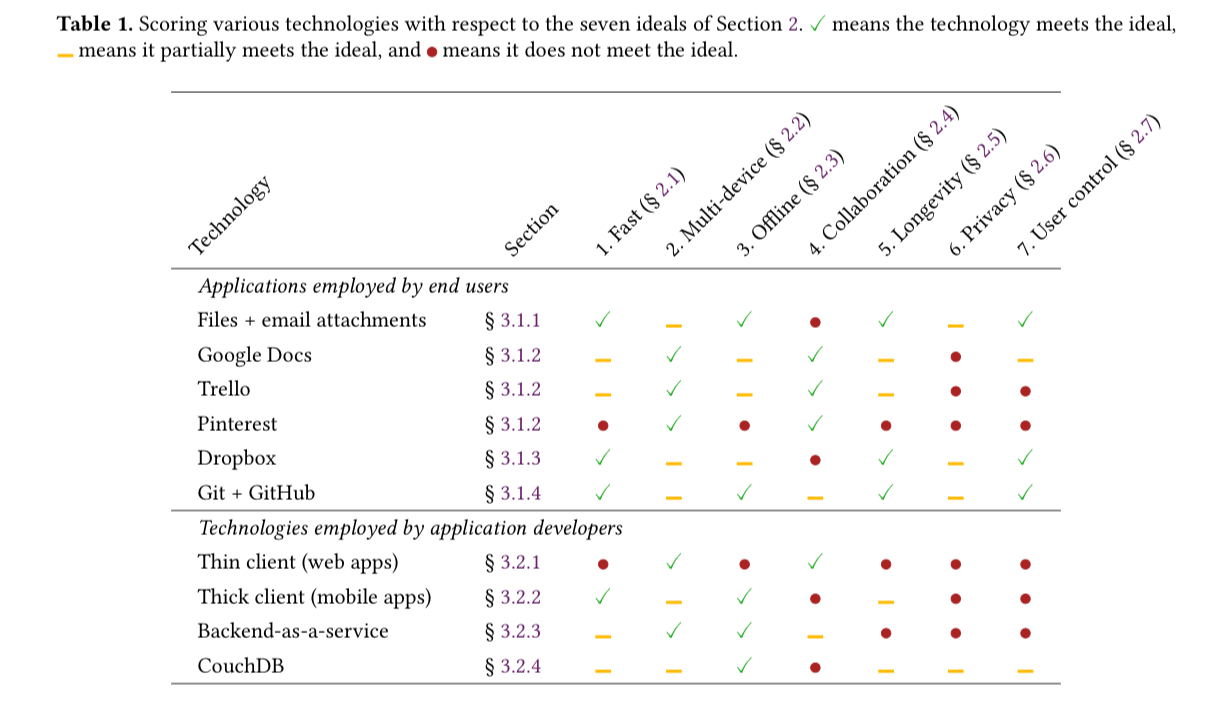
Local-first software: you own your data, in spite of the cloud
Local-first software: you own your data, in spite of the cloud Kleppmann et al., Onward! ’19 Watch out! If you start reading this paper you could be lost for hours following all the interesti…
The Limits of Data
Policymakers want to make decisions based on clear data, but important factors are lost when we rely solely on data. A philosopher writes:
tfw @aaronstevenwhite.io brings an analysis as sharp as a knife to your half-baked Saturday-morning thoughts: aaronstevenwhite.leaflet.pub/3miwsz2hdv22i 🤯 If we're going to own our data, let's actually own our data. Which is to say: No, really, y'all, we're doing this. 💖🧠

Machine-readable attitudes - Computational Semantics++
aaronstevenwhite.leaflet.pub🚨Free data alert!! 🚨 Please share. Large new dataset of Amazon product reviews, including full text and photos and product characteristics, with individual *reviews labeled as fake reviews*. I believe this is the first publicly available data of this kind. github.com/bretthollenbeck/fake-reviews-…


