

Yet another gem from @simonwillison.net that matches my own experience over the last ~3 months. There's no way I could've built my latest ~650 KLOC system in Go without designing and understanding it precisely. It'd be a total mess, and I'm using Fable and Astra for the vast majority of my work.
Sep 25, 2026 at 2:04 AM
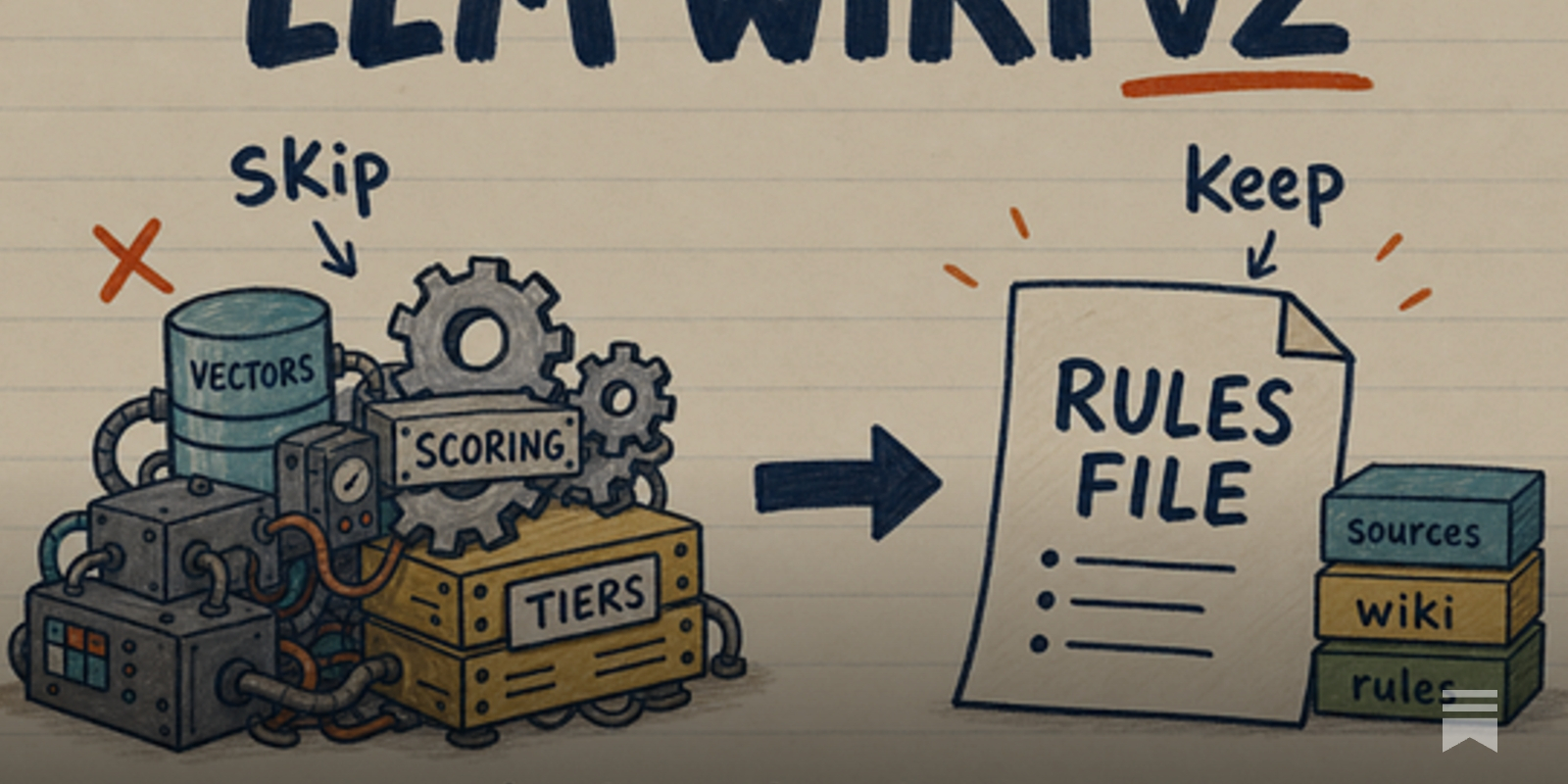
Karpathy's LLM Wiki v2: What to Keep, What to Skip
I rebuilt it, ran it daily for months, and most of the v2 hype is overkill.
If you build it (together), they will come…
Mozilla and the Khronos Group collaborate to bring glTF capabilities to Blender

OpenCode Go | Low cost coding models for everyone
Go starts at $5 for your first month, then $10/month, with generous 5-hour request limits for GLM-5.1, GLM-5, Kimi K2.5, Kimi K2.6, MiMo-V2.5-Pro, MiMo-V2.5, Qwen3.7 Max, Qwen3.6 Plus, MiniMax M2.5, MiniMax M2.7, MiniMax M3, DeepSeek V4 Pro, and DeepSeek V4 Flash.
On Kimi K3: Its Capabilities And Related Discontents
Kimi K3 is a very good model with excellent benchmarks.
Ruby has been fast enough for 13 years
When I started programming Ruby, it was on an Apple iBook G4/800. That beautiful 12” powerhouse of a 800 MHz PowerPC with a rocking 256MB of RAM. A lovely computer that was not only fast enough to …

Gemstone Systems
not the dev part, that part's honestly fine.1 we're talking about the everything else part.
Jacky Kwok on Twitter / X
Scaling self-verification with DeepSeek V4 Flash beats Claude Fable 5 on Terminal-Bench 2.1, while being 11x cheaper 💰As open-source models become more capable, they can now generate large numbers of high-quality candidate solutions and verify their own outputs at very low… https://t.co/as2HtyHzzW pic.twitter.com/XzVBgr5JPz— Jacky Kwok (@jackyk02) August 17, 2026

Ubuntu Summit 25.10 | Day Two
The KDO Rolodex Is Now a Wee Feed Reader?
Hello, good afternoon! As I mentioned a few weeks ago, I have a bunch of new stuff for KDO in the pipeline. I’ve been focused on backend infrastructure recently

Karpathy's LLM Knowledge Base Wiki for Enterprise | Vijoy Pandey posted on the topic | LinkedIn
There's a new kind of computer media in the enterprise: Write once, Read never. The docs are perpetually stale, constantly diverging from reality, and scattered across Confluence, SharePoint, GitHub, Webex (or Slack) threads, Notion, Obsidian - and in my personal life, add Apple Notes, Goodnotes, web clippings, and multiple Google Drives worth of docs and slides that nobody is ever going back to. Karpathy tweeted his LLM knowledge base wiki architecture which went viral last weekend and I decided to give it a run yesterday. Verdict: You *have* to try this out. Prediction: You won’t be able to live without it soon. There were a few mods and decisions I made to the base Karpathy provided. First, the vault / folder structure in Obsidian. I already use Obsidian as a human. Instead of creating separate vaults and dealing with the sync nightmare, I just have folders for Human and Agent, and a Raw folder. (1) The Human/ folder is where I write long form articles and notes independent of the knowledge base wiki. No LLM or agent touches this folder. (2) I do have Arnold Layne, my OpenClaw agent, doing background tasks for me. Raw/ is where both Arnold and I, dump raw snippets. Inclusive of diverse kinds of media. (3) The Agent/ folder is where the LLM (Claude in my case) synthesizes the wiki. No human touches this folder. Second, some customizations to CLAUDE.md for enterprise-like usage - (4) Domain extensions - the agent needs to know that quantum computing and agentic AI have different entity types and different provenance thresholds. (5) Primary source protection, when I drop in my own original work, secondary sources can extend it or raise questions against it, but they cannot overwrite it. It sounds like a small thing but its’s not, especially at enterprise scale where provenance actually matters. Karpathy is upfront that what he’s built is working memory for a single agent, and it’s truly remarkable at that. The jump to Shared Context across teams, reconciling conflicting beliefs at org scale, ontologies that don’t collapse under the weight of a hundred contributors - those are much harder problems and what we are exploring with the Internet of Cognition. PS: The screenshot shows my Obsidian vault after just two runs: one with Karpathy’s original tweet and gist file itself (so meta!) and one with our Internet of Cognition paper. Claude (Sonnet) read it, compiled it into structured summaries, entity pages, concept pages, backlinks, merged all the information cohesively, and keeps it all maintained from there. You just read the Wiki. It’s simply magical.

Go Web Programming
Build scalable, high-performance web apps in Go with modern design principles.

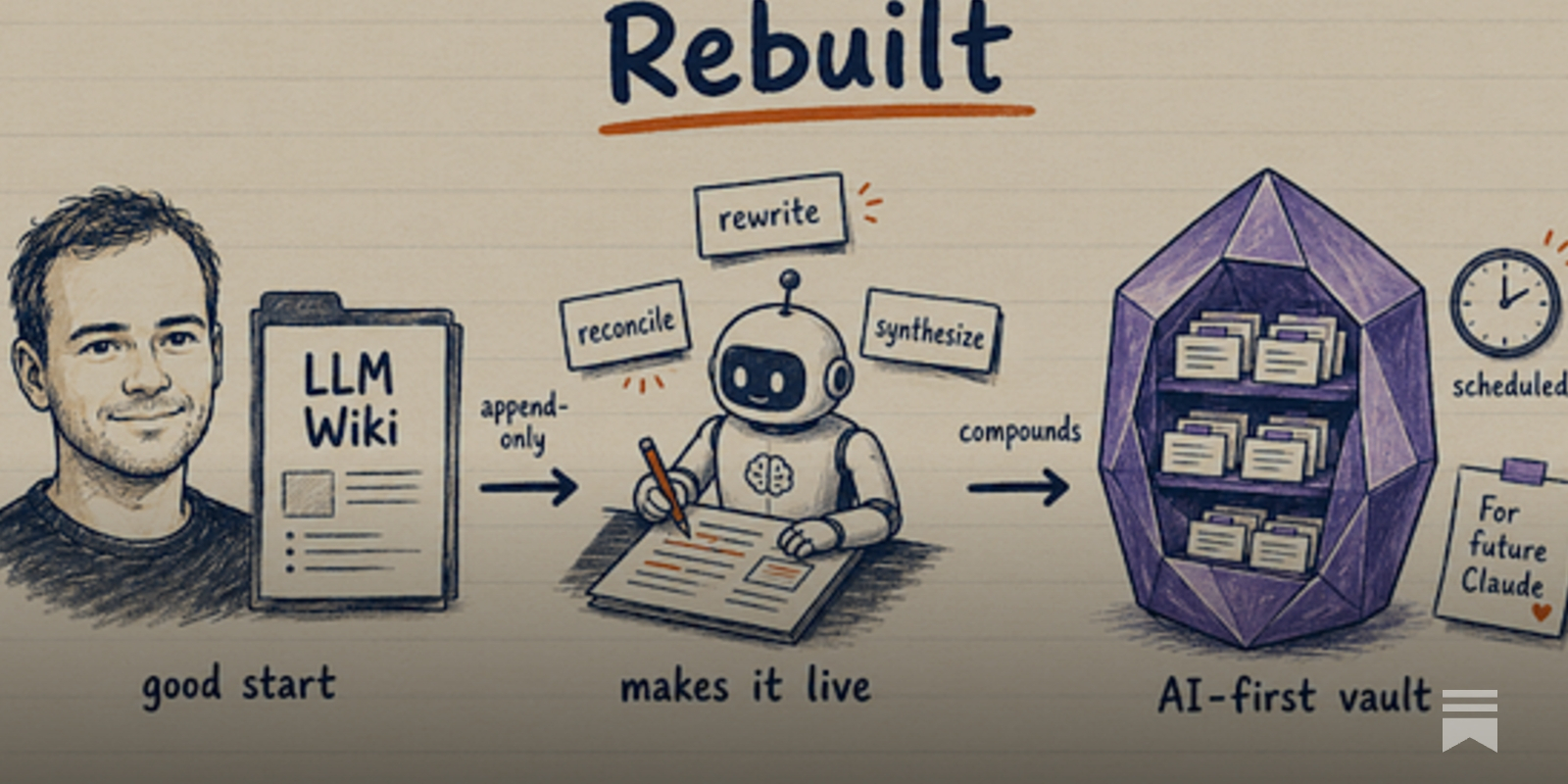
I rebuilt Karpathy's LLM Wiki gist: what's missing
Karpathy's original LLM Wiki gist, explained and rebuilt as a working system. 44 open-source commands, plus the five things the gist leaves out.
Our team just shipped Fugu-Ultra v1.1! 🐡 By dynamically orchestrating the latest frontier models, we pushed performance up by 7.9 points. We are now beating Fable 5 in complex coding and reasoning tasks without even having Fable 5 in our agent pool. Collective intelligence is the future.

Sakana AI
Announcing Fugu-Ultra v1.1 🐡 We’ve been thrilled by the reception to the Fugu model family. Thanks to everyone who tried it, shared feedback, and trusted Fugu with real work. Today, we’re releasing Fugu-Ultra v1.1 → sakana.ai/fugu Upgraded to incorporate the latest frontier models.


