

Most LLM environmental reporting covers only the final pretraining runs. For Olmo 3, we measured every stage across all four variants: 7B and 32B, instruct and reasoning, and found that 82% of the compute went to development, all before the final runs 😱

Ai2
Our research estimates that in today’s model training efforts, 82% of compute goes into exploratory work. At closed labs, the output of that work stays within those labs. In an open system, models, datasets, & methods are shared, and the value compounds across the field.
May 7, 2026 at 4:19 PM
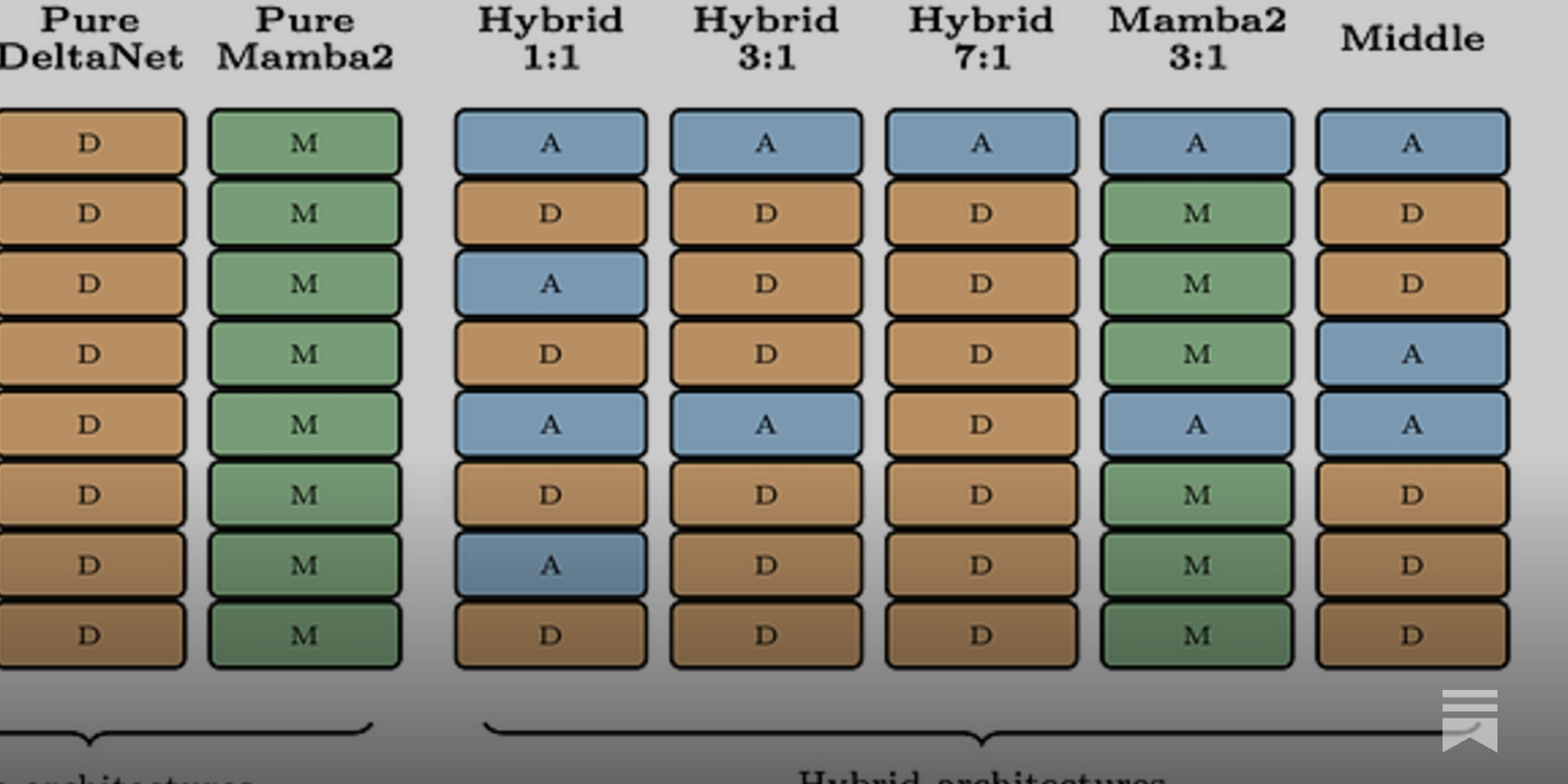
Olmo Hybrid and future LLM architectures
The latest Olmo model and discussions at the frontier of open-source post training tools.
Wolfram LLM Benchmarking Project
Results from Wolfram's ongoing tracking of LLM performance. The benchmark is based on a Wolfram Language code generation task.

Olmo 3: Charting a path through the model flow to lead open-source AI | Ai2
Our new flagship Olmo 3 model family empowers the open source community with not only state-of-the-art open models, but the entire model flow and full traceability back to training data.

Benchmarks | EXO
Transparent benchmarks for LLMs tested on real hardware. Coming soon.
I accidentally turned LLM memory into program analysis :: pwning.systems
Why I stopped trying to give LLM agents a better memory and instead built Lemmalog, a Datalog engine that maintains an agent's knowledge as analysis state, with provenance, retractions and incremental evaluation, plus what happened when I benchmarked it on LongMemEval and LoCoMo.
State of AI 2025: 100T Token LLM Usage Study | OpenRouter
Read OpenRouter's 2025 State of AI report — an empirical 100 trillion token study of real LLM usage, model trends, and developer insights.
distil labs – Cut LLM Costs by 80% with Custom SLMs
Your LLM costs are eating your product margins. distil labs trains a specialized model layer on your workload and serves it behind one OpenAI-compatible endpoint.
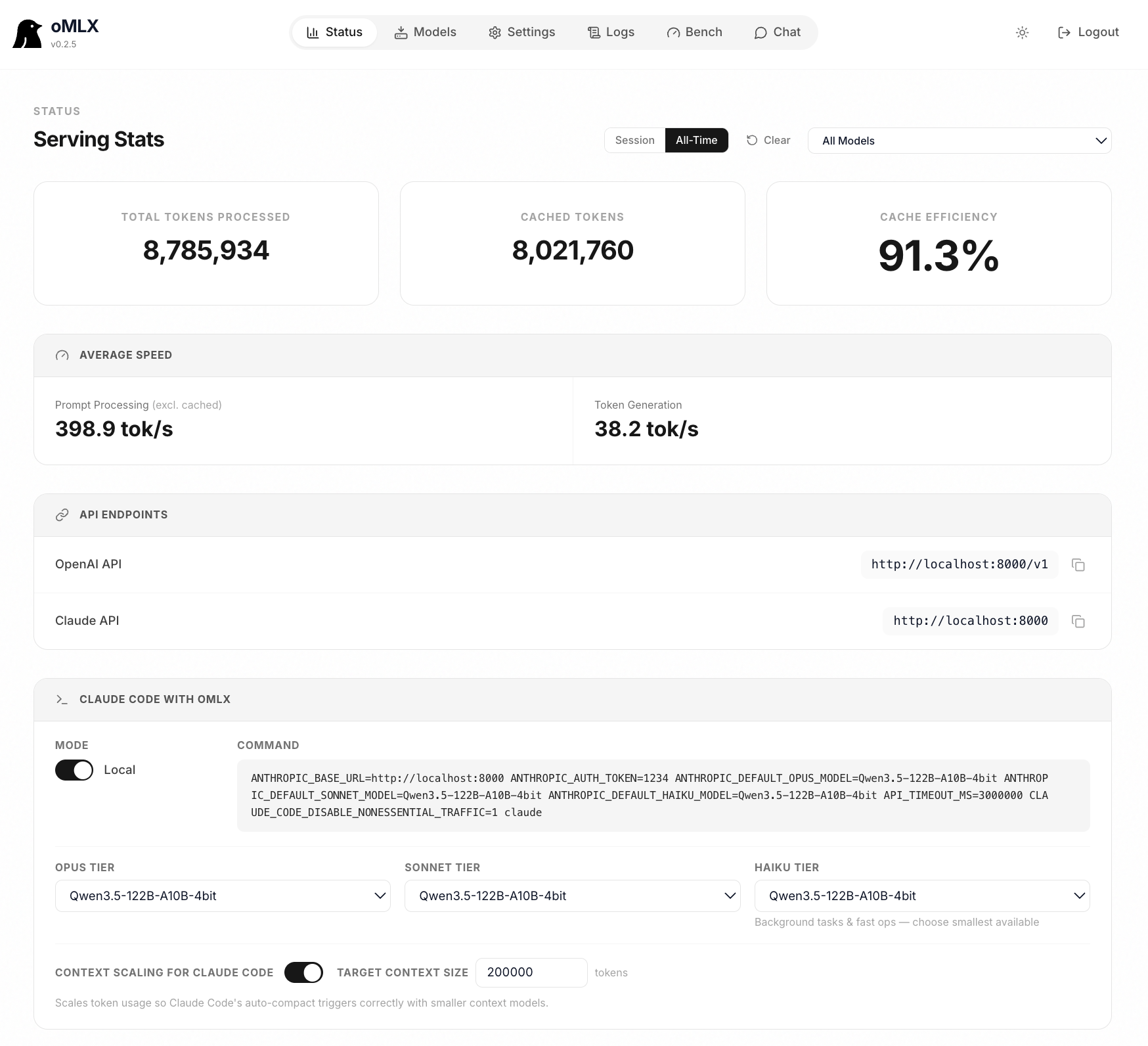
Performance Explorer — oMLX
Compare model performance across context lengths with community benchmark data.
Cross-Model Evaluation: kaish collection syntax across 7 LLMs (DeepSeek, Gemini, Claude, Gemma, GLM, Qwen)
Cross-Model Evaluation: kaish collection syntax across 7 LLMs (DeepSeek, Gemini, Claude, Gemma, GLM, Qwen) · GitHub
apple-silicon-llm-bench/results/complete_results.html at main · AlexHiesch/apple-silicon-llm-bench
Systematic LLM inference benchmark for Apple Silicon: 8 backends, 7 models, 791 measurements - AlexHiesch/apple-silicon-llm-bench
Which direction is forward?
Software role changes tell us something about the goals in LLM deployment.
NeuralBench: A Unifying Framework to Benchmark NeuroAI Models | Hubert Banville
🧠 NeuralBench is now open source. Today we're releasing NeuralBench, a unified framework for benchmarking foundation models of brain activity, developed by the Brain & AI team at FAIR, Meta. 💻 Code: https://lnkd.in/dNJsgBgM 📄 White paper: https://lnkd.in/dvWMg7rx Brain foundation models are starting to show positive transfer to a range of downstream tasks, from brain-computer interfacing to clinical classification. But systematically evaluating them is hard: heterogeneous preprocessing pipelines, input structures, and adaptation methodologies make results difficult to compare. Most prior work also focuses on a narrow set of downstream tasks. NeuralBench addresses this by defining each task end-to-end with config files (data source, preprocessing, splits, optimiser, metrics, architecture) so all models can be evaluated on the same footing. What's in our first release, NeuralBench-EEG v1.0: ⚡ 36 EEG tasks across 94 public datasets, spanning motor imagery, clinical classification, cognitive decoding, and phenotype prediction. 🤖 Task-specific deep learning architectures (EEGNet, Deep4, EEGConformer, CTNet, ...) benchmarked side-by-side with recent EEG foundation models (BENDR, LaBraM, BIOT, CBraMod, LUNA, REVE). 🧩 Extensible to other neuroimaging modalities: the framework already runs MEG and fMRI tasks, leveraging our NeuralSet ecosystem for accessing brain imaging data and the broader neuroscientific software stack. 📜 Released under the MIT license. Help us make it better. Through our white paper, we invite the community to contribute new tasks, datasets, and models, especially for fMRI, MEG, and iEEG. The long-term goal is a fully unified benchmark across neuroimaging tasks and modalities. 🙏🙏🙏 This was a big team effort with Stéphane d'Ascoli, Simon Dahan, Jérémy RAPIN, Marlène Careil, Yohann Benchetrit, Jarod Lévy, Saarang P., Antoine Ratouchniak, Lucy (Mingfang) Zhang, Elisa Cascardi, Katie Begany, Teon Brooks, and Jean-Rémi King. Special thanks to Alexandre Gramfort, Thomas Moreau, Arnaud Delorme, Bruno A. and Pierre Guetschel for feedback and support. #Neuroscience #AI #NeuroAI #Python #OpenSource

Release v0.11.0 · ollama/ollama
Welcome OpenAI's gpt-oss models Ollama partners with OpenAI to bring its latest state-of-the-art open weight models to Ollama. The two models, 20B and 120B, bring a whole new local chat experie...
OpenEvolve underperforms simple autmated discovery harnesses the rest are insignificant from each other. The best choice changed across model–problem pairs. We ran a controlled study (3m+ rollouts) using repeated budget-matched runs, strong baselines, and statistical hypothesis testing.

