I have a vague worry that, as we put more and more computation into CSS, web devs are going to end up with performance issues that are difficult to trace to their source compared to JS solutions. The answer is to surface this in DevTools I guess.
Jun 15, 2026 at 1:33 PM
schalkneethling/css-benchpress
css-benchpress aims to help developers and tooling authors discover where CSS patterns become performance problems by growing realistic web-platform test cases until measurable regressions appear.
Thinking about going with PreactJs for dev.to
The dev.to web application has been built on "vanilla" JavaScript for performance purposes specific...

How we reduced our initial JS/CSS size by 67%
We have been working on reducing the amount of bytes that we send to all Fider users. Being a web application built with React, we have focused on JS and CSS. On this post we share our learnings, some concepts and suggestions on how you can do the same with your web application.

webpack
webpack bundles JavaScript, CSS, HTML, WebAssembly and assets into optimized output for browsers, Node.js, Deno, Bun and other environments.

State of JS 2020
The annual survey about the latest trends in the JavaScript ecosystem.
Solving Performance for 2D & 3D Web Apps: Finally!
Progressive enhancement and JavaScript failure
Can progressive enhancement help to build JavaScript web apps that handle errors gracefully?

Google+ | web.dev
We hit our goal of never downloading more than 60k of HTML, 60k of JavaScript and 60k of CSS at any one time!

The many, many, many JavaScript runtimes of the last decade
This last decade has seen an inundation of new JavaScript runtimes (and engines in equal measure), enabling us to run JavaScript in all manner of contexts...

Multi-process Firefox brings 400-700% improvement in responsiveness | TechCrunch
Earlier this summer I wrote about Mozilla's efforts to rollout a multi-process architecture, codename Electrolysis, for Firefox. In the months since,

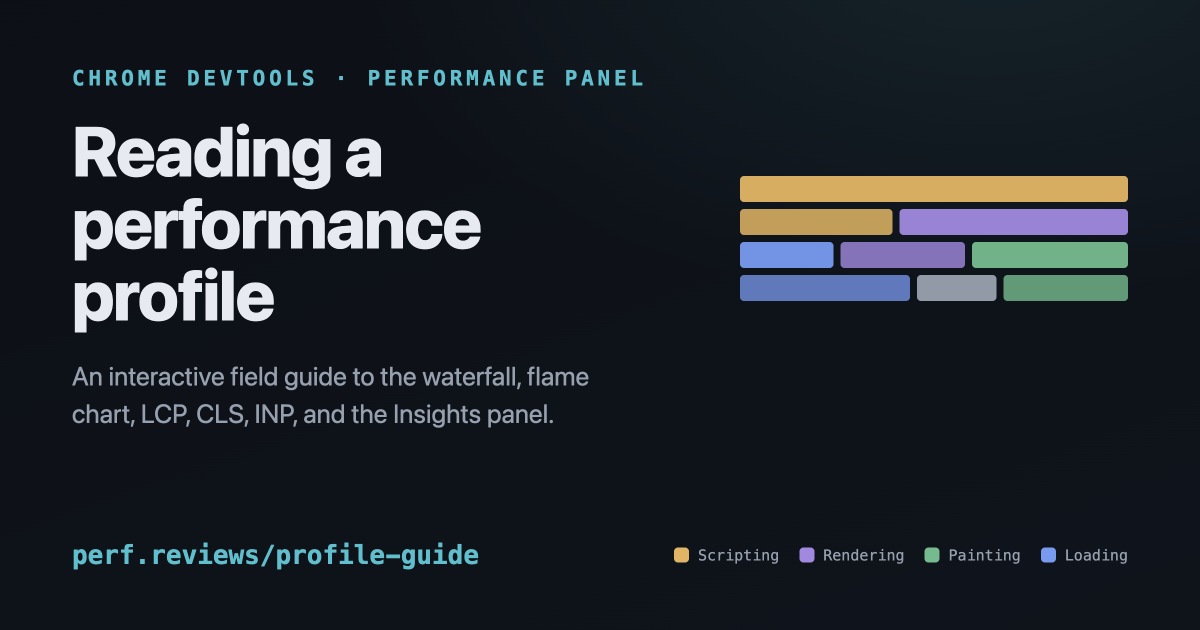
Reading a Performance Profile: Field Guide
An interactive field guide to the Chrome DevTools Performance panel: waterfall, flame chart, LCP, CLS, INP, and the Insights panel.

2026 CSS wishlist – Nathan Knowler
What I’d like to see prioritized for CSS in 2026, how those features will allow us to create better web-based design systems, and how they renew separation of concerns.
A peek into the WebAssembly Browser Preview
Following the introduction of asm.js, we have been working with other browser vendors including Mozilla, Google, Apple, along with the rest of the WebAssembly community group, to push the performance boundary of the web with WebAssembly. WebAssembly is a new, portable, size- and load-time-efficient binary compiler target, which promises near-native performance on the web. As

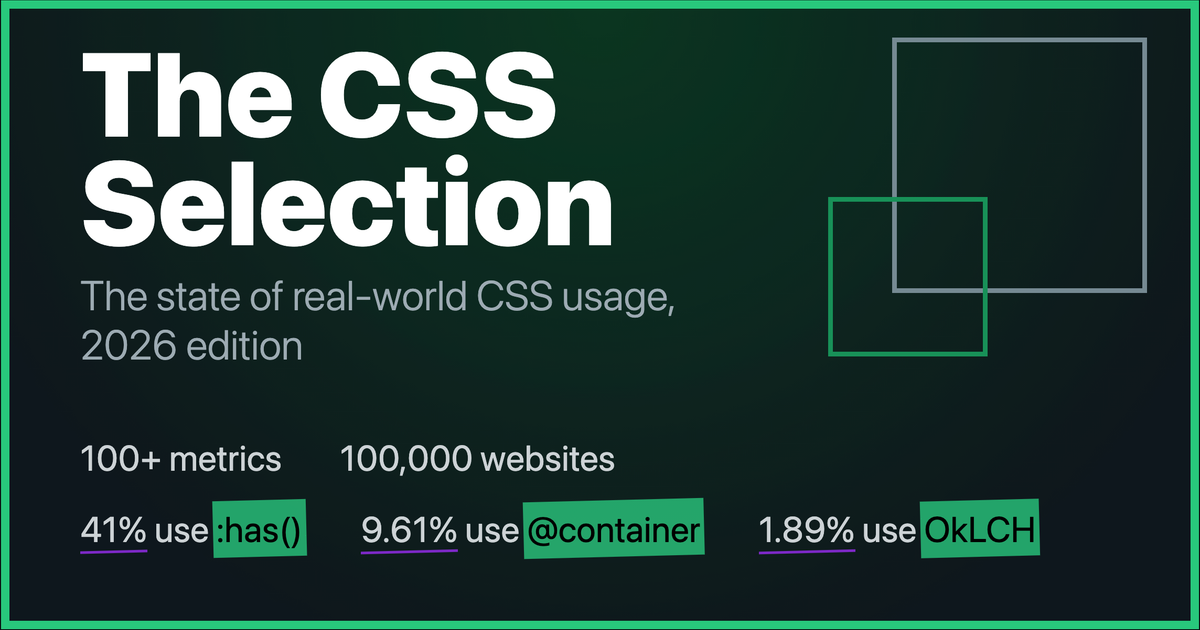
The CSS Selection - 2026 Edition - Project Wallace
The CSS Selection shows real-world CSS usage from over 100,000 websites and looks at the most important metrics.
State of JavaScript 2022
The 2022 edition of the annual survey about the latest trends in the JavaScript ecosystem.