

Regime Change: Inside the Imperial Presidency of Donald Trump
INSTANT #1 NEW YORK TIMES BESTSELLER “Regime Change is exceptional. It transcends its genre...the book is packed with news that will stay news...This is reporting of consequence.” —David Remnick, The New Yorker “A flabbergasting feat of political reporting.” —Tina Brown “Riveting and richly textured...What the authors add is the vivid detail that makes these events feel actual. They wrest reality itself back from the distorted world of entertainment, illusion, fantasy, and denial that Trump has generated around himself. It is this flood of provocation, atrocity, self-dealing, and fabrication that makes Haberman and Swan’s counternarrative so vital.” —Fintan O’Toole, The New York Times A riveting, intimate, and revelatory account of the most radical and consequential presidency of our time.From the two reporters who have covered him more closely than perhaps anyone else over the past decade comes this definitive portrait of Donald Trump in the White House. Regime Change covers the first year of Trump’s second presidency—a term liberated from every constraint that defined his first. The generals who once told him “no” are gone, and the lawyers who remain have learned to pick their battles. His administration has flouted court orders and he has claimed powers that Congress once checked. What remains is a President willing to take enormous risks that have upended global markets and toppled heads of state; an imperial President operating almost entirely on instinct alone. Based on hundreds of interviews and unprecedented reporting from deep within the administration’s most closely guarded rooms, Regime Change takes the reader inside the Situation Room and into the secret Oval Office deliberations that have launched a new war in the Middle East and seen Trump seal the border, surge National Guard troops into cities, and send immigration agents into deadly clashes with protestors. Maggie Haberman and Jonathan Swan bring us behind the scenes of a presidency that has transformed the culture, turned the Justice Department into an agent of retribution against the President’s enemies and the office itself into a brazen vehicle for profit. They reveal a second term propelled by a historical irony that Trump himself has come to understand: that the indictments, the convictions, the assassination attempts, and four years of exile made him not weaker but far more powerful, more vengeful, and more willing to gamble than any President in modern history. This is the story of how Trump has used that power, who has tried to stop him, and why nearly all of them have failed. It is also the story of something American journalists are more accustomed to chronicling in distant capitals than in their own: a President who has fundamentally altered the nature of the office he holds—and, with it, how the rest of the world understands American power. It is an account of Regime Change right here in America—a landmark real-time history of a modern presidency like no other.

‘A Bible-sized blind spot’: congressman sounds alarm on rising Christian nationalism
In his new book, congressman Jared Huffman argues that theocratic insurgency has only grown more powerful after Donald Trump returned to the White House
Five times AI hallucinations embarrassed governments
From the Trump administration’s “formatting errors” to South Africa’s historic policy withdrawal, AI confabulation is infiltrating official documents.

A Modern Guide to Thinking, Fast and Slow - Critikid
A chapter-by-chapter analysis of Kahneman's text with a focus on the replication crisis, clarifying which findings remain solid and which have not held up to scrutiny.

Opinion | I Am Part of the Resistance Inside the Trump Administration (Published 2018)
I work for the president but like-minded colleagues and I have vowed to thwart parts of his agenda and his worst inclinations.

America’s Right-Wing Propaganda Problem Might Be Terminal - Dame Magazine
America’s descent into mass delusion isn’t happenstance. The demise of courageous journalism isn’t a happy accident. Its replacement with engagement-chasing infotainment and propaganda isn’t an error. It’s a global assault on reason and informed consensus, and corporations and authoritarian bullies like Donald Trump are both architects and benefactors. For decades, academics warned anybody who’d listen
How to stop a dictator
I spent months studying how authoritarians like Trump lose. The answer is shockingly simple.

On Courage: How to Be a Dissident in an Age of Fear
From a Pulitzer Prize-winning investigative journalist and a former White House senior advisor, a deeply reported manual for how individuals can resist America's slide away from democracy, based on original interviews with more than 100 dissidents, activists, and theorists across the world. The United States has crossed into a new and unfamiliar realm--one in which daring to challenge the state carries real danger. Ordinary Americans now face a government that feels more like foreign autocracies, with a White House stretching the powers of the presidency beyond recognition. The sitting president wields fear as a weapon, punishes political enemies, intimidates sitting members of Congress, bends private businesses to his will, and disappears student protesters off the streets. Based on their acclaimed The New Yorker essay "So You Want to Be a Dissident: A Practical Guide to Courage in Trump's Age of Fear," Pulitzer Prize-winning investigative journalist Julia Angwin and former White House senior advisor Ami Fields-Meyer deliver a guide to courage in America's age of fear. On Courage is a captivating collection of stories and lessons from the front lines of the fight for the future of the free world that invite action and rouse hope. Step into the room where the world's new dissidents--ordinary people, in the U.S. and around the world, who never aspired to be activists--are writing the playbook for courage, risk, and resistance in the age of authoritarianism and unprecedented digital surveillance. On Courage simplifies the calculus of activism by making more accessible than ever the fundamentals of taking political risk. It's a handbook that is equal parts practical and spiritual, a valuable resource and a powerful message for anyone, anywhere, who feels the walls of history closing in on them.
When Corrections Fail: The Persistence of Political Misperceptions
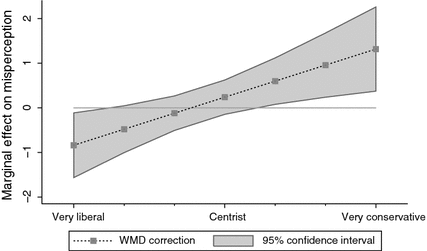
An extensive literature addresses citizen ignorance, but very little research focuses on misperceptions. Can these false or unsubstantiated beliefs about politics be corrected? Previous studies have not tested the efficacy of corrections in a realistic format. We conducted four experiments in which subjects read mock news articles that included either a misleading claim from a politician, or a misleading claim and a correction. Results indicate that corrections frequently fail to reduce misperceptions among the targeted ideological group. We also document several instances of a “backfire effect” in which corrections actually increase misperceptions among the group in question.
Interdependent Thoughts
Bookmarked Will A.I. Become the New McKinsey? by Ted Chiang in the New Yorker
Peter Thiel's "Palantir," The Company That Owns The Trump Regime, Just Published Their 22 Point Manifesto For America And It's Terrifying.
22 Points · A Tolkien-Themed Surveillance Empire · A Chairman Who Loved Epstein · A Philosopher-King Blogger On Speed-Dial · And The IBM-Nazi Template Nobody Wants To Name

Robin Berjon


"For A Left Populism" by Chantal Mouffe Excellent first read of the year. A framework and a strategy for the change we need. If you're progressive and unsure of what to do, what politics should look like, this is a good short read to think it through

