

Why do people trust physicists and biologists more than economists or sociologists? In a new paper out in Public Understanding of Science, @hugoreasoning.bsky.social and I argue that it has to do with perceived precision and consensus. doi.org/10.1177/09636625261471051

Sciences perceived as precise and consensual are more trusted - Jan Pfänder, Hugo Mercier, 2026
doi.orgAug 13, 2026 at 12:12 PM
Sciences perceived as precise and consensual are more trusted
Research focused on the United States shows that people’s trust in science varies considerably between disciplines. Existing explanations of these trust gaps stress the role of ideology: when people perceive scientists of a particular discipline to be ideologically like-minded, they tend to trust them more. Here, we report two findings: first, trust gaps between disciplines also exist in France—a representative sample of the French population (N = 1012) trusted researchers in biology and physics more than researchers studying climate science, economics, or sociology. Second, the more precise and consensual participants perceive scientific findings to be, the more they tend to trust the scientists (across and within disciplines). While these findings are correlational, they align with a non-ideological explanation of trust in science: the rational impression account. This account proposes that people can come to trust scientists by relying on basic cognitive inference processes, which tend to be generally rational.

Why we don’t really know what the public thinks about science
Measuring trust isn’t enough. Furthering knowledge about the institutions and norms of science is the best way to build credibility.
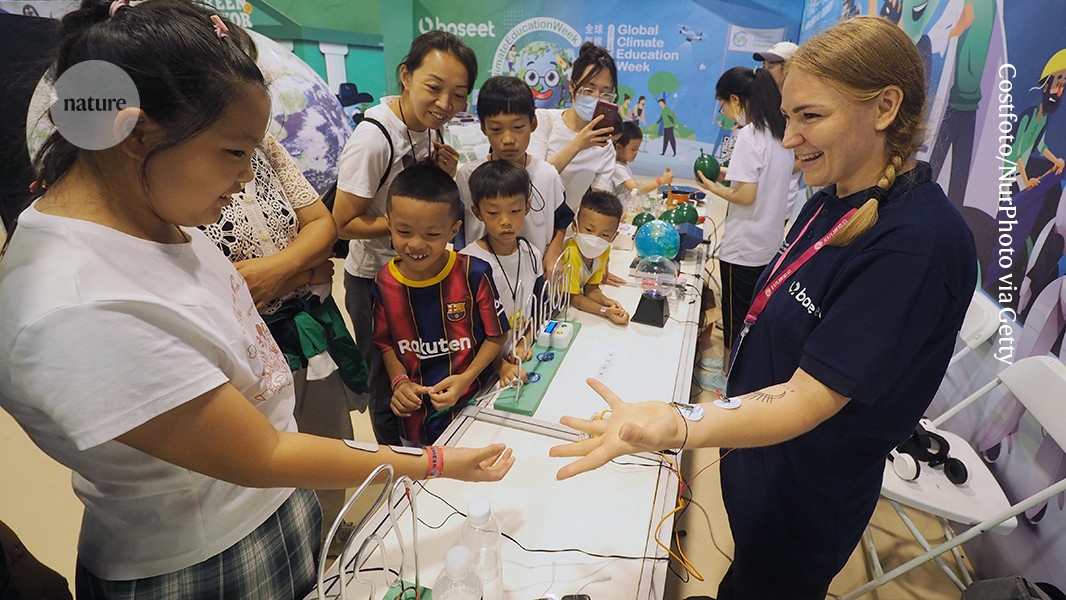
Have people stopped trusting science? The data tell a surprising story
Some say there’s a global crisis of trust — but research reveals where the real problems lie.
Can we measure trust in scientific publications? - LSE Impact
Jonathon Alexis Coates outlines how a constellation of static and dynamic indicators could provide a means for assessing the trustworthiness of published research

Why Science Can't Settle Political Disputes
Attempts to scientifically “rationalize” policy, based on the belief that science is purified of politics, may be damaging democracy
Do Science <i>Kardashians</i> Get Citation Premium? Self‐Fulfilling Effects of Social Media on Scientific Impact
ABSTRACT We analyze whether the visibility of scientists on social media affects the number of academic citations. We use the global COVID‐19 pandemic as a quasinatural experiment that exogenously increased public attention and the demand for expertise. Using publications on COVID‐related topics by social media stars and their coauthors prior to the outbreak of the pandemic, we find that social media stars' pre‐COVID‐era papers received about – more citations annually per paper after 2019. Quantitatively comparable results are obtained when we use scientists' Kardashian index (K‐index) as a benchmark for stardom, however we find no significant effects when using the intensive margin of scientists' K‐indexes. We provide a brief discussion of policy implications in light of these findings.

A budding discipline around how science gets read and judged - Aris
Scholarly publishing spent thirty years arguing about access. It has barely begun arguing about what readers do with the paper once they have it. At Aris we call that second argument scholarly interface design. Mike Morrison's community calls it ScienceUX. Either way it is becoming a field, and here is why it is worth your attention.
Milton Friedman
Blog de sciences économiques et sociales de Martin Anota. Traductions, revues de presse.
.png)
Esprits animaux: Dans quelle mesure les préférences environnementales se traduisent-elles par un vote écologiste ?
La science économique manque de diversité. Les femmes et les minorités ethniques sont sous-représentées dans la profession des économistes, ...
New Studies: How Commercial Forces Make Science Less Reliable
Computational social science has been distorted by commercial forces, and AI is making it worse.

Shifting the Level of Selection in Science
Criteria for recognizing and rewarding scientists primarily focus on individual contributions. This creates a conflict between what is best for scientists’ careers and what is best for science. In this article, we show how the theory of multilevel selection provides conceptual tools for modifying incentives to better align individual and collective interests. A core principle is the need to account for indirect effects by shifting the level at which selection operates from individuals to the groups in which individuals are embedded. This principle is used in several fields to improve collective outcomes, including animal husbandry, team sports, and professional organizations. Shifting the level of selection has the potential to ameliorate several problems in contemporary science, including accounting for scientists’ diverse contributions to knowledge generation, reducing individual-level competition, and promoting specialization and team science. We discuss the difficulties associated with shifting the level of selection and outline directions for future development in this domain.
New study finds that when people help collect data or contribute to research it can build public trust by making scientists feel personally familiar and approachable, and that trust then spreads to how local and tangible the research feels. jcom.sissa.it/article/pubid/JCOM_2506_2026_…

How can citizen science reduce psychological distance to science? Insights from three projects in contested environmental contexts
jcom.sissa.itOnce you understand that this is a model of science written by non-scientists who hate universities but love venture capital and redirecting money to political allies, everything makes a lot more sense. nytimes.com/2026/07/22/us/politics/trump-…

Trump’s Plan for Science: More Money for A.I., Less for Universities
www.nytimes.com

