#Pancreaticcancer is usually caught too late to treat. A new study finds an #AI system can pick up early warning signs in routine CT scans more than a year before diagnosis -- outperforming radiologists on scans previously read as normal. Hopefully it can improve survival. shorturl.at/zXUwj

AI Spots Pancreatic Cancer Years Before It Shows Up, Study Finds
www.bloomberg.comApr 29, 2026 at 4:15 AM
AI Spots Pancreatic Cancer Years Before It Shows Up, Study Finds
An artificial intelligence system can spot pancreatic cancer long before it shows up on scans, raising the prospect of catching one of the deadliest tumors early enough to successfully treat, a study found.

AI model detects very early normally ‘invisible’ tissue changes of pancreatic cancer
An AI model (REDMOD) can pick up the very early subtle tissue changes of pancreatic ductal adenocarcinoma, the most common form of pancreatic cancer, which conventional imaging and the human eye find difficult to detect, finds research published online in the journal Gut. As such, it offers the potential to shift an all too common late stage, terminal disease diagnosis to one that is at an early stage (stage 0) and treatable, say the researchers. While REDMOD was more accurate than experienced radiologists, it requires testing in high risk patients, defined as those with unexpected weight loss and newly diagnosed diabetes, before it can be widely used in clinical practice, they add.
Next-generation AI for visually occult pancreatic cancer detection in a low-prevalence setting with longitudinal stability and multi-institutional generalisability
Background Failure of conventional imaging to detect pancreatic ductal adenocarcinoma (PDA) at its visually occult pre-diagnostic stage is a primary barrier to improving its otherwise poor rate of survival. Objective To develop and validate the Radiomics-based Early Detection MODel (REDMOD), an AI framework to identify subvisual radiomic signatures of pre-diagnostic PDA on standard-of-care CT. Designs REDMOD was trained on a multi-institutional cohort (n=969; 156 pre-diagnostic, 813 control) and tested on an independent set (n=493; 63 pre-diagnostic, 430 control), simulating a low prevalence (~1:6) early detection paradigm. The fully automated framework couples AI-driven segmentation with a heterogeneous ensemble architecture trained on a 40-feature radiomic signature derived from Synthetic Minority Over-sampling Technique (SMOTE)-balanced data. A tunable Youden Index-optimised classification threshold enables performance calibration without retraining. Validation included direct comparison with radiologists, longitudinal test–retest analysis and external specificity validation across two independent cohorts (n=539 and n=80). Results On an independent test set (n=493), REDMOD identified occult PDA (AUC 0.82; 73.0% sensitivity) at a median 475-day lead time. This represented nearly twofold higher sensitivity than radiologists (38.9%; p<0.001), which grew to nearly threefold (68.0% vs 23.0%) at >24 months lead time. REDMOD showed strong longitudinal stability (90–92% concordance) and generalisable specificity across multi-institutional (81.3%; n=539) and public (87.5%; n=80) datasets. Mechanistic analyses confirmed predictive power derived principally from multi-scale wavelet-filtered textural features (90% of selected signature), which outperformed unfiltered features (AUC 0.82 vs 0.74; p=0.007) in capturing subvisual architectural disruptions. Conclusions REDMOD is an automated, mechanistically grounded, longitudinally stable, externally validated AI that surpasses radiologists for PDA detection at its visually occult pre-diagnostic stage. These attributes position it for prospective validation in high-risk cohorts, a necessary step towards shifting the paradigm from late-stage symptomatic diagnosis to proactive pre-clinical interception.
Using AI Made Doctors Worse at Spotting Cancer Without Assistance
A new study offers the latest evidence of potential “deskilling” effects on AI users.
Pancreatic cancer mRNA vaccine shows lasting results in an early trial
Scientists caution that more research is needed, but nearly all of the patients who responded to the personalized vaccine are still alive six years later.
Endoscopist deskilling risk after exposure to artificial intelligence in colonoscopy: a multicentre, observational study
Continuous exposure to AI might reduce the ADR of standard non-AI assisted colonoscopy, suggesting a negative effect on endoscopist behaviour.

Endoscopist deskilling risk after exposure to artificial intelligence in colonoscopy: a multicentre, observational study
Continuous exposure to AI might reduce the ADR of standard non-AI assisted colonoscopy, suggesting a negative effect on endoscopist behaviour.
The algorithm will see you now - Works in Progress Magazine
Radiology combines digital images, clear benchmarks, and repeatable tasks. But replacing humans with AI is harder than it seems.

It’s remarkably easy to inject new medical misinformation into LLMs
Changing just 0.001% of inputs to misinformation makes the AI less accurate.
GraphDx: A Cost-Aware Knowledge-Enhanced Multi-Agent Framework for Sequential Diagnosis
Unlike static question answering, sequential diagnosis mirrors actual clinical workflows: physicians iteratively gather information through symptom inquiries and diagnostic tests, making decisions under uncertainty while balancing diagnostic accuracy against resource costs including monetary expense, patient discomfort, and time. This multi-turn process requires not merely knowledge recall, but systematic reasoning that coordinates information acquisition with hypothesis refinement.
Doctors’ AI scribes get names of drugs and diagnoses wrong, NHS watchdog warns
Exclusive: Patients identify errors in consultation transcripts that are missed by GPs, Healthwatch England finds
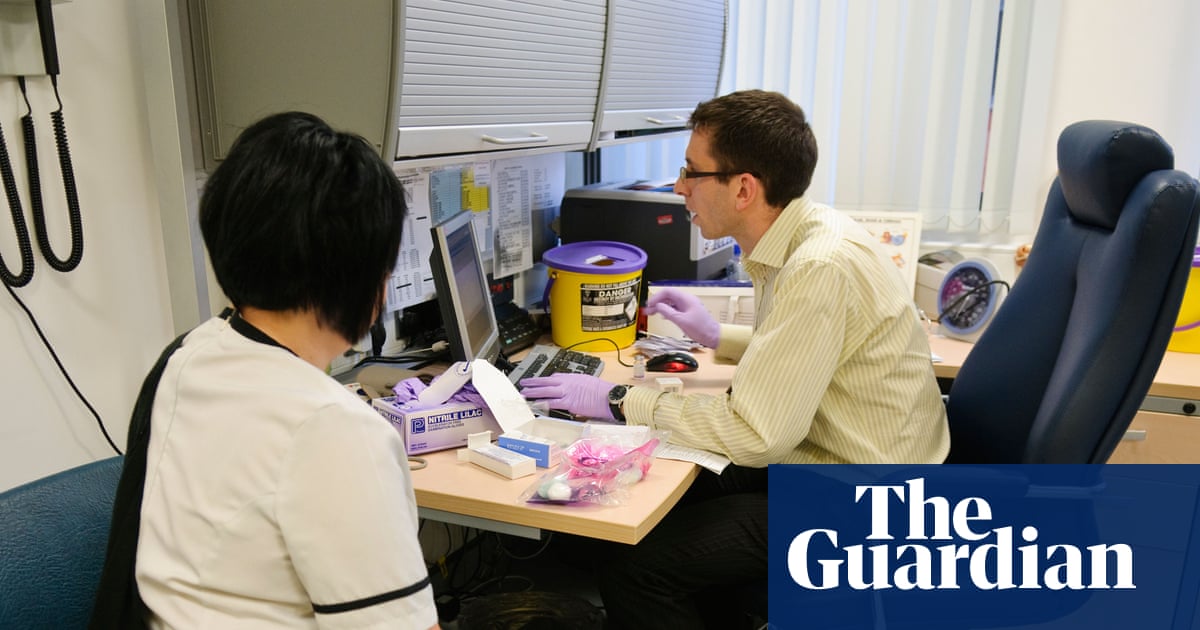
Doctor forced to apologise after AI makes 'scary' error about illegal drugs
Artificial Intelligence is listening to many people's medical appointments, but it is not always hearing things correctly.

Experts warn AI is making your brain work less
Generative AI tools have become hugely popular but some experts worry about the effect they have on the brain.
In the US, Caution Rules on AI Ahead of K-12 School Year
Students and teachers across the country are unlikely to find consistent, clear rules about AI use, reports Tech Policy Press fellow Chris Mills Rodrigo.

AI May Be Atrophying Our Brains, Professor Warns
AI may soon ruin our ability to make decisions for ourselves — an outcome that would be, one expert warns, "catastrophic."