

Scientific sleuths come in from the cold
Research integrity investigators are starting to organize, but the field, and the people, remain idiosyncratic

AI-powered hate content is on the rise, experts say | CBC News
Experts say that artificial intelligence technology is allowing for a rapid increase in the amount of hateful content and misinformation online.

‘I Have a Folder in My Email Called Hate Mail’: Academic Public Engagement, Digital Hate and the Unequally Distributed Risks of Visibility
Public engagement through �traditional� and social media is an increasingly important way for scholars to communicate research w

The contagion of fear | The Observation Deck
I have a difficult confession to make — a shameful incident that I have never spoken of, even to those closest to me. Late one night in my first year at university and having found computer science to be my life’s calling, I was in the back of the large computer science lab, talking with some fellow underclassmen. We were snidely decrying the lack of technological understanding in the broader population, with the kind of arrogance and hubris that youth and precociousness can uniquely summon. Somewhere in this discussion, a terrible idea was hatched: what if we went next door to the general computer lab, and told the humanities students there that a computer virus was spreading through their machines? Would they believe it?
Guest Post — Love, Death & Robots: Scholarly Edition - The Scholarly Kitchen
Today's guest post proposes a method for identifying, measuring, and managing robotic usage of scholarly content.
Les ScienceGuardians, fantômes de l’intégrité — TheMetaNews
Un groupe d’activistes anonymes s’emploie depuis près d’un an à suivre, voire à menacer juridiquement, les détectives de l’intégrité scientifique. Chroniques d’une guerre invisible.
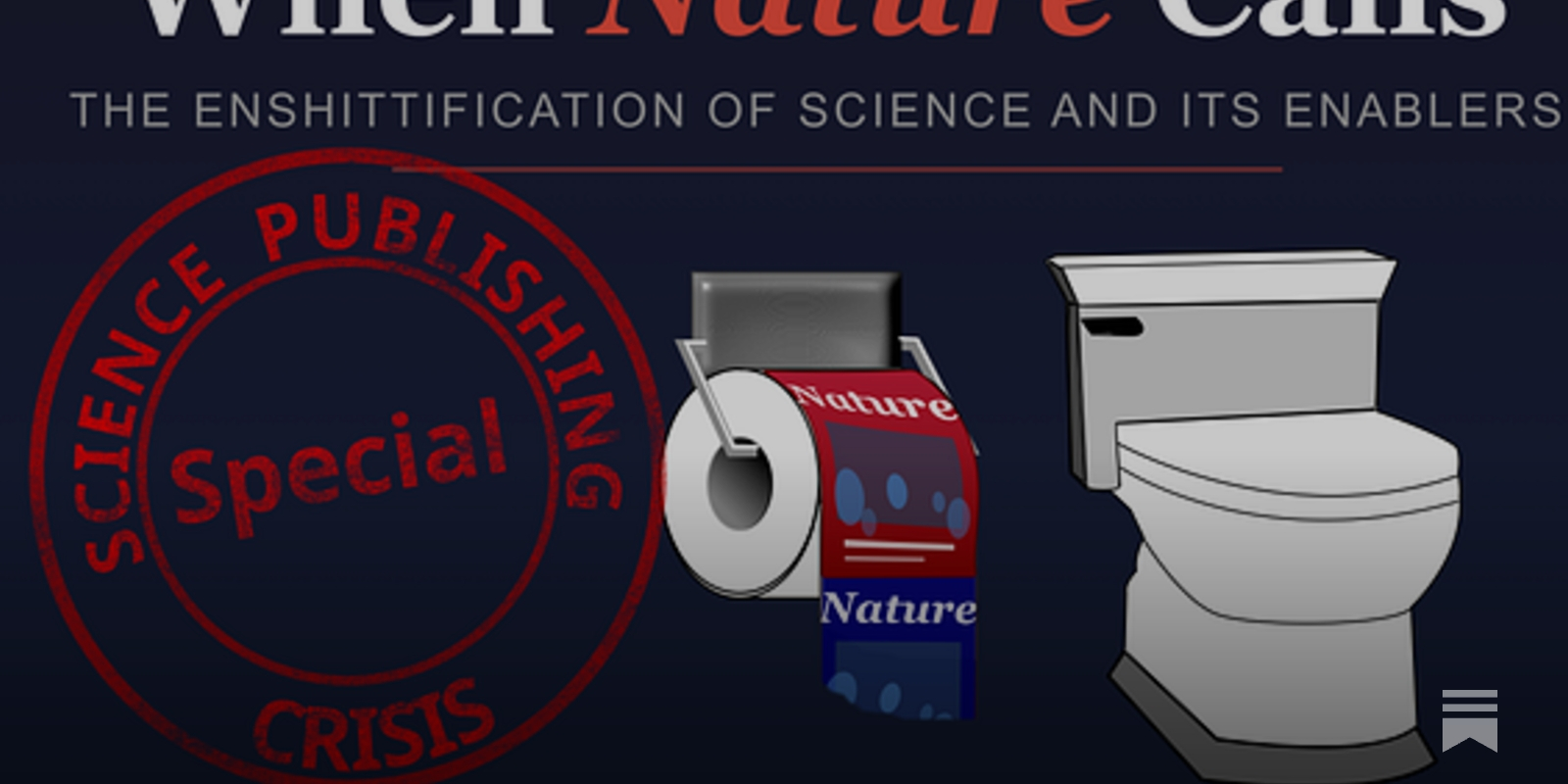
When Nature Calls: The Enshittification of Science and Its Enablers
Proof-of-work papers, policy laundering, and the collapse of self-correction
A Delphi survey on attitudes to serious research misconduct: Exploring convergence vs. polarization of views of research “sleuths” and research integrity experts
Research fraud is often seen as a rare event, but evidence from self-report surveys indicates that fabrication and falsification of data are common enough to be a problem. This study assessed attit...

Large language memories: Psychosis and antisocial media
Using the fields of memory studies and digital humanities, this article argues that there has been a shift from more collective and social memory to more personalised and individual memory. This shift, it is argued here, can be conceptualised through the psychoanalytic concept of ‘psychosis’. While the causes of the changes in our patterns of memory have been located in capitalist and neoliberal principles, the effects of the changes in our memory habits might be found in psychosis. From falling in love with machinic AI replicas to indulging in conspiracy theories to acting as if we are social media influencers or backing ourselves to win out in impossible job markets, we are inclined towards personal fantasy, often at the expense of participating in social life. But why do we do this? Why is it easier to believe a farfetched conspiracy theory or wild personal dream than it is to participate socially and collectively in the world we live in? Part of the reason, at least, is found in our increasing habitual reliance on new and emergent technologies. Often presented to us as a brand-new form of Artificial Intelligence, these generative tools are the latest update to a longer pattern in our digital world: the trend of developing ‘relationships’ with algorithms that, to larger and smaller degrees, we come to rely on for habits of cognition and recognition. By affecting our patterns of memory, these technologies produce a kind of isolation that lends itself to individual and fantastical – rather than shared and realist – thinking.
Geeks, MOPs, and sociopaths in subculture evolution | Meaningness
How muggles and sociopaths invade and undermine creative subcultures; and how to stop them.
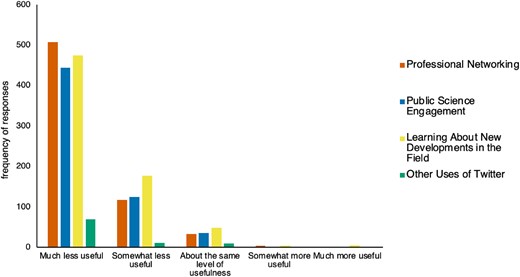
Scientists no Longer Find Twitter Professionally Useful, and have Switched to Bluesky
Synopsis Social media has become widely used by the scientific community for a variety of professional uses, including networking and public outreach. For the past decade, Twitter has been a primary home of scientists on social media. In recent years, new leadership at Twitter has made substantive changes that have resulted in increases in the prevalence of pseudoscience, conspiracy theory, and harassment on the platform, causing many scientists to seek alternatives. Bluesky has been suggested as a good alternative to Twitter, but the phenomenon of academics switching social media platforms has not previously been studied. Here we report on the results of a survey distributed to scientists on Twitter and Bluesky (n = 813). Results overwhelmingly confirm that changes to Twitter have made the social media platform no longer professionally useful or pleasant, and that many scientists have abandoned it in favor of Bluesky. Results show that for every reported professional benefit that scientists once gained from Twitter, scientists can now gain that benefit more effectively on Bluesky than on Twitter.
I am a 15-year-old girl. Let me show you the vile misogyny that confronts me on social media every day | Anonymous
Objectification, hate, rape threats: the politicians debating online abuse mean well, but to truly understand, they need to see what I see
I call this the dark matter theory of science. Blogs, social media, etc - a majority of what actually influences science is invisible to the system (esp in AI) Real systems change in science will only be possible when we recognize these sources of influence and intentionally design for them

Eugene Vinitsky 🍒
Kinda feel weird that a few blog posts I’ve written in a few hours will probably have more educational impact than any amount of teaching I’ll ever do
Excuse me but this is cult behavior. And as a scientist, I have no business joining a cult. These personalized insults and intolerance for criticism are not scholarly virtues however you cut it. I do not understand or relate to it. What is my worth as a scholar if I do not value evidence over faith?
Once you understand that this is a model of science written by non-scientists who hate universities but love venture capital and redirecting money to political allies, everything makes a lot more sense. nytimes.com/2026/07/22/us/politics/trump-…

Trump’s Plan for Science: More Money for A.I., Less for Universities
www.nytimes.com


