

So the people launching a new Twitter under the name Twitter launched their thing so I signed up. Turns out they have an AI scanning tweets for "truth" and it currently has no idea what it's doing. Posted something innocuous about Star Wars Zero Company and it essentially blocked it from all feeds.
Aug 27, 2026 at 3:09 AM
AI-Generated Taylor Swift Porn Went Viral on Twitter. Here's How It Got There
404 Media traced back the viral and abusive images of Taylor Swift to a specific Telegram community. That group sometimes uses Microsoft's AI tools.

Twitter users #BlockTheBlue as ‘verified’ accounts take on new meaning
Some netizens have blocked accounts after Twitter removed the symbol from legacy accounts.

Twitter users #BlockTheBlue as ‘verified’ accounts take on new meanin…
archived 31 Dec 2024 10:44:28 UTC

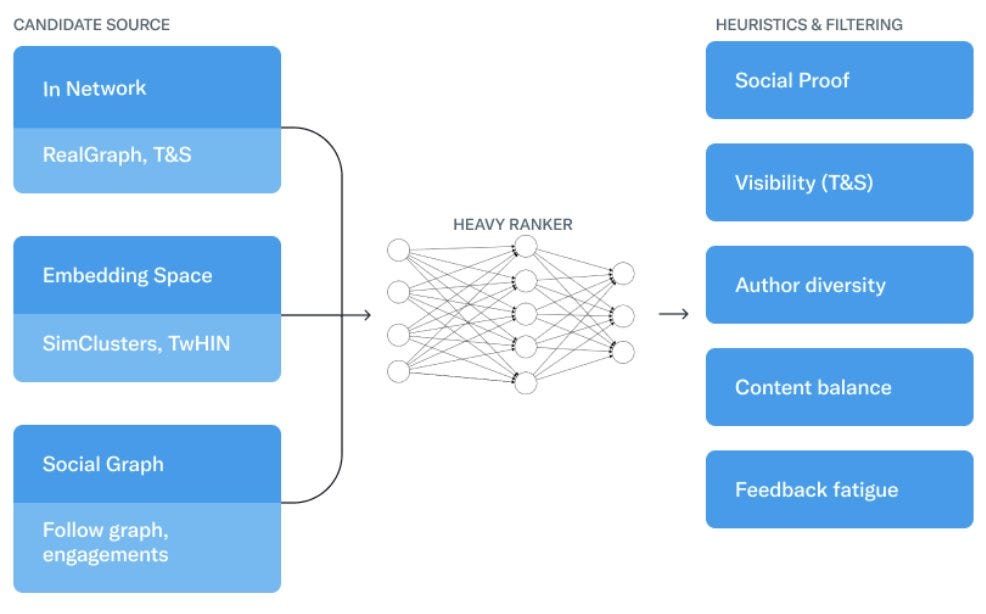
How Twitter’s Algorithm Works: A High-level Breakdown
On March 31st, 2023, Twitter made an unprecedented move by releasing the source code for their algorithm. The move is unprecedented because…
Evaluating Twitter’s algorithmic amplification of low-credibility content: an observational study
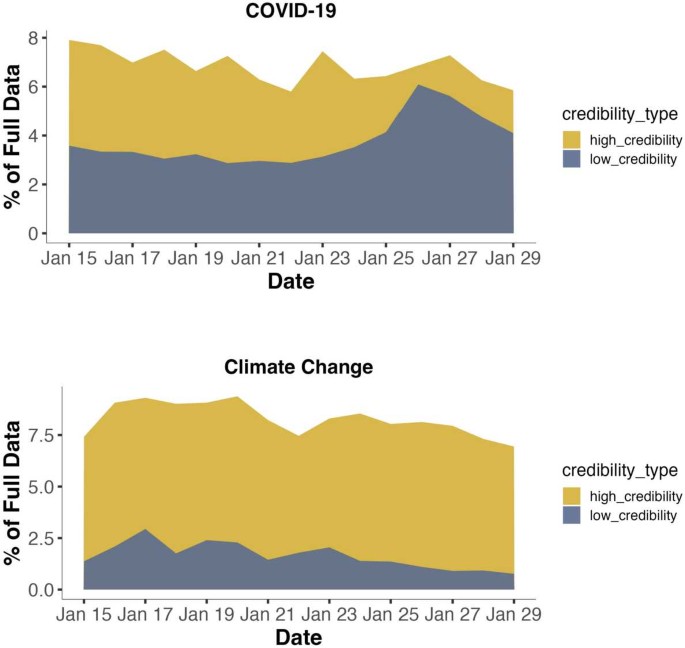
Artificial intelligence (AI)-powered recommender systems play a crucial role in determining the content that users are exposed to on social media platforms. However, the behavioural patterns of these systems are often opaque, complicating the evaluation of their impact on the dissemination and consumption of disinformation and misinformation. To begin addressing this evidence gap, this study presents a measurement approach that uses observed digital traces to infer the status of algorithmic amplification of low-credibility content on Twitter over a 14-day period in January 2023. Using an original dataset of ≈ 2.7 million posts on COVID-19 and climate change published on the platform, this study identifies tweets sharing information from low-credibility domains, and uses a bootstrapping model with two stratifications, a tweet’s engagement level and a user’s followers level, to compare any differences in impressions generated between low-credibility and high-credibility samples. Additional stratification variables of toxicity, political bias, and verified status are also examined. This analysis provides valuable observational evidence on whether the Twitter algorithm favours the visibility of low-credibility content, with results indicating that, on aggregate, tweets containing low-credibility URL domains perform better than tweets that do not across both datasets. However, this effect is largely attributable to a difference in high-engagement, high-followers tweets, which are very impactful in terms of impressions generation, and are more likely receive amplified visibility when containing low-credibility content. Furthermore, high toxicity tweets and those with right-leaning bias see heightened amplification, as do low-credibility tweets from verified accounts. Ultimately, this suggests that Twitter’s recommender system may have facilitated the diffusion of false content by amplifying the visibility of low-credibility content with high-engagement generated by very influential users.
Evaluating Twitter’s algorithmic amplification of low-credibility content: an observational study
Artificial intelligence (AI)-powered recommender systems play a crucial role in determining the content that users are exposed to on social media platforms. However, the behavioural patterns of these systems are often opaque, complicating the evaluation of their impact on the dissemination and consumption of disinformation and misinformation. To begin addressing this evidence gap, this study presents a measurement approach that uses observed digital traces to infer the status of algorithmic amplification of low-credibility content on Twitter over a 14-day period in January 2023. Using an original dataset of ≈ 2.7 million posts on COVID-19 and climate change published on the platform, this study identifies tweets sharing information from low-credibility domains, and uses a bootstrapping model with two stratifications, a tweet’s engagement level and a user’s followers level, to compare any differences in impressions generated between low-credibility and high-credibility samples. Additional stratification variables of toxicity, political bias, and verified status are also examined. This analysis provides valuable observational evidence on whether the Twitter algorithm favours the visibility of low-credibility content, with results indicating that, on aggregate, tweets containing low-credibility URL domains perform better than tweets that do not across both datasets. However, this effect is largely attributable to a difference in high-engagement, high-followers tweets, which are very impactful in terms of impressions generation, and are more likely receive amplified visibility when containing low-credibility content. Furthermore, high toxicity tweets and those with right-leaning bias see heightened amplification, as do low-credibility tweets from verified accounts. Ultimately, this suggests that Twitter’s recommender system may have facilitated the diffusion of false content by amplifying the visibility of low-credibility content with high-engagement generated by very influential users.
A Tweet Before Dying
The revolutionary internet is over, and we don’t have much to show for it. A new start is out there, somewhere.
Dark Web Informer on Twitter / X
‼️🇺🇸 LAPSUS$ Group is allegedly selling a massive dataset of https://t.co/Q6UlD72i8v, an AI recruiting platform with $500M+ revenue, is being auctioned on a popular cybercrime forum, TG, and their website.▪️Total Size: ~4TB▪️Data Includes: 211GB of database▪️939GB of source… pic.twitter.com/hEvp244uNO— Dark Web Informer (@DarkWebInformer) March 30, 2026

Tay (chatbot)
Tay was a chatbot that was originally released by Microsoft Corporation as a Twitter bot on March 23, 2016. It caused subsequent controversy when the bot began to post inflammatory and offensive tweets through its Twitter account, causing Microsoft to shut down the service only 16 hours after its launch. According to Microsoft, this was caused by trolls who "attacked" the service as the bot made replies based on its interactions with people on Twitter. It was replaced with Zo.

Rebuilding Social Media From Scratch!
Rebuilding Social Media From Scratch!
X Corp
X, formerly known as Twitter, is a global social-media platform that facilitates real-time communication and the sharing of short messages, known as "tweets". Founded...

As many as 48 million Twitter accounts aren't people, says study
A big chunk of those "likes," "retweets," and "followers" lighting up your Twitter account may not be coming from human hands.
People are misunderstanding what happened here. They mostly did not go back to twitter. They went to linkedin or substack or threads nowhere and so interesting technical conversations simply didn't happen that could have.

Ryan Moulton
Lots of people tried to reconstruct the ML/AI/stats community over here. 90% of them left because the random abuse they got for just posting ordinary research results was too much. bsky.app/profile/jwherrman.bsky.social…
So the people launching a new Twitter under the name Twitter launched their thing so I signed up. Turns out they have an AI scanning tweets for "truth" and it currently has no idea what it's doing. Posted something innocuous about Star Wars Zero Company and it essentially blocked it from all feeds.


