

papers-we-love/papers-we-love
Papers from the computer science community to read and discuss.
Connected Papers | Find and explore academic papers
A unique, visual tool to help researchers and applied scientists find and explore papers relevant to their field of work.
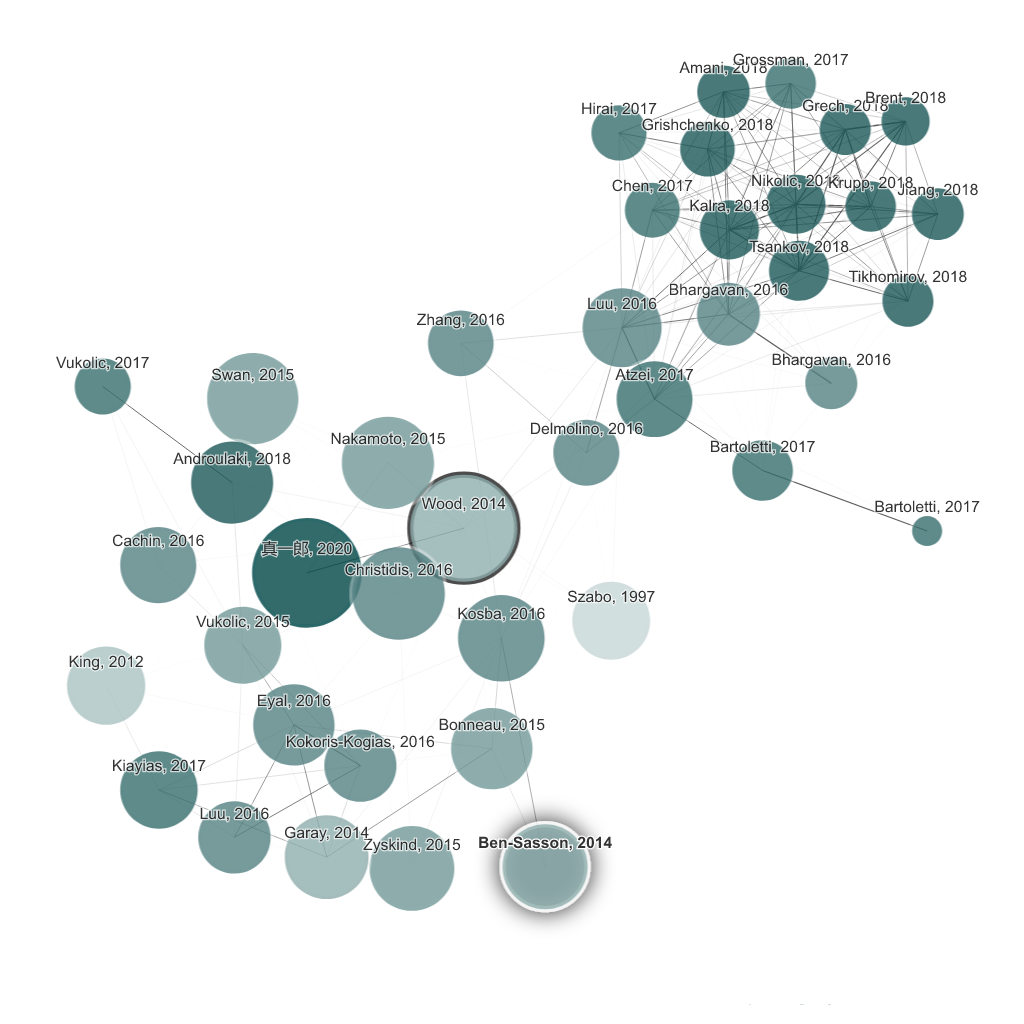
Connected Papers | Find and explore academic papers
A unique, visual tool to help researchers and applied scientists find and explore papers relevant to their field of work.
The new way we’ll do science
Papers should become human-readable views over a graph of data, tools, results, and certificates.
Paper Skygest Team (@paper-feed.bsky.social)
Building personalized Bluesky feeds for academics! Pin Paper Skygest, which serves posts about papers from accounts you're following: https://bsky.app/profile/paper-feed.bsky.social/feed/preprintdigest. By @sjgreenwood.bsky.social and @nkgarg.bsky.social
AI maps science papers to predict research trends two to three years ahead
The number of scientific papers is growing so rapidly that scientists are no longer able to keep track of all of them, even in their own research area. Researchers from the Karlsruhe Institute of Technology ...

Beyond the Page: Enriching Academic Paper Reading with Social Media Discussions | Proceedings of the 38th Annual ACM Symposium on User Interface Software and Technology
Social media has been gaining popularity among university students who use social media at higher rates than the general population. Students consequently spend a significant amount of time on social media, which may inevitably have an effect on their ...

My Browser Stack | The Paper Pilot
The Paper Pilot's digital garden of thoughts on philosophy, politics, and sociology
A BlueSky thread by Jay Patel on Skyview
#SciComment I'm curious to know... ❓If you evaluate papers online using PubPeer, blogs, microblogging services, personal websites, etc... why do you like certain technologies over others? 🤔 What prevents you from using PubPeer or ResearcHub instead of other transient or hard-to-find platforms?

#SciComment I'm curious to know... ❓If you evaluate papers online using PubPeer, blogs, microblogging services, personal websites, etc... why do you like certain technologies over others? 🤔 What prevents you from using PubPeer or ResearcHub instead of other transient or hard-to-find platforms?
I made a little social bibliography atproto app. You can post papers you read and see what your friends are reading. Paper info autofills from links, and it exports to bibtex. There's chronological and following only feeds, maybe more to come, and you can organize papers into lists for your own use.
papers.club
papers.club

