

Norms of behavior? Shielding proven misconduct? Just because you burry it @maastrichtu.bsky.social, does not change the truth! Well, he (the dean) partly succeeded with his threats because my UK university indeed dismissed me.
Jun 2, 2025 at 3:00 PM
A response to: Should universities investigate questionable papers students and faculty wrote elsewhere?
Editor’s note: We recently published a guest post on universities’ responsibility for investigating misconduct allegations related to work by staff and students conducted and/or published while the…

Bill Ackman on Twitter / X
Almost nothing makes my blood boil more than when a large powerful institution unfairly destroys someone’s reputation, and its principal reason for doing so is to minimize bad publicity in an effort to protect its own ‘reputation.’ Sadly, I have seen this occur in many academic…— Bill Ackman (@BillAckman) January 2, 2026
Cas (Stephen Casper) on Twitter / X
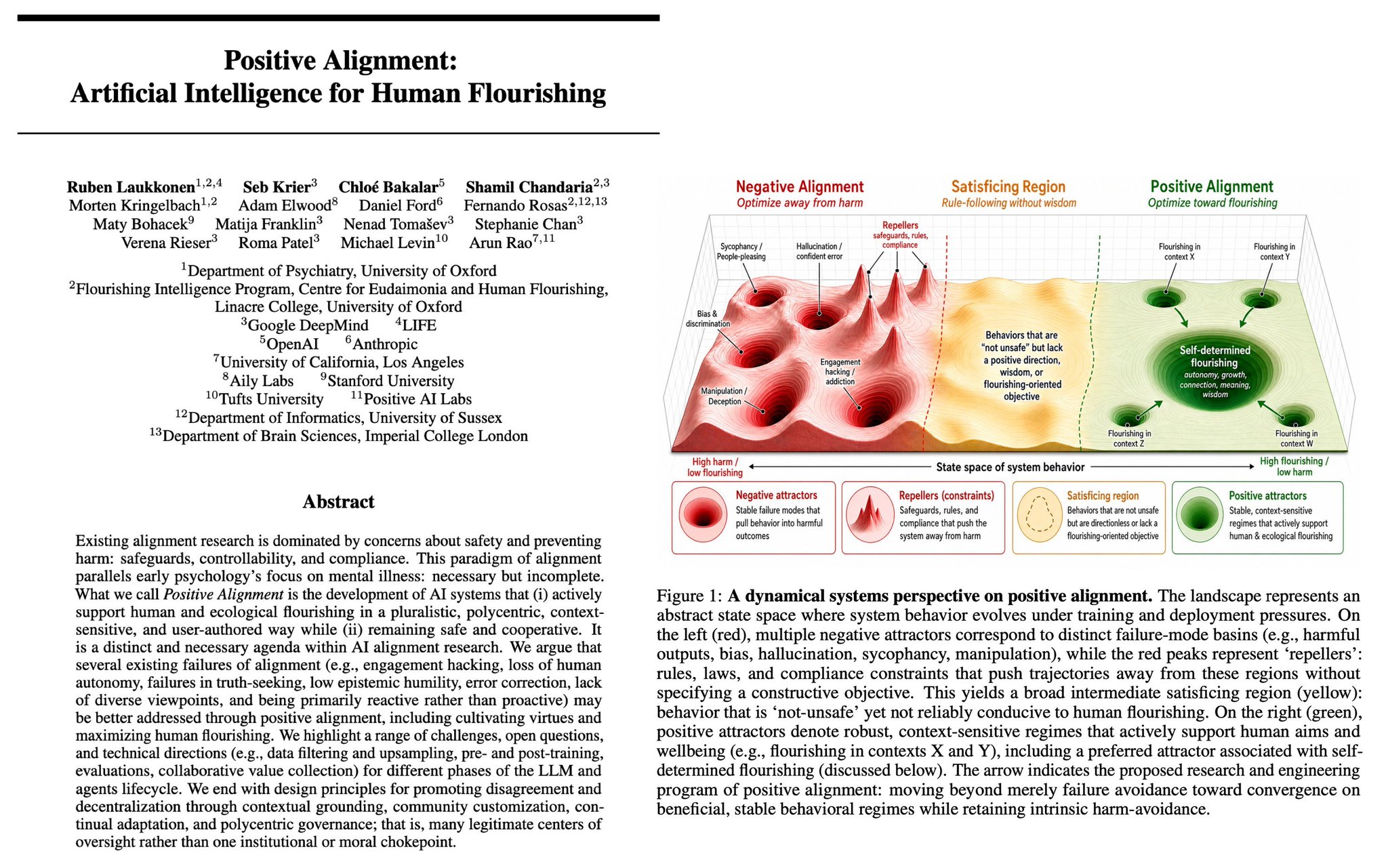
It is hard to overstate how disappointing I think this new paper from Oxford, OpenAI, Anthropic, and Google (et al) is. I can't take it seriously as academic work, just as propaganda. It also has some very bad scholarship and questionable adherence to research ethics. Having… pic.twitter.com/Z5fBx360ya— Cas (Stephen Casper) (@StephenLCasper) May 13, 2026
Morally Motivated Networked Harassment as Normative Reinforcement
While online harassment is recognized as a significant problem, most scholarship focuses on descriptions of harassment and its effects. We lack explanations of why people engage in online harassment beyond simple bias or dislike. This article puts forth an explanatory model where networked harassment on social media functions as a mechanism to enforce social order. Drawing from examples of networked harassment taken from qualitative interviews with people who have experienced harassment ( n = 28) and Trust & Safety workers at social platforms ( n = 9), the article builds on Brady, Crockett, and Bavel’s model of moral contagion to explore how moral outrage is used to justify networked harassment on social media. In morally motivated networked harassment, a member of a social network or online community accuses a target of violating their network’s norms, triggering moral outrage. Network members send harassing messages to the target, reinforcing their adherence to the norm and signaling network membership. Frequently, harassment results in the accused self-censoring and thus regulates speech on social media. Neither platforms nor legal regulations protect against this form of harassment. This model explains why people participate in networked harassment and suggests possible interventions to decrease its prevalence.

The Emotional Toll of Living With Institutional Betrayal - Dame Magazine
What happens to us when institutions protect power instead of people? From Epstein to ICE, institutional betrayal is inflicting trauma and moral injury.

Fairness is what the powerful ‘can get away with’ study shows
The willingness of those in power to act fairly depends on how easily others can collectively push back against unfair treatment
I tried to report scientific misconduct. How did it go?
This is the story of how I found what I believe to be scientific misconduct and what happened when I reported it. Science is supposed to b...

Investigation finds ‘egregious misconduct’ by CUNY scientist
In a report shared with Science in October 2023, a committee investigating allegations of misconduct by Dr. Hoau-Yan Wang, a professor at the City College of New York (CCNY, which falls under the C…

Nigel Farage Reported to Met Police Over Alleged Misconduct in Public Office
The Reform UK leader's non-disclosure of a £5 million 'gift' from a crypto billionaire could amount to a criminal offence, leading democracy groups allege

Anti-social Punishment — LessWrong
Why do some societies exhibit more antisocial punishment than others? Martin explores both some literature on the subject, and his own experience liv…

Guest post: Should universities investigate questionable papers students and faculty wrote elsewhere?
Be-Art/iStock I am a research ethicist and often get asked by my university to investigate when potential concerns are raised about our staff or students. One example involved the recent case of th…
CEA's response to sexual harassment
In this piece, I discuss the sexual harassment I experienced at the Centre for Effective Altruism, the organisation’s response, the outcomes of two i…

Well-intentioned obscenity
An LLM lied about me at the office and I'm cranky about it. That interaction makes me think a lot about how LLMs are becoming normalized, though, and what we're looking at in terms of their role in human-to-human interactions in the future.
Some researchers, including some I very much respect, think that we need to stop pussyfooting around and start being more brutal in our way of talking about bad work in our field I disagree. When you are refuting someone’s work, I think it’s important not to be a dick about it

