

our system of knowledge production is under attack from an extraordinary array of forces and if the people putatively on the side of maintaining it cannot commit to the most basic standards (not using fake citations, writing your own words, etc) I fear there is no hope

Dr. Holly Walters
I'm sorry, what? In writing my first monograph, I spent six weeks trying to track down a citation in TWO languages I didn't know. And good thing too, because the citation was wrong. That's scholarship. That's research. You know, the thing we're trained to do?!?
May 17, 2026 at 10:15 PM
Science Must Decentralize
Knowledge production doesn’t happen in a vacuum. Every great scientific breakthrough is built on prior work, and an ongoing exchange with peers in the field. That’s why we need to address the threat
The Use of Knowledge in (AGI) Society
How to build to break the intelligence curse
See what you think
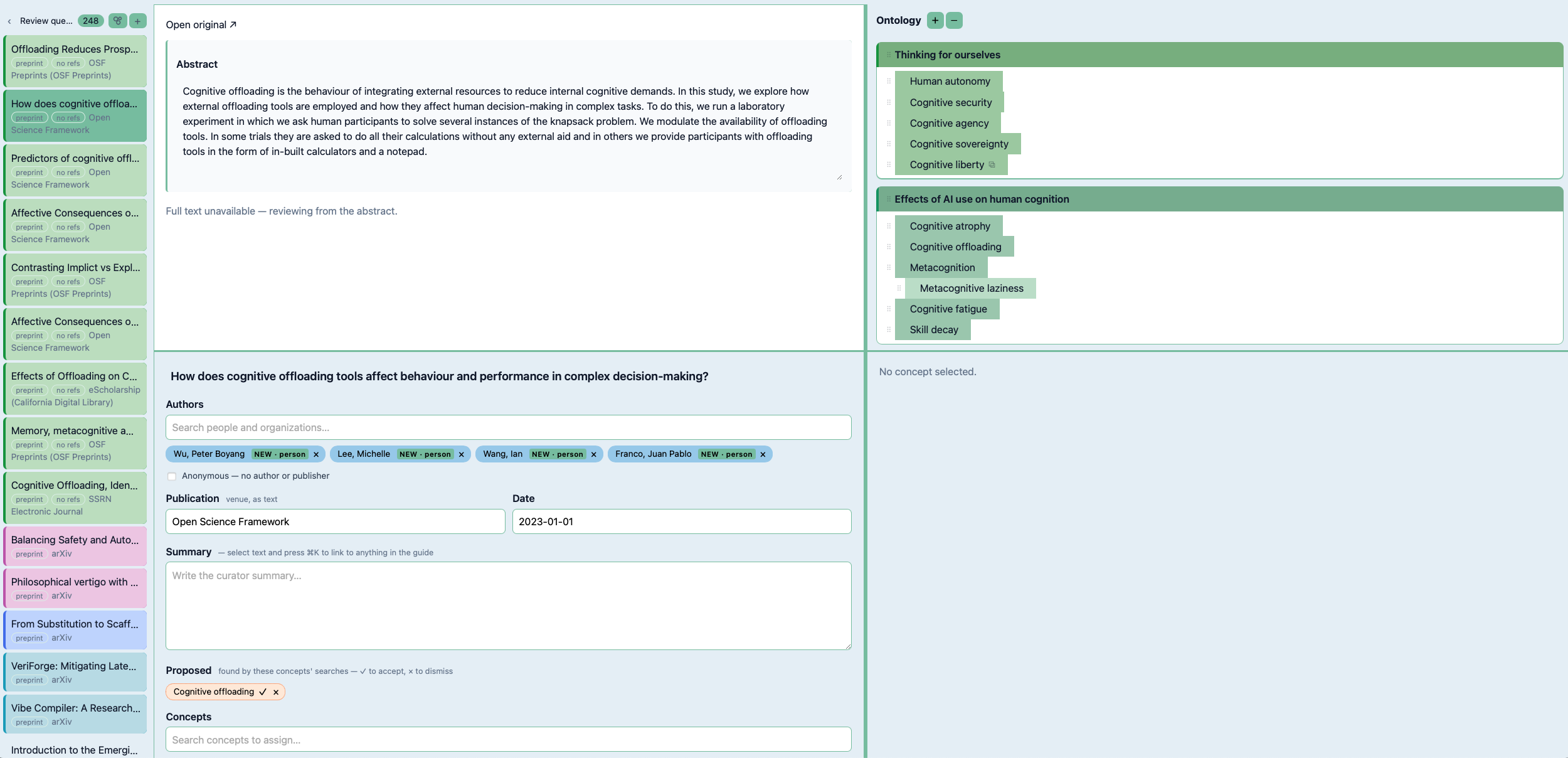
Allegra A. Beal Cohen's blog about knowledge curation, new interfaces, and large-scale qualitative data.
Erik Brynjolfsson on Twitter / X
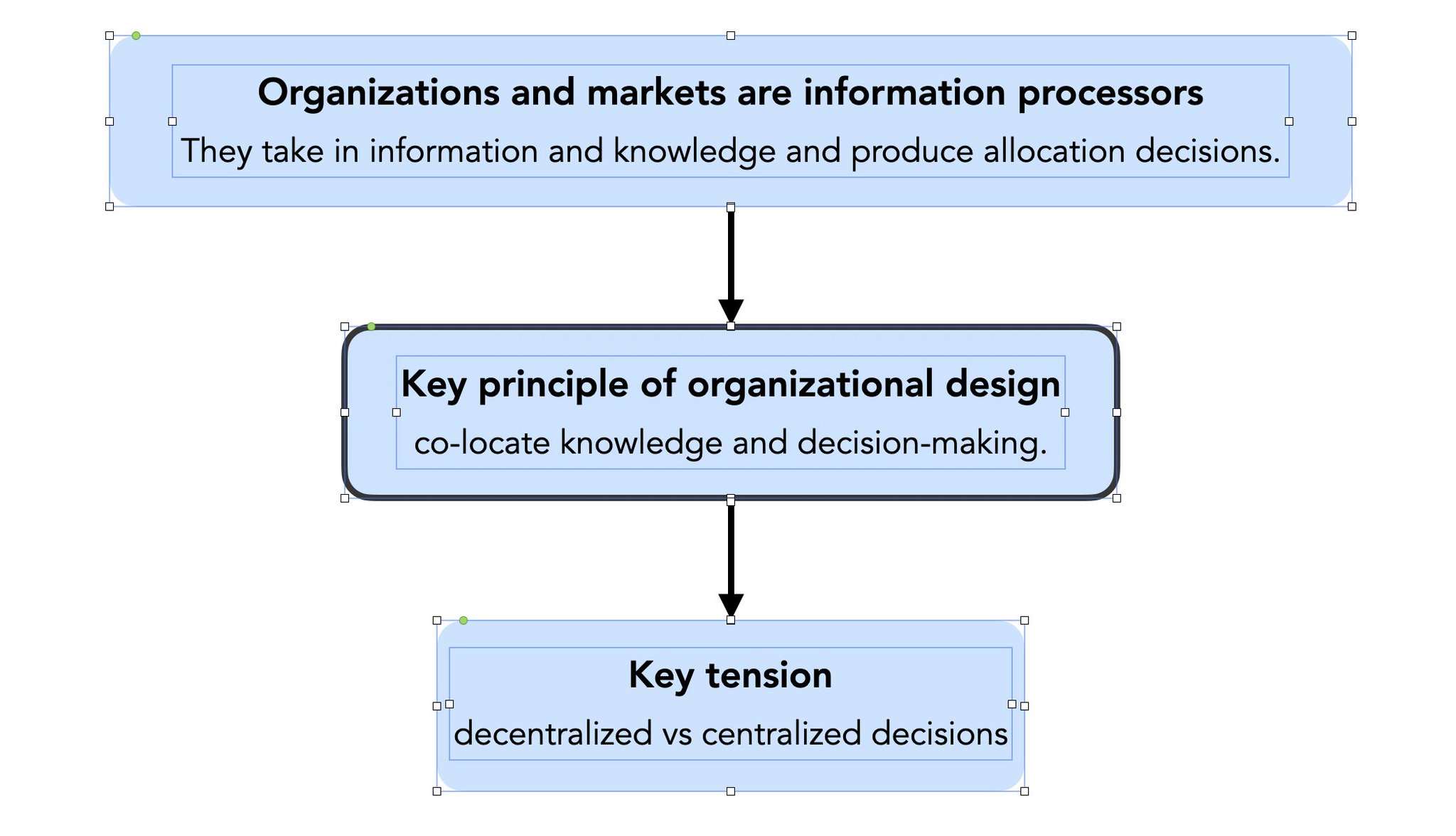
The @nytimes piece today by @ByrneEdsal13590 highlights a concern I share: “If we stay on the current path, the risk of extreme concentration — both economic and political — is very real.”In work with @zhitzig, we ask why AI may shift the balance between dispersed knowledge… pic.twitter.com/10vOTRj4Dq— Erik Brynjolfsson (@erikbryn) March 17, 2026
The Bazaar of Scientific Knowledge | shishyko!
What if we didn't collapse all the knowledge from the scientific process into one paper?
The Source of Truth Problem is Getting Worse with Agents — Tonk
Intelligence depends on knowledge, but in practice that knowledge is fragmented across tools, people, and formats, creating conflicting versions of reality. What if we accepted that knowledge lives at the edge and focused instead on effectively sharing it?

The rise of community-curated knowledge networks
The Internet put thousands of years of human thought at our fingertips, and enabled billions of people to create content. At least 2.5…
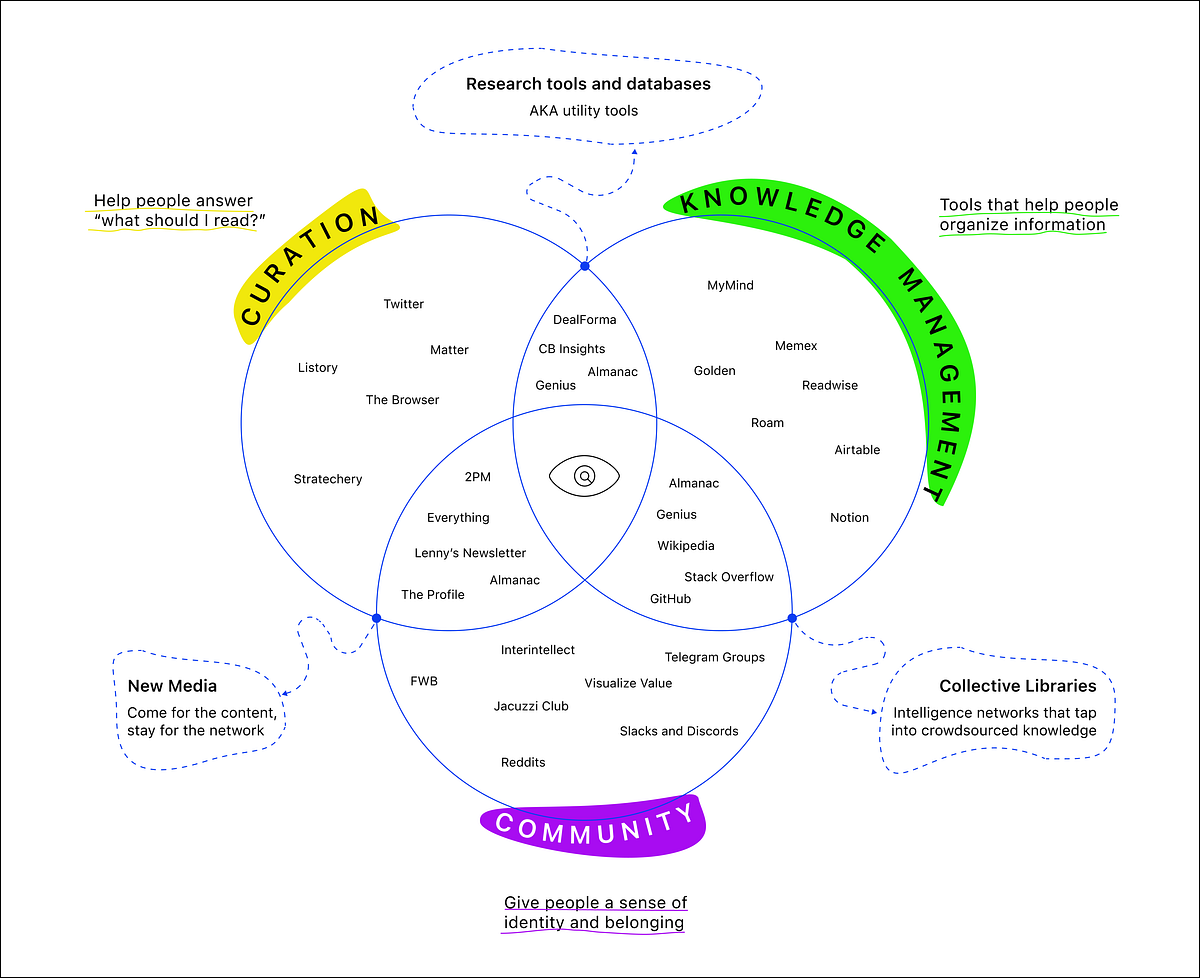
Artificial intelligence and illusions of understanding in scientific research
Scientists are enthusiastically imagining ways in which artificial intelligence (AI) tools might improve research. Why are AI tools so attractive and what are the risks of implementing them across the research pipeline? Here we develop a taxonomy of scientists’ visions for AI, observing that their appeal comes from promises to improve productivity and objectivity by overcoming human shortcomings. But proposed AI solutions can also exploit our cognitive limitations, making us vulnerable to illusions of understanding in which we believe we understand more about the world than we actually do. Such illusions obscure the scientific community’s ability to see the formation of scientific monocultures, in which some types of methods, questions and viewpoints come to dominate alternative approaches, making science less innovative and more vulnerable to errors. The proliferation of AI tools in science risks introducing a phase of scientific enquiry in which we produce more but understand less. By analysing the appeal of these tools, we provide a framework for advancing discussions of responsible knowledge production in the age of AI.
“Wait, not like that”: Free and open access in the age of generative AI
The real threat isn’t AI using open knowledge — it’s AI companies killing the projects that make knowledge free

Research, Attention, and Manipulation
Questionable articles can quietly move into Wikipedia and news outlets without notice.
The web can be weaponised – and we can't count on big tech to stop it | Tim Berners-Lee
It’s dangerous having a handful of companies control how ideas and opinions are shared. A regulator may be needed

Wikipedia Is Battling for the Soul of the Internet
The internet’s largest stockpile of free knowledge is under threat from MAGA, A.I. and foreign autocrats. A bibliophile ex-ambassador is here to help.

Searching for explanations: How the Internet inflates estimates of internal knowledge.
Landslide / Holdfast
Notes on what’s happening to our ability to collectively know things, and a look ahead to what this community is especially well positioned to do to support and revitalize our info ecosystems and the humans inside them.

The Transformation of Documents: Repositories Are the New Unit of Knowledge Work
How will documents evolve when AI agents become ubiquitous? In a world of AI agents, does the repository become the source of truth—where humans declare intent, agents turn it into executable artif…

"Powerful AI can statically help human decision-makers, but can harm collective knowledge building... it can lead to what we call “knowledge collapse” whereby in the long-run all human knowledge is ultimately destroyed.” economics.mit.edu/sites/default/files/2026-02/A…

